Quantcast

Tuesday, April 7, 2015

Of Closets and Clothes


The very first step in the  KonMarie method of decluttering your home is to tackle clothes. Considering I have clothes in my closet that I wore in high school, I was very much in need of a good clean-out in this department.

I realized I'm a bit of a clothing hoarder (I might just be a bit of hoarder in general, which is why this whole decluttering binge has been so cathartic for me). You see, I really like having lots of options, being able to mix and match, and always having just the right outfit for the occasion. So what if I never wear those heavy black work boots, someday I might end up on a construction site and really need them, right?

Obviously, I have a problem.

(Although, not as big of a problem as my husband, who refuses to throw out his Hawaiin shirts that would fit a large Tongan football player nicely, even though he is considerably smaller than that).

Here are the tips I followed, and the difference they made:

Does It Spark Joy?
You are not supposed to keep clothes based on function, or whether you wear it frequently, or haven't worn it in the last year, or any other paradigm like that. Instead Kondo recommends only keeping clothing that spark joy. I have two observations about this.

First, this meant that while I got to throw out A LOT of clothes (like those nasty light-wash frayed denim boot cut jeans from high school that didn't fit then and still don't fit now, but have remained buried at the bottom of my jeans drawer for over a decade), it also meant I got to keep some clothes that have a few unfortunate stains or other problems because I absolutely LOVE those clothes. I was even inspired to pull out the super glue and fix up two pairs of shoes with loose soles because they are favorites that bring me joy. And it made me happy to know that I didn't have to feel guilty about keeping these well-worn items because even if they have their issues, I still feel incredibly happy every time I wear them.

Second, I realized that sometimes I needed a work-around cheat method on this one. Because do those over-sized T-shirts you pick up from family reunions and the summer corporate barbecue actually spark joy? Individually, no. But do I still want a couple of those T-shirts in my closet to serve as comfy pj's? Absolutely. I just drastically pared down my collection.

Have EVERYTHING Visible
You know how most people store their out of season clothes away? Kondo recommends having all your clothes out, hanging up, and visible at all times, no matter what season they are for. When you keep clothes stored away, it's easy to forget about them. This one didn't seem too difficult to me as I've drastically pared down on my winter items since moving to Houston (where it's summer for nine months of the year, and only slightly cooler for the other three months).

But I decided to make this applicable for other types of clothes that I usually keep stored away, like my maternity clothes. Following the "sparking joy" criteria, I actually threw out most of my maternity clothes because they made me terribly depressed. Now all the maternity clothes I kept are hanging in my closet along with all my other clothes, and surprisingly I find myself reaching for some of those shirts regularly even though I'm far smaller than my pregnant self (maternity shirts generally work great for nursing, I've discovered).

Kondo also recommends hanging clothes in an order that ascends to the right; that is, you hang longer items with heavier fabrics (coats, dresses) on the left, and gradually ascend to the right where you have shorter blouses, lighter fabrics, brighter colors. I thought this would be a tip I would mostly ignore, until I realized that my closet was already accidentally organized that way, so I must have intuited this one on my own.

Fold Your Clothes Right
Kondo has a thing against hanging too many clothes up. She definitely favors keeping most items folded in drawers, because this utilizes closet space more efficiently. I totally get this, but here's the thing. We have huge walk-in closets with lots of bar space for hangers, and only one dresser with smallish drawers, so I actually have waaaay more hanger space than drawer space. Thus, I used to keep everything on hangers in the closet, including jeans and pants.

However, after my clothing purge I had a lot more space in my drawers and decided to move all my pants into one drawer. I reorganized all my drawers to follow Kondo's folding method. I had a hard time visualizing this folding method just from her description in the book, but after watching a couple of YouTube videos (this one and this one were helpful) I totally caught the vision. Now my drawers look like this:

I was wearing pants when I took this picture, that's the empty space. And the items on the right are actually my moby wraps. I had empty space after arranging my pants so I folded them up and threw them in there too.

Doesn't it look so pretty? It makes me so happy whenever I open my drawer to see this. I organized my other drawers this way as well, but no, I am not posting pictures of my underwear drawer or other intimates on the world wide web thankyouverymuch.

It might seem like it takes longer to fold clothes this way, but I've found it takes me no longer than it did to hang them all up. I love this method too because even when I take out an item of clothing, everything else stays in place because the way they are folded allows them to stand up themselves. As long as I don't try to fit too many items in a drawer, the system works beautifully for me.

I still keep all my shirts (including T-shirts) on hangers just because that's where I have more space, but if/when we move to a place with smaller closets, I will invest in a closet drawer system because honestly? This folding system is awesome. No more stuffing piles in my drawers! No more drawers that won't close because they are too full! No more forgetting about those clothes at the bottom of the pile because I never see them!

It makes me so happy every morning when I get dressed, and all of my favorite clothes are just there, neatly folded or hanging in a row, ready to be picked. My closets and my clothes all make me so happy now. I haven't yet tackled the kids clothes yet (I don't have a lot of drawer space for their clothes either, so I'm not sure what to do yet, but it really is a problem I need to tackle), and I did not force my husband to participate (I make him fold his own clothes and put them away, does that make me a terrible wife?), but he seemed to catch the bug a bit and asked for help in doing his own closet purge. We haven't gotten around to that yet, but I'm itching to toss those Hawaiin shirts. We'll see.

For now, I'm loving my new joy-only closet.

Monday, April 6, 2015

Book Baskets

I don't really "get" the concept of toys and presents in an Easter basket. Growing up, the Easter bunny brought eggs with lots of candy, but he never brought presents (maybe my childhood was deprived, I don't know).

However, according to Pinterest and mommy blogs and fashion blogs and the internet at large, Easter is now another holiday all about presents. Apparently the Easter bunny is supposed to bring beautiful big baskets full of fun spring-time toys all wrapped up in cellophane with big ribbons on top.

Nothing like a little internet mom-guilt to force one to conform, so this year I decided our kids were getting presents in their Easter baskets. But because I have some sort of knee-jerk reaction against giving toys at any other time than Christmas and birthdays (which is a real downer most of the year for my oldest who was born on Dec. 23rd), of course the Easter bunny only gave them books (and candy, obviously).


I know, everything about these baskets is super cute and photo-worthy. I expect this grainy iphone pic will trend all over Pinterest.

Anyway, I bring up these baskets not to comment on the excesses of modern parenting or my own minimalist philosophies, but because I want to talk about these two books.

Actually, I probably don't need to talk about Pat the Bunny. If you are a parent, and you haven't heard of this book, what rock to do you live under? Do you even buy books for your children? Pat the Bunny is a huge favorite at our house, so much so that Child #1 loved his copy pretty much to death. If I have one complaint about this book, it's that it doesn't hold up as sturdily as most board books. This is probably by design, so that you are forced to buy a new copy for each subsequent child. Anyway, Baby #2 needed his own new copy and what better time than Easter to get a book that is not really at all about bunnies?

But for our 3 year old, I did something that I usually don't ever do: I bought a book sight unseen. Yep, I'd never actually read The Book With No Pictures before I ordered it, so this was a bit of a risk. But I'd read enough glowing reviews to have a pretty good idea what this book was all about, and since our kid has recently been really into making up nonsense words and gibberish (and making us say them too), I figured this book would likely be a hit.

And we were not disappointed. My husband got to do the first reading, and there were lots of giggles and delighted squeals. I'm pretty sure this one will be a regular in the bed-time rotation now. And I must say I think it's a super cute clever little book too. Props to B.J. Novak for coming up with such a simple, fun idea for a children's book.

If you are unfamiliar with this book, here's the premise: Like the title says, this book has no pictures, which of course sounds completely odd for a great children's book, but, as the words explain, the adult reading this book is required to read all the words on the page, even if those words are silly or gibberish, and there's plenty of silly nonsense to go around. It's a fun little book, one I think most kids would enjoy.

Although I'm glad we had an excuse to pick up this new family favorite, I did wonder if maybe I should have gotten a holiday-specific book since we don't actually have any Easter books. But then I realized that I don't know of a single good children's Easter story. So I'm asking you, any recommendations out there? What are the best Easter/spring children's books? What should our Easter bunny bring next year?

Friday, April 3, 2015

Books I Read in March

This post should more aptly be titled The Books I Didn't Finish Reading in March. Because that's kind of how March went down for me. I scrambled to read just enough of the assigned novels to not look stupid in class, but didn't finish any of them, and personal reading got sucked away in the stress-pit that was mid-term essays.

Yay for grad school!

So, I have one measly book to talk about that I actually read for pleasure and finished.

I'm so glad summer starts next month.

Dear Mr. Knightley by Katherine Reay

I saw the audiobook version of this available for download from my library, and since the description (a contemporary epistolary novel with a delightful dash of Jane Austen) sounded right up my ally, I checked it out. And... there were things I loved and things I hated. I loved how, rather than just make this a shallow chick-lit novel, Reay really tried to incorporate some meatier substance. I really appreciated the premise, young girl who's been really hurt and battered by life and hides behind her Austen fandom (totally related to so many different parts). But the execution fell a little flat for me. Reay just didn't nail the epistolary genre, the themes were a little too heavy-handed, and the innocence of the main character considering her rough and tough backstory felt very unrealistic. Still, I found it sweet and charming and would totally recommend to any Austen fan looking for some good chick-lit.

And now, just in case you're curious, here are the books I didn't finish last month.

East Goes West by Younghill Kang - Rather interesting view of a Korean immigrant's experience in New York during the early part of the twentieth century. I might finish it some day.

Tropic of Cancer by Henry Miller - No! No! No! Never! No! These are the types of books that make me shudder as an English major. Ugh. Also, this is why I don't do modern American literature. I'll keep with Shakespeare over this crap any day.

Their Eyes Were Watching God by Zora Neale Hurston - I've read this one before, but I'd forgotten most of it. I love Hurston's colloquial style and how she incorporates her anthropological work and folklore into her fiction. It's really beautiful writing. Highly recommend.

Thursday, March 19, 2015

Embracing Joy


I'm not sure I can put a finger on it exactly, or list all the reasons why, but I've been feeling a deep sense of joy recently (this feeling may or may not have coincided with the advent of my baby finally sleeping 12-13 hours through the night). Life certainly isn't perfect, things are still busy and stressful and there are many days where normal life frustrations get me down (remind me to tell you about the day I yelled at my son so intensely he peed his pants...)

But overall, life is so, so good right now.

Which scares me.

You see, when things seem to be going well for me, my mind inevitably reacts with questions: Why are things so good right now? Is it because something terrible is about to happen? Nobody is allowed too much happiness in life, I bet something horrible is going to happen soon. I be there's going to be a car accident. Someone's going to die. Someone's going to get sick. What's the worst possible thing that could happen to me right now? How can I be prepared?

You get the idea.

I never really used to think much of this tendency of mine to dwell on negative future possibilities until I read Dr. BrenĂ© Brown's Daring Greatly last summer. If you haven't read this book yet, you probably should. I even recommend buying it. It's one that needs to be revisited over and over again.


Brown is a researcher in social science, and she studies fear, shame, and vulnerability. One of her arguments is that in order to avoid shame and pain, people put on different forms of mental armor or shields to protect themselves, things like numbing, perfectionism, cynicism, etc.

One mental shield she called "Foreboding Joy". People who use this shield are incapable of enjoying the happiness of the moment. Instead, they are constantly worried about the possible bad things that could potentially happen. In this way, they refuse to acknowledge the joy that is in front of them, waiting for them if they would just feel it.

It was a strange experience for me, to read about this part of myself in her book, and realize for the first time what a disservice I was doing to myself by forever dwelling on these negative possibilities and mentally trying to prepare myself for the worst.

It meant I was refusing to simply feel the joy.

It's been surprisingly hard to turn that side of my brain off. There's a part of me that feels it's very productive for me to to imagine these possible future scenarios and try to prepare for them. But I realized there's a deeper issue going on. When I have these negative worry thoughts, it's not just because I'm trying to be prepared, it's because there is some part of me that honestly believes I don't deserve this moment of joy.

There is so much pain in this world. So many people have hard struggles. I have friends and family so close to me going through such terribly hard things, and I wonder, what have I ever done to deserve happiness? What did I ever do to get such a beautiful life?

I feel guilty that my life is so happy.

And I also feel like it won't last, because I don't deserve a happy life, and so it's only a matter of time before that super horrible thing happens.

But what Brown's book has also helped me see is that I am doing no one any favors by dwelling in this negative space. Decreasing how much I enjoy my blessed life doesn't help anyone else who is suffering. It only unnecessarily adds misery to the world.

So I am working on it. I'm trying so very hard to just let the joy flow through me right now. To just swim in the cuddles of my baby, and laugh with my three-year-old at tickle time, and soak in the knowledge from my grad school classes, and love my husband more, and enjoy one more slice of chocolate pie because I'm nursing, and just let it swirl around and fill me up. The joy is right there, all around me.


This is a season of joy. Seasons of pain and sorrow may be in my future, but that doesn't change that this is a season of joy. I don't need to feel guilty about it, and I don't need to reject it.

I just need to embrace it.

Monday, March 16, 2015

5 Life Lessons From My De-Cluttering Binge


It was about the end of January that I cane to confront the hard truth.

Over the past year or so, I had many excuses to explain away the clutter: I was pregnant, I had a new baby, I was sick, our tiny apartment was too small for a four-person growing family, if we lived in a house it would all be better. . .

But I finally confronted the truth. All excuses aside, we were just lazy, disorganized, messy people.

The beds were never made, there were always dirty dishes spread over all the counters, books and clothes and toys and mail and whatever random crap just piled up everywhere. I about died of shame any time anyone popped over for a surprise visit.

It was depressing.

So when I came across Marie Kondo's book, The Life-Changing Magic of Tidying-Up, at my local library, I grabbed it up eagerly. I knew we needed help, and something had to change.

Okay, let's start with the caveats. Marie Kondo is Japanese. All of her clients are Japanese, and it is obvious that all of her experience with organizing and decluttering is heavily influenced by her culture (sometimes I had images of neon flashing Hello Kittys or big-bellied Buddhas speaking to their underwear coming through her advice). Not everything she says or does translates perfectly to an American home. She never addresses how to handle holiday decorations, her aesthetic is clearly much more spare and modern than most Americans are comfortable with (unless you really dig that minimalist, modern look, which is cool if you do, but I find it depressing), and she does NOT have kids. Or a husband, as far as I can tell.

And yeah, if I didn't have a husband and kids, I'd like to think my little apartment would be sparkling clean all the time.

BUT, caveats aside, I literally found this book to be LIFE CHANGING! I know, it sounds extreme. Let me see if I can explain.

Kondo has developed and perfected a method (the "KonMarie" method) for organizing and tidying that she guarantees, if followed, will lead to life-long organization. She claims that she has a 100% success rate, and that none of her clients have ever relapsed. You can't argue with numbers like that, so I was more than game to try out her method.

She has five categories of things to declutter and organize:

1.) Clothes
2.) Books
3.) Papers (Files, etc.)
4.) All Other Objects
5.) Sentimental Things

To follow her method completely, you must tackle each of these categories in order (the order is very important to her), and proceed to throw out or keep items based on the criteria of whether or not it brings you joy. Then you organize only the possessions that bring you joy in a logical way where everything has a place. She goes into much more detail in the book with suggestions and tips I don't have space to discuss here, some of which I found super helpful, and some of which I'm going to ignore completely (she had some super extreme and ridiculous suggestions, I just looked past those).

As soon as I finished the book, I jumped into my own decluttering project, sticking as close to her method as I found practical. So far I've worked my way through my clothes and books (the story of my books deserves it's own post), and I'm working through my papers, but this is a HUGE project. It is going to take months to finish, but this process has already been so transformative for me. I've had so many epiphanies, finally internalized lessons I've heard all my life but never taken to heart, and learned things about myself as well. Really, I am not over exaggerating when I say the process of organizing my home has been life-changing.

Here are a few of the epiphanies I've had through this experience:

A House of Order
When I think about my home, this home that I am creating, and the ideal home I want to have, certain words come to mind. PEACE is a big one. JOY is another one. I want a home that is peaceful, calm, filled with joy and light and happy memories. And when I imagine what this home looks like, clutter is not a part of it. This home isn't obsessively clean, or stark and bare (no home with children should be), but it is a home where things have a place, and they are generally kept in place. I want a house of order, and this process has helped me focus that vision and bring it closer to reality.

"Joy" as a Material Philosophy
I've been searching for a philosophy about how to relate to material possessions. Our consumer culture focuses very much on "More! More! More!" and sometimes it's hard not to feel that pull. However I think we all recognize that's not a healthy way to think about things. The philosophy in my home growing up was "Necessity vs. Want," and while I think this is a much healthier view of things, I've talked before about how sometimes there is a fuzzy line between needs and wants, and this wasn't providing clear guidance for me. I've dabbled in the Zero Waste Home philosophy (way too stressful for me) and other minimalist philosophies, but ultimately, none of these philosophies really spoke to me.

But when Kondo started talking about only keeping things that bring you joy, that totally clicked with me. Suddenly, it doesn't have to be about whether I need it or only want it, it doesn't have to be about function, or hoarding, or not being wasteful, or other things that tended to add stress to my life. Instead, it gets to be about joy! This idea has been super profound for me. Not only is it allowing me to let go of A LOT of things we already have (we've hung on to so many ugly, low quality, broken, or underused things because it felt wasteful to throw them out), it's changing the way I bring things in. Now when I shop, instead of asking questions about value and discount and coupons and sales that leave my head spinning, I think about whether it brings me joy. When it has to actually bring you joy, you buy a lot less stuff.

Revolutionary.

Outer Order Brings Inner Calm
Possessions carry a lot of weight. Not just physically, but mentally. I really felt this the last time we packed up our lives and moved across the country (the event that started me thinking about a minimalist philosophy), but I can't believe all the stuff I still felt was necessary to hang on to (like that box of all my lesson plans from when I taught school years ago. I have them all on my computer, why have I been lugging around the physical paper? Why?) It wasn't until I started throwing things away that I realized how great it felt mentally to let that weight go. Life feels lighter, physically and mentally. I feel more in control. I feel calmer and more at peace.

Order Creates Energy
One of the things that worries me the most is the effort it takes to keep things tidy and organized. Laziness has always been the cause I've attributed to all the clutter. I'm just too lazy to clean up and put things away. It takes effort.

But what I've noticed from this experience is that when I REALLY focus on the joy of my possessions and finding the perfect way to organize them, it creates the energy and motivation in me to keep it up. Kondo talks about how no one who follows her method ever relapses, and I think it's because of this energy that is created by the order. You feel so good when everything is in the right place, when you only have things you love, that you don't want to lose that good feeling by not taking the extra five seconds to fold your pants and put them away. At least that's the way it's been working for me.

Everyone Needs a Sapce
At the end of her book, Kondo talks about how everyone needs a space, a place for their things that are their own. Considering that in my entire life I've NEVER had my own room, this idea really struck a chord with me. It also helped me gain perspective on how to deal with the tidyness habits of those I live with. As much as I like to think that this little home is my domain and I have control over everything in it and can force tidyness on everyone, that is simply not true. Kondo says (after making this mistake herself) that you should never throw out or reorganize the possessions of any other person. I'm trying to respect this line with my husband, and leave his possessions and his space to himself. However, I'm finding that my new tidyness obsession is contagious; my husband has asked for my help cleaning out his clothes too and got really excited over the idea of getting bookshelves for his game collection. I'm even trying to respect this line with my three-year-old, while at the same time teaching him how to care for his possessions and keep them tidy. It's an experiment right now, this realm of kids and clutter, one I'm still working through, but I'll write it about it in more depth some day.

This process of decluttering and reorganizing my life has been a profound experience for me. Even though I understand how this book might not be for everyone (you really have to read past the cultural quirks) I highly recommend a good decluttering binge. Look for more posts as I continue to work on this process over the next few months. I'm hoping there are even more lessons to be learned.

Friday, March 13, 2015

Books I Read in February

After pulling an un-intentional almost all-nighter, I turned in my less-than-stellar ten page midterm essay yesterday, and bam! I'm on spring break! One whole week of no class!

I wish I could tell you that I'm doing something super fun, like camping and surfing in Costa Rica where my younger sister is for her spring break. But alas, I'm an old married mother of two, and must be more responsible than that. So, we're keeping the nanny for her regular schedule and I'll be hitting the library hard next week. Super exciting.

But hopefully I'll have a moment or two to pop back over here with a few thoughts, because I'm bursting with books and things and ideas that I want to talk about.

Despite the fact that the past five or so weeks have hit pretty hard (major project for my church calling, grad school deciding to be super intense, potty-training. . .), February managed to be a pretty awesome reading month for me. Relatively speaking.

My Life in France by Julia Child with Alex Prud'homme

I read this one for my virtual book club, and I must say I enjoyed it immensely. Julia's life is completely fascinating, and while I don't think I ever would've been friends with her in real life (she's a bit intense), I loved reading about her passion for food. I love food too. In fact many of the blog post ideas I have floating around in my head are about food. I love books, so I write about books. I love food (especially now that I'm not pregnant), so I'm feeling an itch to write about food. . .


The Sun Also Rises by Ernest Hemingway

Read this one for class. Look, I can freely admit that Hemingway had style. The man knew how to turn a phrase beautifully. But ugh. Beyond that I really don't care for him. Maybe I'm too much of a feminist? If you like Hemingway, that's fine, but if you haven't read him, my advice is don't waste your time.


I'd read about this book in a few places recently, so when I saw it at my library early in February I decided to check it out. Honestly, I thought the title was a bit over-dramatic at first, but YOU GUYS! IT'S NOT A LIE! THIS BOOK HAS COMPLETELY CHANGED MY LIFE! Sorry for all the caps and exclamation points, but you should hear me talk about this book in real life. I've become a total disciple, and I tell everyone I meet about this book and how it will change their lives too. Obviously, this book is going to get it's own, full-length post someday real soon (and maybe even a series of posts). Do I sound a little crazy? Maybe. But I'm not kidding when I say reading this book was life-changing.

The Great Gatsby by F. Scott Fitzgerald

You can't take a course on the Modern American Novel and not read The Great Gatsby. I've written before about my opinion of this book, and I was hoping that this time around I'd be able to appreciate it a little bit more, see why everyone else seems to think this is the best book ever. But nope. I still find it just as depressing, just as soul-sucking, and just as demoralizing as ever. Seriously, not a single likable character. Like Hemingway, I'll give Fitzgerald his due as an artist. The man knows how to write. But I'm sorry, I just don't love story.


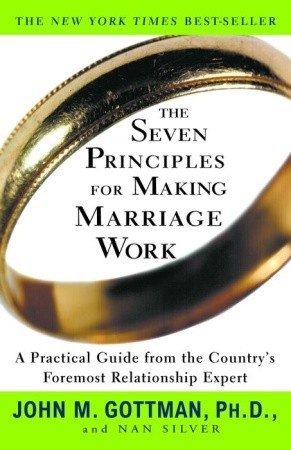
You know, with Valentine's Day being in February and all, I decided it was a good month to work on improving my marriage. If you haven't heard of Dr. Gottman before, he's basically the country's leading academic expert on relationships. I'd only read a few of his shorter articles before, but this book had been on my to-read list for a while, so when I found it available for audio book download, I jumped on it. So, I don't actually recommend this one as an audio book (there are a lot of check lists and quizzes that would have been far easier to process if I had seen them on paper instead of listening to them meticulously read aloud), but I do completely recommend this book for anyone in a relationship. This stuff is just absolutely brilliant. According to his assessment quizzes, my marriage is doing quite well, but there was still tons of stuff I took away to think about and work on. I actually made a list of questions and topics from this book to talk about with my husband for our Valentine's date, and we had such a great discussion that it turned into one of our best dates ever. Or at least in a very long time. Now I really want to read his book on raising emotionally intelligent children.

The Age of Innocence by Edith Wharton

Ah, finally, a book for my class that I could really enjoy! Despite the fact that she is critical and pessimistic along with the rest of her Modern compatriots, Wharton still has hints of hope that totally redeem her. And this book is just beautiful. Sure, the ending isn't all roses and flowers, but nobody wants that from their high-brow literature anyway (except for maybe me). Honestly, I think Wharton might be the best female author this country has ever produced (maybe even the best author period, but it's been a while since I've read any Henry James, and I remember liking him quite a bit too). Obviously, this is the book I chose to write my paper on, and even if my paper wasn't that good, the book still is.

Wow, six books in one short month. That's the most I've done in a while (yay for audio books and a long commute!). March isn't likely to be as good. (I've stopped finishing the books for my novels class. This always happens about mid-semester. Once they start assigning papers, I kind of stop doing the assigned reading. It's all about survival and priorities in grad school.)

Tuesday, February 3, 2015

Books I Read in January

Last year I didn't count any of the books I read for school as part of my total for books read every month. This was because I mostly had poetry courses, or was assigned more obscure academic stuff. But this year I'm taking a course on the early Twentieth Century American novel, and while this is nowhere close to my favorite era/author nationality for novels (I prefer the British, always and forever), I'm still going to include most of these books here because honestly, I have or could have read any of these for pleasure anyway. And maybe someone out there cares about my opinion of the books during this golden age of American literary production (doubtful).

Moving forward. Only three books this month. Not a great showing. Apparently I can only finish a book if it's assigned reading.

Pride and Prejudice by Jane Austen

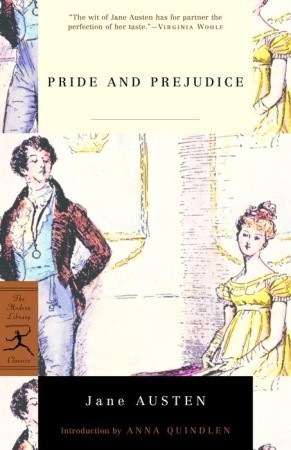
This one was a reread, and Ms. Austen's brilliance continues to hold up. What a remarkable woman. If you haven't read this one yet, WHY NOT? Male or female, your literary life will never be complete until you do. Fix it immediately.


Babbitt by Sinclair Lewis

This was the first novel we had to read for class. I'd heard of Lewis before, but I'd never heard of Babbitt. I'm not sure I recommend this one unless you are terribly interested in the conflicted feelings around the rise of the American business man. Honestly, this book felt very similar to Gatsby for me, only it's about the upper middle class instead of the upper upper class. Lots of the meaninglessness of our modern society. A bit depressing and full of annoying 1920s slang. Also, Lewis hated conservatives. Still, it was an interesting read.


A Lost Lady by Willa Cather

The only other Cather book I've ever read is My Antonia, and I did not care for it much. Maybe it's because I'm older or in a different place in life, but I actually found this book quite good. It's a short read, and still a bit depressing (it is about a "lost lady" after all), but I was able to appreciate what Cather was saying much more this time around. I think this one should be talked about/read more.