Quantcast
Showing posts with label Book Reviews. Show all posts

Wednesday, July 24, 2019

Review: More Than Enough


Do you guys follow Miranda at Live Free Creative Co? I've followed her for a while now, and I really, really like her. I like how deeply she thinks about things, I like the way she lives her life just going for her dreams and doing what makes her happy, and I like a lot of things about her style (even though it is very opposite of mine). So when she wrote a book and announced an open invitation to join her launch team for the release of said book this summer, I thought, why not? I want to read the book anyway, and it'll be summer! I'll have plenty of time to read and review it!

Well, the original release date was June 25th, which then got pushed back to July 9th, which is when I was supposed to be telling you all about this book. But my summer has been just a little bit busier than I anticipated, and clearly I'm behind. But, better late than never, right? Right!

Okay, here's the backstory on this book. Miranda, her lawyer husband (maybe another reason I like her, she's married to a lawyer too), and three kids are living their normal modern lives in a nice big beautiful home in Austin, Texas (oh yes, another Texas ex-pat!), basically living out the American dream, when at the beginning of 2017 she has this big epiphany/idea. She was looking around at their big beautiful home, and especially at all the stuff they had filled it up with, and thought, "We seriously have everything we need. We have more than enough. We should stop buying stuff!" So they did. For an entire year, her family stopped buying non-consumable items completely. No new clothes. No home decor items. No new technology. No new toys. To complicate the "Challenge" (as she refers to it), they moved half-way through the year to Virginia (or North Carolina? somewhere over there, I forget), and ended up downsizing drastically. So what started as a practice in not adding to their stuff also became a process of getting rid of as much of their stuff as they possibly could.

So after their year of no spending, she decides to write a book about their experience, which I have now read, called More Than Enough: How One Family Cultivated a More Abundant Life Through a Year of Practical Minimalism. Let's talk about this book, because I have a lot of thoughts about it. I followed her blog throughout the year of her big "Challenge," so I wondered how much I would actually get out of the book, and while much of the story was familiar to me, there was still quite a bit of reflection/lesson-drawing that gave me plenty to chew on. So, in no particular order, here are some of my thoughts about the book.

I spent the first part of the book wondering if I was the target audience for her message. First off, I absolutely do not identify at all with the type of retail therapy or impulse shopper she seems to be speaking to as a universal audience. Spending money actually makes me feel anxious, I'm not generally the type of person to stray off my intended list (and I always have a list), and I never go to stores "just for fun." I'm not sure I've set foot in a Target since moving to Kansas (there was a Target across the street from us in Houston, which made it more convenient, but now that I actually have to drive to any store I go to, I stick to the generally cheaper and closer Walmart). Maybe I'm different than most people this way, but I generally do not enjoy shopping, so her insights about the time and money she was saving by not doing all this impulse/therapy shopping didn't really resonate with me.

Second, I also found her general class privilege (and lack of awareness about it) a little off-putting. She never talks about her family's income (although it's clear that they have a very comfortable upper-middle-class income), and only spends one short chapter on money (in which it became glaringly obvious that our attitudes and opinions about money are extremely different), and at points it felt to me like she was only speaking to people who have the privilege of choosing between buying more cute Anthropology plates or going on fabulous European vacations (choose less stuff, more adventure!) without really acknowledging that for many people, the actual choice is between less stuff and more debt.

So I kept thinking, am I the target audience for this? Is she really only speaking to people with so much financial security they don't have to worry about money, only about the philosophical costs of materialism? And here's where I had my epiphany: Just because I am not buying things because of budget constraints and she is not buying things because of philosophy doesn't meant I can't use her philosophy to feel better about my own position and heal my own relationship to stuff! Maybe I should've seen this from the beginning, but really, maybe I can benefit even more from her insights than someone who is not so worried about their budget! I think the mindset shift for me can be summed up like this, "I don't buy all the things right now because of my budget, but even if I had all the money in the world, I would still choose to limit what I spend money on because less stuff really does make me happier" or something like that.

(*I also just want to stress here that we are in no way in real financial difficulties, my husband makes a great salary and we are probably considered upper-middle-class as well. We never lack for basics, we own a nice house with very nice things that fill it up, and we occasionally take those fabulous European vacations too, just with a lot more budgeting and saving and financial number crunching in the meantime. I don't want to pretend we are in any way super constrained, I just generally approach all of my shopping from a place of budget-awareness, while Miranda on the other hand doesn't seem to have or need a budget, or at least doesn't seem worried about one as she literally has a chapter titled "It's Not About the Money.")

After having this epiphany, I began enjoying the book quite a bit more and began to see the ways all of her insights were very useful for me. So here are some of my biggest take-aways:

What Does It Mean To Have Enough?

This was a question I mulled over quite a bit while reading. Miranda began her "Challenge" because of her realization that she had more than enough. She had a craft room bursting with supplies and storage bins with all sorts of extras and was sure that should any materialistic need arise, they could craft what they needed. She tells stories of all the things they did end up making, clay toys and make-shift Pokemon card binders among other things, using and re-using stuff they already had.

I, however, do not have a bursting collection of craft supplies (not a crafter, don't own a sewing machine, etc.), and went through my Marie Kondo phase pretty seriously a few years ago, so really don't have a lot of "extra" stuff. When we upgraded from our two bedroom apartment to our four bedroom house two years ago, we had several rooms that remained embarrassingly bare for quite a while, and I still feel like there is a never ending list of house projects I would love to spend money on. But I did give some serious thought to the question of, were I to do some version of this challenge myself, would we have "enough" to survive without buying any non-consumable goods? ...

And the answer, I think, is yes. I mean, it would require some creative work arounds. There are a few things we know we plan to purchase in the next few months: a bed for our toddler (she's still in the crib, and I guess she could continue sleeping in the crib indefinitely, but really, there comes a point, and I think by her third birthday it's reasonable to get her a real bed, right?), and a suit for my oldest son (he's getting baptized in December, and maybe a suit isn't entirely necessary, but some sort of new winter-appropriate Sunday clothing situation will probably be necessary given his growth this summer). There will probably be some other clothing and shoe purchases for the kids that will feel urgent. But in the end, we could find a way around each one of these purchases. Not indefinitely, but for a year, we really could probably manage it.

Does that mean we have enough?

One thing that Miranda wrote that really stuck with me is that "Enough wasn't an amount. It was a decision." So I think the answer to the question above is yes. If we decided it, then we have enough. We have enough so that we could mostly comfortably live for a year without buying a single new non-consumable.

And that was a really, really nice thing to realize. We have enough. It also made me feel incredibly grateful to realize that, which brings me to my next take-away...

Gratitude Really is Soooooo Important

Miranda spends a chapter talking about gratitude and it's importance. She was actually playing a Pollyanna-ish gratitude game with her children during a trip to Costco, in which she reminded them of all the great toys and things they already had to be grateful for (like an iPad and trampoline), and I remember thinking, "Well, my kids don't even have any of that stuff, but I'm actually grateful that we don't!"

But really, a focus on gratitude for what you already have makes you feel less covetous for you don't have. I know I have an actual physical list of all the things I know I want to buy for our house once we save up the money for it (starting with the new dresser to finish off our bedroom make-over, to a grill for the deck, to new kitchen counter-tops, and a whole bunch of other things), and focusing on that list just makes me feel the sense of lack. But I also feel incredibly grateful for all the beautiful things we do have, and focusing on those feelings of gratitude will lead to more overall peace and contentment in life. Miranda offers great practical tips at the end of every chapter, but I think the gratitude practice suggestions at the end of this chapter were my favorite.

Other Random Tid-bits

-I loved her suggestion to build community through borrowing. I've been the recipient of lots of good hand-me-downs when it comes to baby and kid clothes, which I love beyond anything, but there are lots of other things that can be shared too (books, tools, fancy dishes, etc.) and I'd love to tap into that kind of community borrowing more than I do.

-I loved her thoughts about creativity in minimalism. I still feel some conflicts here (what if you are creating products/content meant to be consumed by others, how do we balance that with respect for our consumers need for minimalism?), but I still whole-heartedly agree that the best way to really suck the marrow out of life is to create stuff (my stuff usually involves creating with words, but occasionally involves refinishing a chair!).

-I also really appreciated her chapter on time and energy as resources. I feel like in a lot of time management literature, energy levels don't get talked about enough as a crucial part of productivity. I love the way Miranda brought up how much time and energy it takes to earn the money you are spending on stuff. Is the stuff really worth the energy you put into making that money? Does the stuff just sap more of your energy? Good questions.

-And finally, I just appreciated in general how this was a minimalism book that focused on controlling what you bring into the home, as opposed to most minimalism books that focus on getting rid of what you already have. I think this is an important part of minimalism, not bringing the junk home in the first place.

In summary, I really appreciated all of the thoughtful insights and suggestions Miranda presented in her book, and I'm also just really happy for her that she wrote it and made this book happen (she really is living her dreams). After analyzing our spending tracking for the first two quarters of 2019, my husband and I need to do a little belt tightening to meet our savings goals for this year, and I think this book gave me just the motivation I needed to feel grateful for that instead of frustrated. It's true that for me it's far more encouraging to think about budgeting in terms of not bringing excess clutter into our lives than in thinking of it as restriction.

Here's to minimalism! Here's to deciding that we have enough! Here's to gratitude for a beautiful and wonderful life!

Thursday, March 9, 2017

Book Review: The Course of Love

The Course of Love by Alain De Botton

I've been trying to write this book review since I read it at the beginning of January. Partly, I blame the delay on the new baby. But partly, I've just had a hard time figuring out exactly how I feel about this book.

I picked up this book because Modern Mrs. Darcy raved about it last summer. I knew nothing about De Botton before reading this book (and still know relatively little, other than that he's a philosopher who usually writes nonfiction philosophy), but I found it to be a book that inspired pretty polarizing emotions in me. There were parts I LOVED with all the emotions those capital letters can convey. And there were parts that, while hate may be too strong a word, I completely disagreed with and found flawed and frustrating. At points this book resonated so deeply with me I felt like De Botton had been a fly on the wall of my marriage, and at other times I felt so completely different from the couple in this book that I was sure we must be a separate species. I wanted to recommend this book to everyone, and at the same time recommend it to no one because I felt I would have to explain the flaws that I did not agree with. I really wanted to bring this book up in our Book Blab on romance, but my thoughts on this book could more than fill an entire episode alone, so I felt it best not to mention it at all.

Monday, November 21, 2016

Review: Leave Me


I stumbled across this book almost by accident, just seeing it while scrolling through my library's app on my phone. I read If I Stay by Forman a few years ago. Confession: I picked it up in a bookstore and speed read the whole thing in one sitting because I didn't actually want to buy the book but the premise was so interesting I wanted to see where it was going.

A similar thing happened with this one. I read the little blurb, and was immediately intrigued. A mother who actually walks away from her unsupportive, ungrateful children and husband? Hm...

Thursday, October 13, 2016

Review: Teach Your Child to Read in 100 Easy Lessons

Teach Your Child to Read in 100 Easy Lessons Book Review


Conversations I've had with my four-year-old over the past few months:

Driving in the car, light turns green and I step on the gas.
Josh: Mom! I wasn't done reading that sign! You're supposed to wait till I sound out all the words!
Me: Sorry bud, I have to drive when it's time to drive.
Josh: But what did that sign say?!?!?
Me: I don't know. I didn't see what sign you were looking at.
Josh: Turn around! Drive back! I need to read it!
Me: Sorry kid. You'll just have to read it next time we drive by.

Tuesday, September 6, 2016

Being Mortal: A Review and Thoughts


I think I added this book to my library holds queue after I finished When Breathe Becomes Air because I was all like "I need more books about dying written by doctors!" Okay, so Atul Gawande is not actually facing/reflecting on his own imminent death, nor is this a poetic tribute to what it means to be alive. This one is much more straight fact nonfiction.

But it's still very well written, incredibly interesting, and a very important read. To give a brief summary, Gawande realizes at some point in his career that he, as a doctor, and the modern medical profession as a whole, really don't know how to face death. To modern medicine, death is a failure, death is to be avoided at all cost, whatever cost. There is always another treatment, always another surgery, always another experimental drug, and never a way to tell patients they are going to die. And yet, we all die, we are all still mortal. So Gawande sets out to explore what death means in this modern medical environment, and how best to go about the medicalized process of dying. The first part of this book focuses on aging and the medical practice of geriatrics, while the second half focuses on the medical journeys of people with terminal illnesses.

So, this is a super depressing book. It's not fun to think about death, or even just growing older. In fact, my husband kept asking me why I was reading this book because I would complain to him every night about all the discouraging and depressing things I was reading, and my answer was, "It feels important. It feels like something we should all be thinking about a little bit more."

Thursday, August 25, 2016

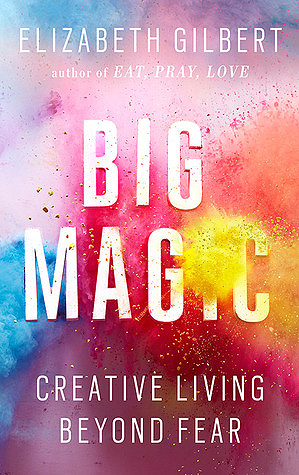
Big Magic: Review and Thoughts

Oh, hey, if you came by today looking for that Book Blab live stream I promised you, well, it's not happening today. A combination of technical difficulties (like the entire Blab social media platform being dissolved... ugh, technology!) and scheduling conflicts means we are regrouping. But we're still excited about this episode, so we'll figure something out and get it posted in the near future. Keep an eye out.


So, remember when I made that goal to start writing a book this year? Well, in preparation, I decided to read some motivational/inspiring/instructive books on writing. I started off with Elizabeth Gilbert's book Big Magic, which came out last year, I think?

Now, here's where I confess that I've not read anything else by Gilbert. I never read Eat, Pray, Love, and I suspect I wouldn't like it if I ever did read it. In fact, I suspect I wouldn't really like any of her other novels and I don't have plans to read them.

But  Big Magic? I totally loved. Yes, it's a bit woo-woo and probably not for everyone. But while I didn't agree with everything, I agreed with so much of Gilbert's advice that I found myself wishing I had the paper copy of the book (I listened to it on audio) so I could highlight or copy out quotes.

Tuesday, July 26, 2016

Connecting With, Loving, and Accepting My Children (or Book Review: Peaceful Parent, Happy Kids)


A few months ago, my blogging friend Amy posted a funny list of twenty parenting books she has read in the past few years, and the takeaways she remembers from each book (spoiler: very little, and sometimes nothing at all). This is generally pretty true for me too. When I'm in the middle of a parenting book, I'm like, "This is great stuff! I'm going to implement all of this and become the best parent ever!" And then fast forward a few months, and pretty much nothing has changed, and I barely even remember the title of that book, let alone any of its advice.

So take it with a grain of salt when I say that Peaceful Parent, Happy Kids: How to Stop Yelling and Start Connecting by Dr. Laura Markham is the best parenting book I've ever read. It is entirely possible that six months from now, I will have completely forgotten everything about this book and absolutely nothing will have changed in my day-to-day life. Right now, I just happen to be dwelling in the happy afterglow of reading this book and drinking the cool-aid, it may not actually be all that wonderful.

Wednesday, June 8, 2016

Giveaway! Windstorm Trilogy by Katie Robison

*This Giveaway is closed! A winner has been selected and notified (congratulations, Ann-Marie!). Thanks so much to all of you who participated.*

I mentioned on The Book Blab a few months ago that one of my most anticipated releases for 2016 was a book called Firestorm, the final book in the Windstorm Trilogy written by the incredibly smart and talented (and also my real-life friend) Katie Robison.

Well, yesterday (June 7th) was the big release day, and as part of the festivities Katie asked if I would be willing to be part of the Firestorm release blog tour and host a giveaway of the trilogy here on Such Stuff. Obviously it took me about 0.0 seconds to enthusiastically agree, and so I present, my first ever giveaway!


More details on the giveaway are below, but first, I thought you might like to know a little bit about these books and the awesome author behind them, so I've got a brief mini-review on each book, and then an extra fun little interview with Katie.

Tuesday, November 24, 2015

Book Review: Peter Pan

Peter Pan by J. M. Barrie

I'm assuming you don't need a summary of this one, right? If you haven't seen one movie version of this, you've probably seen another. Or a spin-off movie, like Hook or Finding Neverland (both of which, I would argue, are better Peter Pan adaptations than any movie of the original story).

But how many of you have actually read the original book?

If there is a single message I want to convey in this book review, it is this: no movie or other adaptation has done this book justice. The original is delightful, magical, insightful, and beautiful in a way that I was completely unprepared for, despite the fact I've seen nearly every movie version.

In short, it is SO GOOD.

Monday, October 19, 2015

Book Review: Half the Sky

Half the Sky book review
One night as we were getting ready for bed, I had the following conversation with my husband:

Me: "Hey, thanks for not beating me up, and sleeping around with prostitutes and thereby infecting me with aids."

Him: "Wow. Setting the bar pretty low there, aren't you?"

Me: "Apparently, worldwide, that's a pretty high bar as husbands go. Also, thanks for not spending all our money on alcohol so there's nothing to feed the kids."

Him: "You're welcome."

Obviously, this conversation happened while I was in the middle of Half the Sky.

Friday, August 28, 2015

Book Review: Go Set a Watchman


When Harper Lee's new novel Go Set a Watchman was released on July 14th, I looked at it longingly on the display at the grocery store.

I keep myself to a pretty strict book-buying policy: I don't buy any books unless I've already read them, know I love them, and know they are worth owning (and worth re-reading). Usually this policy works really well for me. My bank account appreciates it, my bookshelves appreciate it, and my library gets very faithful patronage from me. But every now and then, like when a popular new release comes out, I reconsider this policy. Nothing has tempted me so badly as Go Set a Watchman to break tradition and buy a book I hadn't read. I was #107 on the wait list at my library. I suspected I would like it. And I wanted to be cool like everybody else and read it NOW.

However, I exercised restraint, told myself to wait it out, and lo and behold, my library came through for me! I don't know if a bunch of people dropped their holds after hearing the spoilers, or if my library system decided to invest in a few more copies, but I got the email notifying me the book was in just a month after the release date. Then I devoured the book in two days.

So, am I glad I waited?

In all honesty, I would not have considered it a waste of money had I purchased this book. And while I don't *love* it enough to go out and buy it right now, should I ever happen across a copy I would be more than pleased to find a home for it on my shelves.

In other words, I completely recommend this book. Like I said, you don't need to buy it, but it is very, very well worth the reading experience.

I know there have been a ton of mixed reviews, and a lot of people saying they didn't like it, or don't want to read it at all because of the spoilers about Atticus' fall from grace. Look, I know plenty has already been written about this book elsewhere, but let me throw my two cents in the ring and see if I can convince you to pick up the book yourself (assuming you haven't already).

First off, the caveats. This is an unedited manuscript, and that shows through. It was not as polished as most published books, and certainly not as polished as To Kill A Mokingbird. There were awkward transitions and areas of excess where I'm sure a skilled editor would have encouraged cuts and revisions. It wasn't perfect.

That being said, it was still very powerful. The saddest part about reading this book was realizing that while some of the specific issues are no longer current (thankfully no one is spouting trash about the genetic inferiority of black people these days), most of the big ideas and problems these characters grappled with are still being fought out today. It almost felt like the Civil Rights movement happened, yet here we are sixty years later and these same problems are just as relevant. That was depressing to realize.

But I must say that I loved the way Harper Lee grappled with these issues of race, and other problems like losing your child-like faith in the goodness of other human beings (especially your father), in such a beautifully raw, powerful, and unique way. I would love to read this book again just to think through the way she presented certain ideas, and then turned them upside down.

For instance (*spoilers ahead* read at your own risk), Scout clearly seems to hold the moral high ground with her staunch position in favor of race equality, but in the very last scene her uncle calls her a bigot, because she is intolerant of the views her father holds. She doesn't want her father, or anyone, to hold those beliefs, so in a way, that does make her intolerant. Atticus is actually set up as the more tolerant figure because he allows all people to express their opinions without judgment, even opinions he may or may not personally agree with. I thought that was a super interesting turn, and really made me question and think about what tolerance is. Tolerance is always touted as a virtue, but is it truly a virtue to tolerate the immoral positions and speech of others? Harper Lee would seem to be saying so.

There were many more complex issues like this that Lee addressed, and that deserve closer consideration and unpacking. There were layers to all her arguments, and I actually liked how she tried to be sympathetic to all sides. I'd like to think that if I had lived in the South during this era, I would've been a Scout, with the strong conviction in the equality of all people, but after reading this book, I realized that so often we are steeped in a cultural tradition and history where we grasp at justifications, and can't see our own faults. I probably would've been one of the silly girls at the party, spouting the language of the men around me. Scout asks herself over and over again how she grew up in such a place and completely missed out on the message everyone else seemed so indoctrinated with, and that is a question I assume Lee asked herself. Through the uncle and the speech of Atticus, Lee outlined the history and position and of the Southern White Man, the tradition he came out of, and the convoluted justification for segregation. While Lee still firmly condemned this position, she also allowed room for compassion, and I was fascinated by that sympathy.

Let's get to the elephant in the room. Yes, Atticus turns out to be a racist segregationist. This is heart-breaking for both Scout and the reader. Some of his language is truly shocking and disappointing. I can see how this would ruin the reading experience for some, especially those who really love the TKAM Atticus. I know some people choose to read these as two completely separate novels, where one story doesn't have to touch the other story, and that's fine. There are enough differences that you can think of the two Atticuses as completely separate people and it would work.

However, I personally found that this turn made Atticus a more real and believable character. Yes, it knocked him off the pedestal, yes it was devastating, but it was also humanizing. It's hard to explain, but it made him harder to love and easier to love at the same time. It was complex, but I found it to be a net positive complex, not a net negative. It didn't ruin it for me.

I do not guarantee that everyone will love this book, but I do think the ideas and the issues are explored in a complex and nuanced way, and I think it is worth reading about them just to consider them. Besides the complexity, there are also many moments of fun and humor. There are flashbacks to different parts of Scout's childhood (she is called Jean Louise in the book, but I have a hard time thinking of her as anything but Scout), and those vignettes are hilarious and memorable (and very likely the reason Lee's editor suggested she rewrite the book from the point of view of that childhood Scout). Scout herself is still one of the best female protagonists in print today. She is fiery and fantastic. There is much to love in this book.

It may not be the best or most polished book I've ever read, but I think this one will stay with me for a while. I also think I will want to revisit it at some point and think through these ideas again. It is well worth the read. I recommend 100%.

Thursday, August 20, 2015

Review X2: Books on Time Managment


So, you know I've been thinking a lot about time management lately, what with my time diary experiment and all. Part of the reason I've become so interested in the topic is because I started following author Laura Vanderkam's blog earlier this year, and I find some of her ideas intriguing, so I thought I probably ought to read one or two of her books. Both I Know How She Does It and 168 Hours came in from my library holds within a week of each other, so I read them back to back, which was a bit of a time management overdose. But, SO. MANY. THOUGHTS.

For a bit of background: I Know How She Does It (stupid title, don't you think? I get what it's supposed to be doing, but I still think it's stupid) takes a look at the time management strategies of moms who work in high powered careers, and 168 Hours takes a more general look at time management, and how we all should be spending our time. There were things I loved, and things I hated, and I feel like I just need to write out my thoughts here to sort through them. So bear with me. Here we go.

WHAT I DIDN'T LIKE

After reading both of these books, I would describe Laura Vanderkam as the Marie Kondo of time management, in that she makes the argument that if what you do with your time doesn't bring you joy, then you shouldn't be doing it. As much as I think this approach works for ownership of stuff, I think it's a bit fuzzier when applied to how you spend your time. Her advice was much along the lines of: You hate doing laundry? Outsource it! You hate your job? Get a new one! Which is all fine and well and I'm sure works for some people of a certain socio-economic status. But most real people just don't have the luxury of paying a cleaning service, or hiring a personal chef, or simply building a dream career out of thin air. So that kind of bothered me.

It helped to realize who Vanderkam's target audience is: well-educated, ambitious people with busy, affluent careers, preferably in dual-income homes. This is explicitly stated in How She Does It. 168 Hours is supposed to have a broader appeal, but if you view this books as intended for general audiences, Vanderkam comes across as wildly out of touch with reality. If you realize she is writing for a privileged upper class (and doesn't really seem to acknowledge that other classes exist and have time management issues), then her suggestions make more sense.

I am not really a part of that target audience, which is why I think I had so many issues with her suggestions, but was also so partially intrigued by this foreign, privileged view of life and time. While I like to think of myself as a well-educated, busy person, my background and upbringing is solidly middle-class. Possibly even lower-middle class (my parent's incomes fluctuated widely at times). Both of my parents worked, but they never made use of the luxuries of a cleaning service, lawn service, or even child-care. The idea was sort of unthinkable. The message growing up was clearly never pay someone to do what you can do yourself, and also that there is something character building about taking care of your own home, and teaching your children to work through chores and that kind of thing. So I did NOT fully buy into the argument about outsourcing all the work you don't want to do. (That being said, how nice would it be to pay someone else to scrub my toilets? I'm not going to lie that it sorely tempts me. But then, I want my kids to have chores and do that kind of thing, and how will they learn if they just see Mommy paying someone else to do it? I have conflicted feelings.)

Also, in How She Does It I was a little bit... annoyed by her definition of "Having It All." For women, she defined this as having at least 1 child, and earning more than $100,000 annually (personal income, not husband's or combined income). I thought that $100,000 figure was a bit arbitrary, but that aside, she didn't include anything else in her definition like quality of life, quality of familial relationships, job satisfaction, or general happiness level. I'm sorry, but if you work in a grinding job you hate, have one kid, and are completely miserable, I do not think that qualifies as "Having It All." At the same time, my own personal career earning potential is well below that $100,000 mark. Does that mean that, should I ever develop a career, I can never "Have It All"? Once again, annoyed by that socio-economic status assumption underlying Vanderkam's ideas.

Moving on.

The big message of How She Does It is to show how women with these demanding careers actually balance work and family time, and one of the things she kept saying over and over was that when they actually recorded their time in time diaries, these women were surprised at how much time they were spending with their children each week, and that once they looked at the numbers, many of them felt like they were spending "enough" time. This is where I had questions.

I'm very glad these women felt like they were able to spend "enough" time with their children, but what I always wanted Vanderkam to address was whether the children or the spouses felt like it was enough time. Perhaps this is a harder variable to measure and quantify (how do you ask a toddler if he feels like he got enough time with his mom?), but it's the anecdotes in the culture around me that raise this question.

For instance, there is the story of the female partner at my husband's law firm whose kids put an "RIP Mom" tombstone in their yard every Halloween, the joke being that they never see their mom so she might as well be dead. Then there's the friend in my church congregation whose mother had a busy and flourishing career, but who purposely chose to become a stay-at-home-mom herself because she wanted her own children to know they were more important to her than any job (the implication being she did not get that message from her own mother). And then there's the couple we know who changed their wedding date to make sure the nanny who raised the bride could be at the ceremony, as her relationship with the nanny was more important than the relationship with her parents. Did these respective mothers feel like they spent "enough" time with their kids? Because the kids sure didn't.

Now, I only have anecdotal evidence, and I'm sure there are more people I know who had power working mothers and felt like they got plenty of quality time with these mothers (we only focus on the outlier bad stories). Also, I'm pretty sure Vanderkam would argue these specific mothers in the stories above weren't managing their time well or taking advantage of strategies like the split shift. Sure, whatever. This question of relationship health is still one I would like investigated and explored more thoroughly. A relationship is two sided, and just saying that the women themselves felt they were spending enough time with their families doesn't mean all the family members would concur (my love language is quality time, and since I have a husband in one of these demanding careers, this is an issue that is sensitive to me).

Also, Vanderkam seemed rather dismissive of the idea that different personalities might view time and values differently. Her advice to busy working moms on home-life, beyond outsourcing all domestic responsibilities, was to lower your expectations, live amidst the clutter, eat quick processed meals, etc. Maybe that works for Vanderkam, but those kind of lowered living standards would be EXACTLY what would make me feel like my life was crazy (No time to pick up the clutter! No time to make healthy meals!). So many of these suggestions and strategies will work only if you have a specific personality (Vanderkam's personality). Vanderkam might say that I am just buying into specific cultural narratives that tie women down, but actually, there are a lot of people (male and female) who work and live with more peace when the house is uncluttered, and I am one of those people. I need a certain level of control over these areas before I can even BEGIN to focus or enjoy any other type of work. Anyway, just another "strategy" that wasn't for me.

WHAT I LIKED

Okay, I know I just dropped a bunch of criticism on these books, but I actually found many of her big picture ideas to be fascinating and productive.

Her overall, big argument is that as long as you prioritize your activities, you have enough time for everything you really want to do. She talks about how time is more fluid than we think, and that if we were more aware of how we actually used our time, we could find the time to do everything we really want to do. I believe this absolutely and completely. Being a full-time mom and full-time grad student has taught me this. I may not have as much concentrated, uninterrupted time as I want, but I do have time for everything I want to do.

I felt like the biggest takeaway for me, especially from How She Does It, was just mentally being present in the time you are doing something, instead of always thinking about something else. It won't feel like you have as many hours with your kids if you spend those hours thinking about work. It won't feel like you ever sleep if you tell yourself you're not getting enough sleep. Time management is more a mental game than anything else. It's about telling yourself you have enough time, being present in the moment so you feel like you were engaged during that time, and allowing yourself to spend time on things you want and not feel guilty because YOU ARE IN CONTROL OF YOUR TIME.

She talks about how we are stewards of our time, and our lives will be so much the better if we take control (rather than feeling constantly like our time is at the mercy of other people, therefore out of our control). She talks about time as the only tool we have to do the things we want to do in this life, so we should use it mindfully and purposely. I agree completely with all of these ideas.

I really love the idea of the core competencies that she talked about in 168 Hours, how you figure out what you are good at, what you enjoy, pick your priorities and your core competencies, and focus on spending your time there, not mindlessly wasting it on TV or web surfing.

Also, I really do appreciate what she is trying to do for working moms. Like I said, I had a working mother (not one who made $100,000+, but a working one nonetheless), and at some point in my life I might be a working mother too (being a student mom doesn't seem to count as being a working mom, even though it is a very similar set-up), and I really appreciate the hard evidence Vanderkam offered that just because women work, it doesn't mean they don't have many, many hours to devote to both personal and family life. I found this narrative encouraging, even if I still have reservations.

So, do I recommend these books? Despite all my issues, yes, I recommend them. I don't think you need to read both books (there's a lot of material that overlaps), and since 168 Hours is for a more general audience that's probably the one I'd recommend. Unless you actually are a working mom in a high-power career (Adrienne, I'm thinking of you), and then I would probably recommend How She Does It. Vanderkam is upper-class privileged and her strategies will not apply to everyone, but her big picture ideas are still very compelling.

Monday, October 27, 2014

Book Review: Daring Greatly

Daring Greatly by Brene Brown (I don't know how to get the accent over the last e in her name, and I'm too lazy to figure it out. Apologies.)

Summary (Courtesy of Goodreads): Researcher and thought leader Dr. Brené Brown offers a powerful new vision that encourages us to dare greatly: to embrace vulnerability and imperfection, to live wholeheartedly, and to courageously engage in our lives. Every day we experience the uncertainty, risks, and emotional exposure that define what it means to be vulnerable, or to dare greatly. Whether the arena is a new relationship, an important meeting, our creative process, or a difficult family conversation, we must find the courage to walk into vulnerability and engage with our whole hearts. In Daring Greatly, Dr. Brown challenges everything we think we know about vulnerability. Based on twelve years of research, she argues that vulnerability is not weakness, but rather our clearest path to courage, engagement, and meaningful connection. The book that Dr. Brown’s many fans have been waiting for, Daring Greatly will spark a new spirit of truth—and trust—in our organizations, families, schools, and communities.

This book came highly recommended to me by several very trusted sources but it took me a while to get around to it. And when I finally did pick it up, I wasn't sure I would personally get a lot out of this book. After all, Brown's big revelation that "vulnerability" is necessary to experience true connection and joy wasn't all that big of a revelation to me. Honestly, that was something I figured out the first time I fell in love (because I was the first one to say "I love you," and I experienced all sorts of vulnerable emotions that long week before he plucked up the courage to say it back to me).

And as far as the "shame" issues she discusses, I felt like I was beyond that too. Brown talks a lot about shame, and how when people feel shame (over body image, money, lifestyle, whatever it is) they will use coping techniques to hide their shame in an attempt to control how people perceive and connect with them. Of course, back in high school I experienced all sorts of insecurities and shame (who doesn't), and I definitely used to be a perfectionist (one of the unhealthy coping strategies she talks about). But somehow I managed to get over it. By and large, I feel like I more firmly belong in the category of "whole-hearted" peopled she described as coping well with shame, and I didn't think this book would offer me much.

But the more I read, the more I realized what a prideful assumption that was on my part. I may not feel the same types of shame as most other people in our society today, but I still feel shame about a lot of things, and I still have coping techniques that are not healthy. In some types of relationships, I am great at being open and honest and connected. But in other relationships, I feel nothing but disconnect. I feel vulnerable or uncertain, so I close up and shut down. Most of the time I attribute this to my introverted nature, but Brown helped me see how a lot of my relationship problems come from shame, and a lack of willingness to be vulnerable.

The chapter I found most insightful was how to be open to vulnerability as a parent in order to really connect with our children, and most importantly, never to use shame with our children. I've found myself thinking and reflecting about this constantly. Brown talks about how some parents use shame in an effort to control a child's choices, but that is never healthy or productive because it often leads to a child who feels fundamentally unworthy of love. Suddenly I wondered if my attempts to potty-train my toddler by pointing out all his friends who are potty-trained and telling him only babies wear diapers are communicating a sense of shame instead of motivation. I really want my children to feel comfortable with me, to feel like they can be open with me and tell me things without fear of shame or judgment from me, and that's one of the main reasons I will keep coming back to this book over and over again.

This book had some other great insights too, about feeling like we have "enough" in our lives instead of "never enough," and allowing ourselves to truly feel joy without any sort of caveat (this one was big for me, I am almost always suspicious of happy moments in life because I'm sure it means something terrible is going to happen soon). And even though I feel like I intuitively understood many of the lessons it took Brown twelve years of research to figure out, this book was still incredibly helpful for me in understanding the motivations and behaviors of others. It's heartbreaking to realize how many annoying or confusing or abrasive behaviors are motivated from a place of shame. If anything, this book has helped me have more compassion for other people, and greater courage in how I navigate relationships with other people.

In the end, I determined this book was one I needed to revisit and reread. This is a book for marking up and taking notes. It is one I needed to own (so my sister got it for me for my birthday), and like I said in my last post, that is the highest praise I can give a book.

Tuesday, August 19, 2014

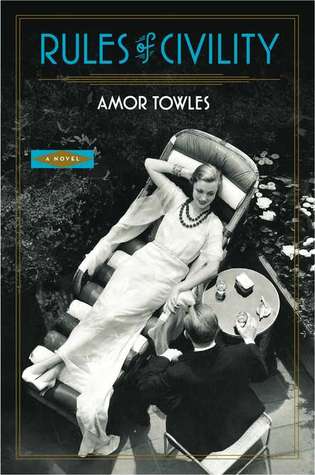
Book Review: Rules of Civility

Rules of Civility by Amor Towles

Summary (Courtesy of Goodreads): On the last night of 1937, twenty-five-year-old Katey Kontent is in a second-rate Greenwich Village jazz bar with her boardinghouse roommate stretching three dollars as far as it will go when Tinker Grey, a handsome banker with royal blue eyes and a tempered smile, happens to sit at the neighboring table. This chance encounter and its startling consequences propel Katey on a yearlong journey from a Wall Street secretarial pool toward the upper echelons of New York society and the executive suites of Condé Nast--rarefied environs where she will have little to rely upon other than a bracing wit and her own brand of cool nerve. Wooed in turn by a shy, principled multi-millionaire and an irrepressible Upper East Side ne'er-do-well, befriended by a single-minded widow who is a ahead of her time, and challenged by an imperious mentor, Katey experiences firsthand the poise secured by wealth and station and the failed aspirations that reside just below the surface. Even as she waits for circumstances to bring Tinker back into her life, she begins to realize how our most promising choices inevitably lay the groundwork for our regrets.

So I don't exactly remember where I first heard about this book, but I do remember it popped up in several places all at once the same day I was filling up my holds request list at my library, so this one was on the brain and I decided to add it to the list.

I didn't necessarily think I was going to love it. Actually, I was pretty sure I was going to hate it.

You see, this book is touted as a sort of Great Gatsby wannabe, and call me crazy, but I really dislike F. Scott Fitzgerald. I know, I know, as a former English teacher that's practically blasphemous for me to admit, but it's true. I just find his portrayal of the American dream so sad and empty and depressing. I find his characters shallow and vapid and morally reprehensible. I don't relate to those people at all.

But I do recognize that Fitzgerald was a pretty incredible writer, and I do understand why The Great Gatsby is considered a classic, so I was willing to give this one a try to see if it had any redeeming value.

And the answer is... yes and no.

I'm actually quite torn over whether I really loved this book, or hated it as much as Gatsby. It's set a decade after the roaring twenties, but even after the Great Depression there is still plenty of shallow, vapid, morally reprehensible behavior exhibited in this story of climbing the social ranks of New York. And just like the Great Gatsby, I really hated most of the characters.

But the main character? Katey, or Katherine, or Kate, or whatever people happened to call her, was someone I really related to. She was smart and level-headed, and a wonderful little introvert, and she loved Dickens! How can you not love a character who reads Dickens?

The only thing I couldn't understand about Katey was why in the world she wanted to hang out with the people she did. By and large every other character in this book (excepting maybe one or two) was completely horrible. And Tinker Grey? I mean, I kind of see why she liked him at first, but I got over him real quick, and I couldn't figure out for the life me why Katey still loved him for so long. Especially in the end, when Tinker turned out to be a bigger scumbag than even I'd anticipated, the book is still so sympathetic to him and I was just like, Why? Why does anybody like him?

So there was lots of social climbing and shallow parties and people sleeping around and all that stuff I hate about The Great Gatsby (tangent: I have such a hard time comprehending how the characters in these books can drink all the alcohol described, and not walk around completely inebriated all the time. Granted, I have zero experience with alcohol consumption, but just reading about all the drinks these people consume is enough to make me feel nauseated).

But! Then there were gems like this one (I know it's an awful long quote, feel free to skip):
One night near the end, as I was sitting at [my father's] bedside trying to entertain him with an anecdote about some nincompoop with whom I worked, out of the blue he shared a reflection which seemed such a non sequitur that I attributed it to delirium. Whatever setbacks he had faced in his life, he said, however daunting or dispiriting the unfolding of events, he always knew that he would make it through, as long as when he woke in the morning he was looking forward to his first cup coffee. Only decades later would I realize that he had been giving me a piece of advice.
            Uncompromising purpose and the search for eternal truth have an unquestionable sex appeal for the young and high-minded: but when a person loses the ability to take pleasure in the mundane—in the cigarette on the stoop or the gingersnap in the bath—she has probably put herself in unnecessary danger. What my father was trying to tell me, as he neared the conclusion of his course, was that this risk should not be treated lightly: One must be prepared to fight for one’s simple pleasure and to defend them against elegance and erudition and all manner of glamorous enticements.
            In retrospect, my cup of coffee has been the works of Charles Dickens. Admittedly, there’s something a little annoying about all those plucky under privileged kids and the aptly named agents of villainy. But I’ve come to realize that however blue my circumstances, if after finishing a chapter of a Dickens novel I feel a miss-my-stop-on-the-train sort of compulsion to read on, then everything is probably going to be just fine.
There were several passages like this that just made me stop and think, Wow, that was actually profound. And I loved this book for those nuggets of profound wisdom.

I think the real test of this book for me will be time. If I'm still thinking about those little nuggets months from now, if next year this book still stands out among all the others I've read, then I think I'll be able to truly recommend it and say it's one to read. But for now, I think it's still mostly a no. If you love Gatsby, go ahead and give this one a try. You'll probably enjoy it. But otherwise, don't go rushing this to the top of your to-read list.

Tuesday, July 29, 2014

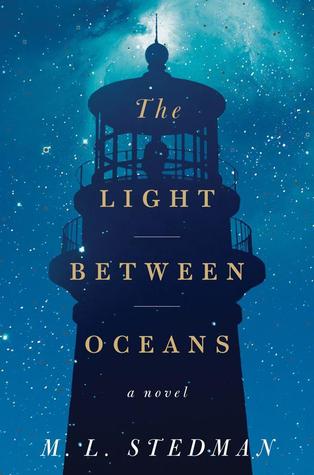
Book Review: The Light Between Oceans

The Light Between Oceans by M.L. Stedman

Summary (Courtesy of Goodreads): After four harrowing years on the Western Front, Tom Sherbourne returns to Australia and takes a job as the lighthouse keeper on Janus Rock, nearly half a day’s journey from the coast. To this isolated island, where the supply boat comes once a season and shore leaves are granted every other year at best, Tom brings a young, bold, and loving wife, Isabel. Years later, after two miscarriages and one stillbirth, the grieving Isabel hears a baby’s cries on the wind. A boat has washed up onshore carrying a dead man and a living baby. Tom, whose records as a lighthouse keeper are meticulous and whose moral principles have withstood a horrific war, wants to report the man and infant immediately. But Isabel has taken the tiny baby to her breast. Against Tom’s judgment, they claim her as their own and name her Lucy. When she is two, Tom and Isabel return to the mainland and are reminded that there are other people in the world. Their choice has devastated one of them. 

I've just got to say upfront that I listened to the audio version of this book, and I can't say I recommend that. I mean, yes, it was nice to hear everything pronounced in an Australian accent, but the reader's voice was not my favorite. He was so soft spoken that I kept having to turn my volume way up to try and catch what he was saying, and even then I feel like I missed out on a lot of the finer details (seriously, it was like he was mumbling). Also, I'm just not sure about the choice to use a male narrator here. I understand that Tom Sherbourne is probably the most common point of view in the story, but the language and descriptions (especially about babies) just felt so feminine to me that I think a female reader would have felt more natural. But whatever. It was fine.

Besides the fact that I didn't care for the audio production, and the fact that it took me FOREVER to finish this book (I think I started it back in February, which is seriously pathetic), I actually loved this book quite a bit. It was beautifully written, and the characters were so real and believable. Which was the tragic part. Especially Isabel. I felt like her flaws were so real, so understandable, and yet so unforgivable. The conundrum these people get into! It's terrible and heart-wrenching. And even though I knew the whole time that they should have notified the authorities and turned the baby in, and even when I sympathized with Tom for doing the "right" thing in the end, my heart just broke for Isabel. Being a mother myself, I felt her desire and longing and pain, and it was excruciating. And poor Tom just loved her and just wanted her to be happy, but couldn't live with a guilty conscience.

This was one of those books that really made me think, "What would I do if I were in their place?" I would like to think I would have enough sense not to keep a baby that wasn't mine, but then again, I've never had a miscarriage (knock on wood, real hard please). I can only imagine how hard it would be to lose a baby, and then have one turn up unexpectedly that for all the world looked like an unwanted orphan. I can really understand how Isabel thought it was a sign from God. But poor Hannah (the real mother)! I can't imagine her pain. What a terrible mess. There were so many times when I wondered, "What is the right thing to do here? Who really is to blame?" When I described the scenario to my husband, it was as clear as black and white who was wrong and who was to blame, but I tried explaining that when you get involved with the emotions of the characters (and in my present pregnant condition, I can't help sympathizing with the emotions of everyone in this book, especially the mothers), it's really not so clear (my dear, sweet, extremely logical husband has never been good about sympathizing with hormonally-charged emotions). This book is just about honest good people who make misguided decisions that lead to terrible messy situations where a lot of people end up hurt. And you just wonder how good people can make such a mess of things.

Anyway, I hope I'm not giving too much of the plot away for those of you who are interested. I thoroughly recommend this book to anyone looking for a well-written, heart-wrenching little story. I can't say I think this one will go down as a classic exactly, but I found it a very thought-provoking and worthwhile read. Right now I'm giving it four stars (though I might change it to five, we'll see how long it sticks with me).

Wednesday, July 9, 2014

Books I Read in June

At some point in this pregnancy, I expect to get some sort of groove going. Despite my best efforts to eat well and exercise and get (plenty) of sleep, I just feel thwarted. First there was the thyroid issues in my first trimester that made everything just so much more terrible, but gratefully my hormones have settled down and we're mostly past all those problems. Then there was that little hiccup of being anemic (which might explain why the unusual exhaustion is dragging on into the third trimester), but hopefully the recent addition of iron supplements will fix that soon. And I'm just coming to terms with the fact that this little baby doesn't like sugar, and as tragic as that fact is it's probably best for both of us. So now that I'm done with my family reunioning and travels for the summer (thus the blog absence for the past few weeks) and I'm back in control of my diet and sleep schedule, I have real hopes that the rest of this summer will start shaping up in terms of not feeling like a zombie all the time.

Here's to a positive outlook!

Anyway, somewhere in the past month (and by that, I mean sometime in June, even though June ended nine days ago) I finished three books. As pathetic as that might sound for a book blogger, this is a record for me this year (not counting the books I read for school). It's been a rough one on the pleasure reading front, but I'm feeling my old itch again to start scratching these titles off my to-read list, so hopefully the steam only builds from here.

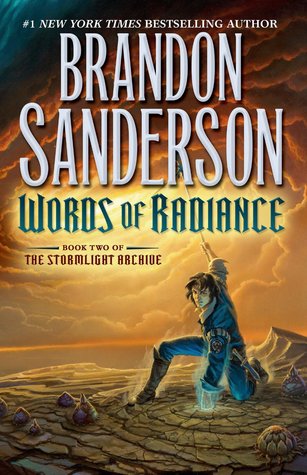
Words of Radiance by Brandon Sanderson

Yay! I actually finished this behemoth. You guys, as much as I love me my Brandon Sanderson, this Stormlight Archive series is not for the faint of heart. You must be a dedicated, hardcore, nerdy fantasy fan. You have been warned.

That being said, wow is Sanderson incredible at crafting a story. It was when I found myself comparing the themes in this book to Crime and Punishment that I really appreciated the complexity Sanderson is creating here. This is straight up great fantasy.

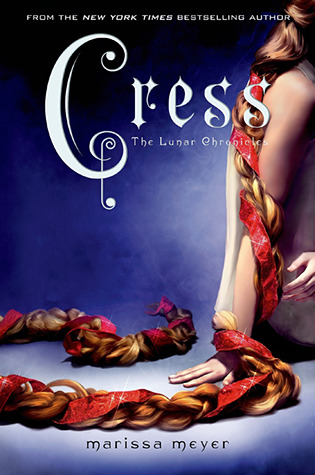
Cress by Marissa Meyer

I finished this one in two days, and it felt so good to allow myself the indulgence of such a fun, light, consuming read. So, I adore this Lunar Chronicle series, and while I don't think Cress is nearly my favorite (definitely suffered from some middle book syndrome dragging) I still enjoyed every minute of it. Such fun fairy-tale retellings.


All Joy and No Fun: The Paradox of Modern Parenthood by Jennifer Senior

I added this to my to-read list after reading Amy's review of this book, and then was pleasantly surprised to find it on the "New Non-Fiction" display at my library the very next week. So I snagged it, and subsequently devoured it. I could probably write a super long post analyzing all the thoughts and feelings I had while reading this book, but for now I'll just say that I highly recommend this book to anyone who is or might become a parent. I found it fascinating. It's not a typical parenting book, as in there is no real advice (do x, y, and z and you'll have happy, healthy, successful children), but it does provide a broad historical background on how parenting as a cultural concept has evolved over the past century or so, and I found that perspective vastly illuminating. This one gave me and my husband a lot to discuss, and I love books like that. Also, I cried all the way through her last chapter about the "joy" side of this parenting business (but that just might be the pregnancy hormones). Good stuff.

Thursday, June 19, 2014

Intellectual Reads

So I tossed around the idea of reviewing some of the books I was assigned to read this past semester in grad school, but I'd already written enough about all of them elsewhere to not really want to rehash it here on the blog, and I kind of figured that none of my readers would be really interested in full length reviews of Romantic poetry anthologies, so I've been waffling on whether to review anything or not. I mean, is anyone really interested in pleasure reading more academic stuff?

Then, I saw Modern Mrs. Darcy's post on her Summer Syllabus, the idea being she wants to read something that makes her a little bit smarter this summer, and I thought, you know what? I read some really interesting stuff this semester, and I bet maybe someone out there would be interested in reading these things too. But, for your sake, I've paired it down to the five most interesting (at least to me) books I read last semester, and the ones I feel the most confident in recommending for general (albeit, intellectual) consumption.

What I think is most funny about this list is that they all come from one course I took called The History of Narrative. I actually hated this class (the professor was terrible, and the class took place in a restaurant, which you might think sounds awesome but I was first trimester pregnant and they served seafood and I associate all memories of class discussions with intense nausea and the desire to die), but the reading list was incredible. So, without further ado, here are my current recommendations for some intellectual reads:


1. On the Origin of Stories: Evolution, Cognition, and Fiction by Brian Boyd. Okay, the concept with this one is that the human fascination with stories (and in particular, fiction stories) is the product of evolutionary adaptation, and that stories actually serve a biological function in giving us an advantage over other species. I mean, how fascinating an idea is that? We are biologically programmed to need stories? That's an idea I can totally get behind.

But as interesting as I found this one, I also struggled with it quite a bit. As a literature person, I've never studied evolution much beyond the basics, and I must admit that Brian Boyd's whole approach-- that pretty much the entire branch of Humanities (including religion) evolved as a biological adaptation-- felt a bit soulless to me. I definitely don't agree with 100% of what he argues in this book, but I still found the science and the concepts fascinating. This one made me stretch and grapple and think about really big ideas, and I appreciate it for that.

2. Journey of the Universe by Brian Thomas Swimme and Mary Evelyn Tucker. This book is a quite a bit shorter than any other on this list, and was actually written for a lay audience. Let's see, how to describe this one? This book is a good follow-up to the Origin of Stories because this is where the Humanities comes back into science. Or something. It's a bit weird, and I might even say mystical. It's kind of the history of the universe and lightly covers everything from the Big Bang to star formation and galaxies and atoms and life and all of that, but with this grand idea of making human existence meaningful (instead of soulless and accidental). So, it's kind of like the religion of science without a God. Being a religious person who believes in God (and science, the two are not mutually exclusive), I thought some of this was downright ridiculous, but as far as a synopsis of the history of the universe and a little light physics, it was quite interesting. Worth a read at least.

3. The Divine Comedy: Inferno by Dante Alighieri. For those of you who aren't very familiar with The Divine Comedy, this masterwork is actually divided into three parts: Inferno, Purgatorio, and Paradiso. We had to read the whole thing for class, and it's really quite epic and brilliant and all of that. But I will say, Inferno is by far the most interesting of the three. Let's just face it, it's more fun to read about the sinners in hell than to read about the holy angels who do nothing but sing in heaven (seriously, Dante's version of Paradise sounds downright catatonic to me). So, if you feel the need to cross this classic piece of literature off your life bucket list, take it from me and stick to the Inferno.

4. Parallel Myths by J. F. Bierlein. I've always enjoyed mythology and those types of ancient stories, and before taking this class I had a vague notion that there were certain themes or tropes that show up in a lot of mythology from different cultures, but this book! I had no idea how many similar stories there were across cultures. It was fascinating, in almost an eerie kind of way. Bierlein goes through by category (creation stories, flood stories, end-of-time stories, etc.) and retells myths from cultures all over the world, and then offers a fascinating discussion about why so many cultures share such parallel myths. There are all sorts of theories, ranging from some sort of shared human conscious (that's Freud for you) to dispersion (although that one's kind of been disproved) to simple mystery. If you are even a little bit interested in mythology, this one is a great collection, with a fascinating discussion to boot.

5. Ramayana by Valmiki, translated by William Buck. Supposedly, this translation of the Ramayana is more accessible and reader friendly than other translations. I haven't read other translations, but I thought I'd let you know in case you pick up a different version and wonder why in the world I would ever recommend this one.

So, what I knew about this epic Hindu religious poem before taking this class consisted of the excerpts from A Little Princess and what I gleaned from a funny cultural experience on my first date with my husband (that's a story for another day). I didn't know that this was probably the most popular and influential story of all time, having been told and retold for centuries across the entire southern continent of Asia. In fact, it's considered one of the few "living" epics today, as this story is still being told in traditional and modern formats (apparently there's a TV miniseries that nearly shut down the subcontinent of India when it first aired). At it's core, it's an epic love story between a husband and wife, and while it doesn't necessarily have the happiest of endings, it is a great story. If you have any interest in expanding your cultural horizons and learning more about Indian culture, this is a great place to start.

Thursday, May 29, 2014

Book Review: HypnoBirthing

HypnoBirthing: The Mongan Method

Summary (Courtesy of Goodreads): Childbirth is not something to be feared; it is a natural expression of life. With HypnoBirthing, your pregnancy and childbirth will become the gentle, life-affirming process it was meant to be. In this easy-to-understand guide, HypnoBirthing founder Marie F. Mongan explodes the myth of pain as a natural accompaniment to birth. She proves through sound medical information that it is not our bodies but our culture that has made childbirth a moment of anguish, and that when we release the fear of birth, a fear that is keeping our bodies tense and closed, we will also release the pain. HypnoBirthing is nature, not manipulation. It relaxes the mind in order to let the body work as it is designed. The HypnoBirthing exercises - positive thinking, relaxation, visualization, breathing and physical preparation — will lead to a happy and comfortable pregnancy, even if you are currently unsure of an intervention-free birth. Your confidence, trust and happy anticipation will in turn lead to the peaceful, fulfilling and bonding birth that is your right as a mother.

So, my first book review since February, and it's a pregnancy book? And not just any pregnancy book, but perhaps the most hippy-dippy crunchy-granola pregnancy book on the market (okay, probably not).

But you guys. I'm pregnant. This is just where my brain is these days. Feel free to skip if this is not your phase of life right now, or cup of tea, or whatever.

Because that summary up there is a little bit weird, let me add some clarity. First off, this book is somewhat of a text-book of sorts that is supposed to accompany a pre-natal course with a certified Hypnobirthing instructor. In the course, you go over all of the breathing and relaxation techniques talked about in the book (I assume, I haven't actually taken the course). The focus is all about having a natural, drug-free, medical-intervention free labor and delivery. And yeah, it can sound pretty weird to the average person.

I'm almost 90% certain that I read this book at some point in my first pregnancy, but my dear, sweet, super mainstream husband thought the whole concept sounded way too weird. I mean, isn't hypnosis for late-night cruise shows and other creepy entertainment venues? Also, my husband is totally on the "doctors know best" bandwagon. I, on the other hand, was intrigued by the idea of it all (it's not really side-show hypnosis, it's more like self-meditation to help manage the pain of labor), but I wasn't super sold on the idea of an un-medicated birth and, coupled with my husband's resistance, I didn't push for it. Plus, we were poor college students at the time, so forking out a couple hundred dollars to take the course, when the hospital's pre-natal class was free, was just too much to swallow.

However, one super traumatic C-section later, and I'm looking for ANYTHING that will allow me to have a more positive birth experience this second time around. So here I am, devouring everything this book has to say, eagerly buying their promises that no medication will make everything go so much smoother this time. Once again, I'm not actually taking the course with an instructor (the nearest instructor I could find lives about an hour away, which is just not feasible with my husband's work schedule), but I've got the book and accompanying cd's (full of relaxing music and relaxation scripts), and I have a feeling I will be rereading this multiple times before the big due date in October.

Even my super mainstream husband is on board this time. After watching many of our "normal" friends and family use this technique with great success over the past two years, and after witnessing the trauma I went through last time with the stupid epidural (seriously, hated the epidural more than the pain of contractions), he's promised to be my supportive companion with this whole thing.

Unfortunately, my chances of having a C-section again are still pretty high. Even though I'm working with a doctor who is very supportive of VBAC's, if the same perfect storm from my first pregnancy happens again (I'll spare you the details, but my doctor told me it was either a C-section or they would have broken my hips...) I will likely end up with another scar. But in the off chance things work out and this baby cooperates, I am 100% committed to a natural birth this time around.

Regardless of what happens for the actual delivery, I'm finding many aspects of this book to be helpful now, just in managing this pregnancy. For instance, there is a chapter discussing how negative emotions and speech can adversely affect a fetus. While the scientific support behind that may be questionable, I realized that I really have been quite negative about this whole pregnancy. I have just been SOOOOOO sick for so long (and still not feeling quite over it yet), that I've found myself adopting a "grumpy pregnant lady" persona, accepting that I will just hate life as long as I am pregnant. And whenever anyone asks me how the pregnancy is going, I immediately launch into my long list of complaints and grievances about everything I hate about being pregnant. While this attitude may or may not be affecting my baby at all, I realized this attitude was totally affecting me. I was victimizing myself, trying to convince other people that I had it so hard and was so miserable. So, my new resolution has been to change that, because I don't really want to be the grumpy pregnant lady. In reality, I AM happy to be pregnant. I AM thrilled to be having another little baby. And it probably wouldn't hurt anything if my attitude reflected that.

Second, I am LOVING the relaxation exercises. Every day, as soon as I put my kid down for nap time, I go in my room and turn on the Rainbow Relaxation track (I know, isn't that a terribly hippie title? It makes me think the next track should be about unicorns, but whatever) and you guys! The BEST naps of my life. I wake up an hour or two later in this completely zen state. Yeah, I'm not actually using nap time to be productive and get things done (thus the lack of posting recently), but I don't even care. For a few hours after doing those relaxation techniques I don't feel nauseous, I don't feel body aches, I just feel good. It's amazing.

So, to sum up, I don't buy everything this book is selling. I don't necessarily believe that birth is naturally meant to be painless (maybe for some lucky few with nice wide hips, but even then...) or that everything about the medical maternity ward is evil and meant to thwart the natural birth process. There's still a lot of hippie-dippie crunchy-granola language in this book that I just sort of looked past. That being said, I do firmly believe in the underlying position that the mind-body connection is a powerful thing, and that a woman can use her mind to manage what is going on in her body during labor. I do believe in the power of a positive attitude. And I'm certainly converting to the benefits of these self-relaxation techniques.

So yes, I wholeheartedly recommend this book to any woman of child-bearing inclination who is even remotely interested in the idea of natural child-birth.

Monday, February 3, 2014

Book Review: Bomb

Bomb: The Race to Build-- and Steal-- the World's Most Dangerous Weapon by Steve Sheinkin

Summary (Courtesy of Goodreads): In December of 1938, a chemist in a German laboratory made a shocking discovery: When placed next to radioactive material, a Uranium atom split in two. That simple discovery launched a scientific race that spanned 3 continents. In Great Britain and the United States, Soviet spies worked their way into the scientific community; in Norway, a commando force slipped behind enemy lines to attack German heavy-water manufacturing; and deep in the desert, one brilliant group of scientists was hidden away at a remote site at Los Alamos. This is the story of the plotting, the risk-taking, the deceit, and genius that created the world's most formidable weapon. This is the story of the atomic bomb.

Okay, so I love me some good non-fiction. Especially historical non-fiction. Throw in a little interesting physics, and I'm all over it (I almost minored in physics). But I was a little bit skeptical when I heard this was a YA non-fiction book. I mean, hm. When was the last time I read a really good non-fiction book aimed at teenagers?

But Sheinkin knows what he is doing. He knows how to take historical facts and turn them into a crazy suspenseful, spy-thriller, action-packed story. Honestly, this is the way history needs to be taught in our schools. I personally learned most of my history through novels anyway, (nearly all of my knowledge about the Napoleonic campaigns comes from reading War and Peace), but historical fiction is not always the best way to get your facts right. I would have devoured a book like this in middle school, and I say more of this kind of YA stuff, please!

So, I thought I knew a bit about the development of the atomic bomb before I started this book, but at the Russian spy intrigue? Fascinating stuff! Really, I thought that kind of espionage was only in the movies. Also, who knew Dr. Oppenheimer was such a character? You're quintessential absent-minded genius. All of the characters in this book were fantastic, mostly because Sheinkin really did his homework and was able to drop in little interesting stories and tid-bits that just made these characters come alive. It was so much fun.

Five stars. If you have even an inkling of interest in well written non-fiction, you should definitely read this book. It's fabulous.