Quantcast
Showing posts with label Non Fiction. Show all posts

Thursday, June 15, 2017

What It Means to Be a "Reader": Does Nonfiction Count?

Look, I love nonfiction. Nonfiction books can be amazing and informative and fascinating and gripping and wonderful. We did a whole Book Blab episode on all our favorite nonfiction books. Nonfiction is amazing, and I love reading good nonfiction books.

But.

When someone asks me my what my favorite book is (impossible question) the answer is always and forever going to be a novel. A fictional story. That's where my true love lies. To me, literature is fiction. I remember reading a quote somewhere (no idea where, so sorry I can't cite a source) about how even the word "nonfiction" sounds like an apology, denoting its inferiority. It doesn't get it's own word, it is identified simply as being not-fiction. Because obviously, fiction is the best.

So when I took my "Teaching Reading" course in college, and the professor talked about how many (maybe even most) people prefer reading nonfiction, I couldn't really believe it. Who are these people? I didn't know anyone who actually preferred nonfiction over fiction. How could I even begin to understand someone like that?

Well, over the past few months, I've slowly been coming to terms with the fact that my oldest child is probably one of those people. Here's the evidence.

1. He picked an easy reader book out at the library called The Adventures of BB8 that he absolutely loved, not because he knows or cares anything about Star Wars or the story, but because the book told a fictional story in a nonfiction format. Every page contained it's own heading, and every other page or so contained informational graphics like all the categories of different droids, or diagramming a starship, or something like that. He was the most fascinated with the Table of Contents, and ever since reading this book, all of the stories he's written on the computer have contained detailed Table of Contents, including notes for indexes and glossaries. I've never met another five-year-old who does this.

2. He was recently gifted a book about space, which he loves, but he tends to ignore the main text and focus on all the captions and factoids presented in bubbles. He's apparently really drawn to the visual layout and bite-size break up of text presented in these kinds of texts.

3. And, the most compelling piece of evidence by far is the absolute love and devotion he's shown for his favorite book of all time: Maps. I mentioned how cool this book was when we got it last year, and here's a picture of it (from last year):


Then my son got super interested in geography, and this became his new favorite book, and one year later, this is what the map book looks like today:


Yeah, it's been taped back together so many times, the spine doesn't actually exist anymore. We really just need to bite the bullet and get another copy of this book, but I'm waiting until his geography obsession abates a little so our next copy has a chance of being enjoyed by the younger children.

Anyway, the point is, my kid's favorite book is about maps. Geography. Nonfiction that is light of narrative text. I'm not denying this isn't a cool book (it is a super cool book, and deserves to be obsessed over), I'm just saying that at no point in my childhood was my favorite book about maps. Stories? Yes. Maps? No.

And it's totally, totally cool that my kid likes nonfiction books, or at least books that present bits of information alongside graphics. These are great books. It's just that when I think about people who I would define as "readers" (and I want my children to grow up to be defined as "readers"), they read fiction. Novels. And as children, they read and devoured all that wonderful children's literature. They love stories. That's what a reader is to me.

My son does enjoy stories (remember this?). He willingly participates in our nightly read-aloud sessions, and he'll sit and read both picture books and chapter books on his own, but he reserves his passion and enthusiasm for these nonfiction books. And I'm trying to tell myself this is okay. Right?

Do you count as a "reader" if the books you pour over are maps?

I actually think this was one of the things my college professor was trying to teach us English-major-avid-reader teachers-in-training, that we needed to re-frame how we defined what a "reader" was. Kids who read informational texts are "readers." Kids who read graphic novels are "readers." My kid is a "reader."

He may not love the same books I loved as a kid, or love fiction the way I love fiction, but he still loves books, and I will encourage a love of books and reading in any form it comes. When it comes to family read-alouds, I will always choose fictional novels, because everyone deserves to be exposed to classic children's literature. But when it comes to his own personal reading, he'll always be allowed to read his choice.

And if that's nonfiction, that's wonderful.

Thursday, October 6, 2016

Nonfiction That Has Changed Me

While thinking about our topic for the latest Book Blab, I started reviewing all the nonfiction books I've read over the last few years. If there has been any sort of change in my reading life from my adolescence to now, it's how much I read nonfiction. I was almost exclusively a fiction reader as a kid. Nonfiction just felt boring. Too textbooky or something.

But I LOVE reading nonfiction now. I don't know if it's because nonfiction has gotten better, or I've just woken up to the possibilities of this genre, but some of the best books I've read in recent years have been nonfiction. I just wanted to take a moment and highlight some of the most influential non-fiction books I've read over the last few years. I want to stress that this list does not represent all of my favorites or even the categorical best of the non-fiction I've read. I just realized that some of these books had been super influential in shaping me in some way, and I wanted to highlight them here. It's always a powerful thing when a book can actually change the way you think or act, and I would argue that all of these books have done that for me in some way.


Books That Were So Interesting They Blew My Mind

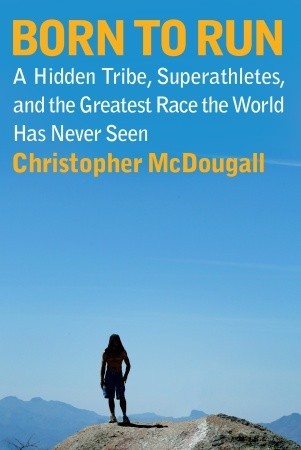
Born to Run  by Christopher McDougall

I believe I can safely credit this book with being the one to fully turn me on to non-fiction. I'd never read any book like this before, and I absolutely loved it. It was just so fascinating, and the writing was good! I'm not even a runner (and probably never will be, despite how close this book came to convincing me I should try), yet I couldn't put this book down. This was the book I told everyone about for months after reading it and forced on all my friends and family. It is a good one.


Tuesday, September 6, 2016

Being Mortal: A Review and Thoughts


I think I added this book to my library holds queue after I finished When Breathe Becomes Air because I was all like "I need more books about dying written by doctors!" Okay, so Atul Gawande is not actually facing/reflecting on his own imminent death, nor is this a poetic tribute to what it means to be alive. This one is much more straight fact nonfiction.

But it's still very well written, incredibly interesting, and a very important read. To give a brief summary, Gawande realizes at some point in his career that he, as a doctor, and the modern medical profession as a whole, really don't know how to face death. To modern medicine, death is a failure, death is to be avoided at all cost, whatever cost. There is always another treatment, always another surgery, always another experimental drug, and never a way to tell patients they are going to die. And yet, we all die, we are all still mortal. So Gawande sets out to explore what death means in this modern medical environment, and how best to go about the medicalized process of dying. The first part of this book focuses on aging and the medical practice of geriatrics, while the second half focuses on the medical journeys of people with terminal illnesses.

So, this is a super depressing book. It's not fun to think about death, or even just growing older. In fact, my husband kept asking me why I was reading this book because I would complain to him every night about all the discouraging and depressing things I was reading, and my answer was, "It feels important. It feels like something we should all be thinking about a little bit more."

Tuesday, August 9, 2016

Meditation vs. Relaxation


Way back in 2013 I read The Willpower Instinct by Kelly McGonigal. As with most such nonfiction books, I remember it being truly fascinating and thoroughly enjoyable at the time, but have since forgotten most of the content. The one thing that has stuck with me from that book was the discussion about meditation. I don't remember any details of the studies or the specific benefits or whatever, other than the general idea that meditation is inexplicably but undeniably beneficial for your brain, your self-control, and all sorts of other things.

I remember vowing that I was going to make meditation a daily part of my life. The idea of meditation really appeals to me, as do all of the purported benefits of regularly practicing meditation.

But, enter motherhood, and a couple debilitating pregnancies, and that whole earning a master's degree thing, and general sleep deprivation, and a busy life... and, well, this is a habit that has yet to become a really ingrained practice in my life.

But the busy life part is just an excuse. My real problem is that I'm just not exactly sure how to meditate. The (very little) reading I've done on it has given some idea that there are many, many different ways to approach meditation, so I kind of assume that I just need to figure out what works best for me and stick with that. But the few times I've taken a stab at developing a meditation habit, I find that whatever I'm trying feels silly, or ineffective, or way too hard to keep my focus, or just makes me fall asleep, and that makes me feel like I'm doing it wrong.

Monday, October 19, 2015

Book Review: Half the Sky

Half the Sky book review
One night as we were getting ready for bed, I had the following conversation with my husband:

Me: "Hey, thanks for not beating me up, and sleeping around with prostitutes and thereby infecting me with aids."

Him: "Wow. Setting the bar pretty low there, aren't you?"

Me: "Apparently, worldwide, that's a pretty high bar as husbands go. Also, thanks for not spending all our money on alcohol so there's nothing to feed the kids."

Him: "You're welcome."

Obviously, this conversation happened while I was in the middle of Half the Sky.

Monday, March 16, 2015

5 Life Lessons From My De-Cluttering Binge


It was about the end of January that I cane to confront the hard truth.

Over the past year or so, I had many excuses to explain away the clutter: I was pregnant, I had a new baby, I was sick, our tiny apartment was too small for a four-person growing family, if we lived in a house it would all be better. . .

But I finally confronted the truth. All excuses aside, we were just lazy, disorganized, messy people.

The beds were never made, there were always dirty dishes spread over all the counters, books and clothes and toys and mail and whatever random crap just piled up everywhere. I about died of shame any time anyone popped over for a surprise visit.

It was depressing.

So when I came across Marie Kondo's book, The Life-Changing Magic of Tidying-Up, at my local library, I grabbed it up eagerly. I knew we needed help, and something had to change.

Okay, let's start with the caveats. Marie Kondo is Japanese. All of her clients are Japanese, and it is obvious that all of her experience with organizing and decluttering is heavily influenced by her culture (sometimes I had images of neon flashing Hello Kittys or big-bellied Buddhas speaking to their underwear coming through her advice). Not everything she says or does translates perfectly to an American home. She never addresses how to handle holiday decorations, her aesthetic is clearly much more spare and modern than most Americans are comfortable with (unless you really dig that minimalist, modern look, which is cool if you do, but I find it depressing), and she does NOT have kids. Or a husband, as far as I can tell.

And yeah, if I didn't have a husband and kids, I'd like to think my little apartment would be sparkling clean all the time.

BUT, caveats aside, I literally found this book to be LIFE CHANGING! I know, it sounds extreme. Let me see if I can explain.

Kondo has developed and perfected a method (the "KonMarie" method) for organizing and tidying that she guarantees, if followed, will lead to life-long organization. She claims that she has a 100% success rate, and that none of her clients have ever relapsed. You can't argue with numbers like that, so I was more than game to try out her method.

She has five categories of things to declutter and organize:

1.) Clothes
2.) Books
3.) Papers (Files, etc.)
4.) All Other Objects
5.) Sentimental Things

To follow her method completely, you must tackle each of these categories in order (the order is very important to her), and proceed to throw out or keep items based on the criteria of whether or not it brings you joy. Then you organize only the possessions that bring you joy in a logical way where everything has a place. She goes into much more detail in the book with suggestions and tips I don't have space to discuss here, some of which I found super helpful, and some of which I'm going to ignore completely (she had some super extreme and ridiculous suggestions, I just looked past those).

As soon as I finished the book, I jumped into my own decluttering project, sticking as close to her method as I found practical. So far I've worked my way through my clothes and books (the story of my books deserves it's own post), and I'm working through my papers, but this is a HUGE project. It is going to take months to finish, but this process has already been so transformative for me. I've had so many epiphanies, finally internalized lessons I've heard all my life but never taken to heart, and learned things about myself as well. Really, I am not over exaggerating when I say the process of organizing my home has been life-changing.

Here are a few of the epiphanies I've had through this experience:

A House of Order
When I think about my home, this home that I am creating, and the ideal home I want to have, certain words come to mind. PEACE is a big one. JOY is another one. I want a home that is peaceful, calm, filled with joy and light and happy memories. And when I imagine what this home looks like, clutter is not a part of it. This home isn't obsessively clean, or stark and bare (no home with children should be), but it is a home where things have a place, and they are generally kept in place. I want a house of order, and this process has helped me focus that vision and bring it closer to reality.

"Joy" as a Material Philosophy
I've been searching for a philosophy about how to relate to material possessions. Our consumer culture focuses very much on "More! More! More!" and sometimes it's hard not to feel that pull. However I think we all recognize that's not a healthy way to think about things. The philosophy in my home growing up was "Necessity vs. Want," and while I think this is a much healthier view of things, I've talked before about how sometimes there is a fuzzy line between needs and wants, and this wasn't providing clear guidance for me. I've dabbled in the Zero Waste Home philosophy (way too stressful for me) and other minimalist philosophies, but ultimately, none of these philosophies really spoke to me.

But when Kondo started talking about only keeping things that bring you joy, that totally clicked with me. Suddenly, it doesn't have to be about whether I need it or only want it, it doesn't have to be about function, or hoarding, or not being wasteful, or other things that tended to add stress to my life. Instead, it gets to be about joy! This idea has been super profound for me. Not only is it allowing me to let go of A LOT of things we already have (we've hung on to so many ugly, low quality, broken, or underused things because it felt wasteful to throw them out), it's changing the way I bring things in. Now when I shop, instead of asking questions about value and discount and coupons and sales that leave my head spinning, I think about whether it brings me joy. When it has to actually bring you joy, you buy a lot less stuff.

Revolutionary.

Outer Order Brings Inner Calm
Possessions carry a lot of weight. Not just physically, but mentally. I really felt this the last time we packed up our lives and moved across the country (the event that started me thinking about a minimalist philosophy), but I can't believe all the stuff I still felt was necessary to hang on to (like that box of all my lesson plans from when I taught school years ago. I have them all on my computer, why have I been lugging around the physical paper? Why?) It wasn't until I started throwing things away that I realized how great it felt mentally to let that weight go. Life feels lighter, physically and mentally. I feel more in control. I feel calmer and more at peace.

Order Creates Energy
One of the things that worries me the most is the effort it takes to keep things tidy and organized. Laziness has always been the cause I've attributed to all the clutter. I'm just too lazy to clean up and put things away. It takes effort.

But what I've noticed from this experience is that when I REALLY focus on the joy of my possessions and finding the perfect way to organize them, it creates the energy and motivation in me to keep it up. Kondo talks about how no one who follows her method ever relapses, and I think it's because of this energy that is created by the order. You feel so good when everything is in the right place, when you only have things you love, that you don't want to lose that good feeling by not taking the extra five seconds to fold your pants and put them away. At least that's the way it's been working for me.

Everyone Needs a Sapce
At the end of her book, Kondo talks about how everyone needs a space, a place for their things that are their own. Considering that in my entire life I've NEVER had my own room, this idea really struck a chord with me. It also helped me gain perspective on how to deal with the tidyness habits of those I live with. As much as I like to think that this little home is my domain and I have control over everything in it and can force tidyness on everyone, that is simply not true. Kondo says (after making this mistake herself) that you should never throw out or reorganize the possessions of any other person. I'm trying to respect this line with my husband, and leave his possessions and his space to himself. However, I'm finding that my new tidyness obsession is contagious; my husband has asked for my help cleaning out his clothes too and got really excited over the idea of getting bookshelves for his game collection. I'm even trying to respect this line with my three-year-old, while at the same time teaching him how to care for his possessions and keep them tidy. It's an experiment right now, this realm of kids and clutter, one I'm still working through, but I'll write it about it in more depth some day.

This process of decluttering and reorganizing my life has been a profound experience for me. Even though I understand how this book might not be for everyone (you really have to read past the cultural quirks) I highly recommend a good decluttering binge. Look for more posts as I continue to work on this process over the next few months. I'm hoping there are even more lessons to be learned.

Monday, February 3, 2014

Book Review: Bomb

Bomb: The Race to Build-- and Steal-- the World's Most Dangerous Weapon by Steve Sheinkin

Summary (Courtesy of Goodreads): In December of 1938, a chemist in a German laboratory made a shocking discovery: When placed next to radioactive material, a Uranium atom split in two. That simple discovery launched a scientific race that spanned 3 continents. In Great Britain and the United States, Soviet spies worked their way into the scientific community; in Norway, a commando force slipped behind enemy lines to attack German heavy-water manufacturing; and deep in the desert, one brilliant group of scientists was hidden away at a remote site at Los Alamos. This is the story of the plotting, the risk-taking, the deceit, and genius that created the world's most formidable weapon. This is the story of the atomic bomb.

Okay, so I love me some good non-fiction. Especially historical non-fiction. Throw in a little interesting physics, and I'm all over it (I almost minored in physics). But I was a little bit skeptical when I heard this was a YA non-fiction book. I mean, hm. When was the last time I read a really good non-fiction book aimed at teenagers?

But Sheinkin knows what he is doing. He knows how to take historical facts and turn them into a crazy suspenseful, spy-thriller, action-packed story. Honestly, this is the way history needs to be taught in our schools. I personally learned most of my history through novels anyway, (nearly all of my knowledge about the Napoleonic campaigns comes from reading War and Peace), but historical fiction is not always the best way to get your facts right. I would have devoured a book like this in middle school, and I say more of this kind of YA stuff, please!

So, I thought I knew a bit about the development of the atomic bomb before I started this book, but at the Russian spy intrigue? Fascinating stuff! Really, I thought that kind of espionage was only in the movies. Also, who knew Dr. Oppenheimer was such a character? You're quintessential absent-minded genius. All of the characters in this book were fantastic, mostly because Sheinkin really did his homework and was able to drop in little interesting stories and tid-bits that just made these characters come alive. It was so much fun.

Five stars. If you have even an inkling of interest in well written non-fiction, you should definitely read this book. It's fabulous.

Tuesday, October 15, 2013

Book Review: Zero Waste Home

Zero Waste Home by Bea Johnson

Summary (Courtesy of Goodreads): In Zero Waste Home, Bea Johnson shares the story of how she simplified her life by reducing her waste. Today, Bea, her husband, Scott, and their two young sons produce just one quart of garbage a year, and their overall quality of life has changed for the better: they now have more time together, they've cut their annual spending by a remarkable 40 percent, and they are healthier than they've ever been. 

Yay! It's the first nonfiction I've reviewed on here since... well, it's been a while. Which is strange, because nonfiction is actually one of my favorite genres. So this one! I'm pretty sure I first heard about this one from Janssen, and I'm pretty sure that my initial reaction was, That sounds like a bunch of hippie-dippie crap. But then I read about this book in a few other places, and it stuck around in the back of my mind through our whole process of cleaning up and moving (which is a huge trash-producing process, if you've ever been through it), and I just kept thinking, How? How in the world does that family live without producing any trash? So curiosity finally got the better of me and I checked the book out from the library.

So, I'll just say this first: Bea Johnson is extreme. I mean, if you're only producing one quart of trash a year and you're living in modern America, obviously you've got to be extreme. Johnson is super dedicated to her philosophy, and the lady is hardcore. And while that's all awesome for her, I am not that dedicated to this cause. I will never make my own make-up. I'm just not going there.

That being said, I really liked a lot of what Johnson had to say about simplifying life and rejecting our culture of extreme consumerism. For our entire marriage, my husband and I have been struggling students, and I feel like we've done a relatively good job of living within our means, which has meant necessary restrictions on how much we've participated in consumer culture. But now that we have a real job, I can see how our attitudes and patterns are changing (and we haven't even gotten the first paycheck yet!). Now I find myself thinking, "Why not? We can afford that," or "How nice we can finally buy (fill in the blank)." So reading this book now right now was great timing for me. It's made me stop and really analyze my attitude towards our new spending habits, because I do NOT want to fill up our house and our lives with stuff just because we can afford it. I want to be a lot more purposeful about the things we buy. Johnson has chosen to do this through the filter of not bringing anything in that will generate waste, and I think that's an interesting way to think about things. Like I said, I'm not as dedicated to reducing our trash output, but I see the value of thinking this way.

This book also changed my perspective on buying quality over quantity. I used to firmly be in the camp of buying the absolute cheapest possible product, whether it be food or clothes or toys. My husband once asked me where I would choose to shop once we had a real clothing budget and I told him that I would probably still shop at Target, because then I could just get MORE clothes. But Johnson has convinced me that there is merit in paying a little bit more for fewer quality products that will last longer. I don't know how much I feel this applies to clothes, since trends change from season to season (I probably will still always shop at Target, because, it's Target!) but I'm definitely starting to see the benefit of this philosophy for things like appliances, kitchen gadgets, electronics, my husband's wardrobe (he doesn't care about trends anyway), etc.

This book also provoked a very interesting discussion between me and my husband about what kind of house we want to live in some day. We've talked about our dream home before (most specifically, my dream library) and we talk about things like having a game room, a full guest suite, a huge beautiful kitchen, a formal dining room, an office, bedrooms for all the kids, walk-in closets, and all located on some sprawling piece of property out in the suburbs somewhere. But this book actually made me seriously rethink that dream. We are in a two-bedroom apartment right now, and we fit so perfectly. Obviously, as more kids come, we'll want more rooms and we'll upgrade to homeowner status some day, but do we really need the humongous house? And wouldn't it be nice to live closer to town to cut down on my husband's commute? And I can barely keep our little place clean now, how much more stressful would it be to keep a huge house clean? These are all things I hadn't really thought about before, but my husband and I had a great conversation about how maybe we're open to a different kind of living situation, maybe a town-home even (although, it's pretty tough to swallow the bang-for-your-buck comparison of a town-house to homes an hour or two outside the city...).

So what I'm saying is, after reading this book I'm probably not going to make drastic changes in the way we live to reduce our trash output, but I did love Johnson's philosophy about living simply. It's not that reducing trash isn't a value for me, it's just that hauling glass jars to the grocery store and fighting junk mail would complicate my life right now, not simplify it. But this book was definitely food for thought. I really want to be more reflective about how we participate in consumer culture, and I really do want to make some changes. I want to try composting and a few of the other helpful tips Johnson recommends. This book is brim full of tips and recipes and suggestions, I took a lot of notes of things I want to think about adopting.

So is this book hippie-dippie crap? Yes, it is absolutely hippie-dippie, but it's also very interesting and thought-provoking (or maybe I'm a bit more hippie than I thought?). I completely recommend this one to anybody interested in a different perspective on living simply.

Monday, June 3, 2013

Book Review: The Willpower Instinct

The Willpower Instinct by Kelly McGonigal

Summary (Courtesy of Goodreads): After years of watching her students struggling with their choices, health psychologist Kelly McGonigal, Ph.D., realized that much of what people believe about willpower is actually sabotaging their success. Committed to sharing what the scientific community already knew about self-control, McGonigal created a course called "The Science of Willpower" for Stanford University's Continuing Studies Program. The course was an instant hit and spawned the hugely successful Psychology Today blog with the same name. Informed by the latest research and combining cutting-edge insights from psychology, economics, neuroscience, and medicine, McGonigal's book explains exactly what willpower is, how it works, and why it matters. 

Sometimes self-help books aren't actually that helpful. And sometimes scientific non-fiction is more interesting than it is practical. This book, however, is a good combination of both interesting and incredibly practical.

McGonigal (who teaches at Standford University, and I can't tell you how tempted I am to move to California to enroll in one of her courses just so I can call her Professor McGonigal) is a specialist in the science of self-control. She spends a lot of time explaining the neuroscience behind our decision making process, and how a lot of what we believe about self-control and willpower is actually not true. Honestly, I found this stuff fascinating.

In each chapter, McGonigal focuses on one aspect of self-control, explains the studies and research behind what is going on in the brain, and offers strategies for increasing self-control. I loved this organization of the book, especially the helpful chapter summaries at the end that succinctly state each strategy discussed. She instructs the reader to pick a willpower challenge at the beginning of the book, and then to try each of the strategies respectively to see what is most effective. And some of these strategies for gaining self-control are not as intuitive as you would think.

My willpower challenge while reading this book was finding the self-control to effectively study for the GRE (since I'm working on my grad school application right now). Being a full-time stay-at-home-mom meant that I had to carve my study time out during naptime or after my son went to bed, but often it was far more tempting for me to take a nap myself. Or watch TV. Or read for pleasure. Or do any of those million and one things that you can't do when you have a toddler demanding your attention. And studying for the GRE wasn't the most fun option for my break time (even if it was potentially the most rewarding). Here are a few of the suggested strategies that I found particularly effective:

-Meditation. Yes, even just five minutes of meditation a day can increase your willpower. This has something to do with increasing the flow of oxygen to your prefontal cortex, or whatever, but I was surprised at how well this one actually works for me. Days with meditation were noticeably better than days without it.
-Meet Your Future Self. This one is about being self-reflective about your future, and trying to keep future benefits weighed in the balance of present rewards. So I would tell myself things like, "Yes, my present self really, really, really wants to take a nap. But my future self will really love me if I study and do well enough on the GRE to get a scholarship. The rewards of a scholarship beat the fleeting pleasure of a nap."
-Catch Self-Control. This strategy is about the influence people around you can have to strengthen or weaken your willpower. McGonigal suggests thinking about or surrounding yourself with people who exercise self-control themselves. I had a built-in role model with my husband, who has not only been an example of extraordinary self-discipline when it comes to his legal studies over the past three years (I can't tell you how many hours he put in studying for the LSAT, and how much it paid off), but he was also my biggest champion (and lecturer) when it came to encouraging my GRE studying.

Those are just a few of the many strategies that worked for my specific goal, but McGonigal discusses many more, and I really think this is the kind of book I need to reread every year (maybe around the New Year, with all those resolutions...) to keep it fresh. In general, most of the strategies are about simply becoming a more self-reflective person, being conscious about the decisions you make, and knowing yourself well enough to know what tempts you or what triggers a certain behavior. Gaining willpower is really about gaining self-knowledge, and I thought that was a really powerful idea.

One interesting observation I had about some of these suggestions for increasing willpower is how, even though McGonigal kept everything strictly scientific with solid research to back her up, many of these suggestions are preached from religious pulpits. There was a whole chapter about the need to forgive ourselves when we mess up, because being harder on ourselves actually increases the chance we will fail again. The whole idea of "meet your future self" and delaying gratification can be re-construed in the general religious practice of avoiding temptation here in hopes of a better reward in the after-life. Meditation is a concept brought to us by ancient religions (and one that heavily parallels prayer). McGonigal never discusses religious parallels (although she uses terminology like "sin" and "temptation" all the time), but I drew my own and find it interesting that religious practice might generally increase a person's willpower.

Anyway, this review has already gotten far too long, but I hope you can tell how much I enjoyed this book. Not only was it well-written and well-organized (with some humor to boot), I'm just so pleased at how useful it was in my real life. Because I took the GRE just a few weeks ago, and while I won't reveal my scores here, I will say I did better than I expected.

Thanks for that, Professor McGonigal.

Recommend this one to anyone who wants to develop more self-control (and really, shouldn't that be everyone?).