Quantcast

Monday, August 5, 2019

Books I Read in July

Well, folks, looks like I set a new record! I read 16 books this past May, which I was pretty sure was a record for me, but last Wednesday I finished my 17th book for the month of July, which I must say, impresses even me (especially considering I DNF'd a few books). July was a rough month around here for a couple of reasons, but at least I was rocking it on the reading front! I mean, honestly, that's roughly a book every two days!

So what did I read? Well, let's jump in!

The Hired Girl by Laura Amy Schlitz

This was a sweet little historical fiction book I picked up after reading my friend Amy's review of it (and if you know or follow Amy at all, please remember her family in your prayers right now!). There's a bit of a painful (but oh so realistic) crush/awkward teenage romance situation that does not end happily (sorry if that's a spoiler for anyone, but like I said, pretty realistic). I loved the themes of education and religion, how this Christian girl came to serve in a Jewish household, learn their customs, and love them (with some missteps along the way). There were some really nice discussions around the topic, and I think this would make a fantastic book club book, especially for middle-grade/highschoolers.

Girl, Wash Your Face by Rachel Hollis

I just had to read this book to see what all the fuss was about! I mean, people have strong opinions about this book, they either seem to love it, or hate it with a vitriolic passion that cannot be contained (just read the comments/reviews on Goodreads/Amazon, lots are glowing but some people get so harsh). I, on the other hand, fall somewhere in between. I'm not sure I need Hollis' brand of motivation in my life, I don't think she should be giving anyone dieting advice, and I can see where a lot of the criticism is coming from. That being said, I think she has overcome a lot in her life, I admire the business she's created and the success she's achieved, and if women find her motivational, then more power to all of them. I wish nothing but the best to her and her work. All that being said, I don't believe this one is a "must read".

The Heir Chronicles Books 1-5 by Cinda Williams Chima

Okay, I blew through this series in early July, and for the sake of efficiency, thought it might be better to review the whole series together rather than each book individually. Chima wrote one of my favorite fantasy series of all time (Seven Realms, see a couple books down), so  when I realized she'd written this earlier series, I knew I definitely wanted to check it out. And it was good. Not fantastic, but good enough to keep me reading all the way through. The premise here is magic in the 21st century (think wizards with cell phones), and the world and the system and the stories were all good fun. My favorite was probably the first one (The Warrior Heir), although the second and third ones were both pretty good too (The Wizard Heir and The Dragon Heir). With books 4 and 5, the series took an abrupt turn (and it felt unplanned, like the series was supposed to be a trilogy and then this extra story-line got tacked on, so there were some holes), but in general, if you like YA fantasy, then I think this is a really fun series.

More Than Enough: How One Family Cultivated a More Abundant Life Through a Year of Practical Minimalism by Miranda Anderson

If you haven't already, you can read my full review here!


The Demon King by Cinda Williams Chima

After reading Chima's other series, I really wanted to come back and revisit this Seven Realms series since it's been a good six years since I last read it, and I wanted to see if it was as good as I remember it being. This first book really has to set up a lot of ground-work and do a lot of world-building, so it wasn't super action-packed, but I forgot just how intricate this world and plot are! I'm excited to re-read the rest of the series, but unfortunately the next one has a six-week wait on it! Ugh. Anyway, if you like fantasy, this one is fantastic, a definite recommend. My husband loves this series too (we actually re-listened together on our trip to San Francisco).


The Stranger From the Sea by Winston Graham

Well, after about a year break, I decided to pick up on the Poldark series again. This one is number 8 in the series, and I was interested to see that this one picks up a few years later, with the second generation all grown up and falling in love now. It was fun, still a fair amount of drama, but the historical detail is fascinating.


The Miller's Dance by Winston Graham

Number 9 in the series. More drama (but my goodness I was grateful when Clowance broke off the engagement), and more questionable moral behavior from our supposed heroes, and with that I'll probably take another year long break. Will I ever finish this series? Only time will tell.


The Child Whisperer by Carol Tuttle

Okay guys, are you familiar with Carol Tuttle and her 4 Energy Types? It's a whole thing, and I won't go into a lot of detail now, other than to say that I generally love a good personality profile system, and this one is pretty interesting (especially because she uses it to tell people how to dress... somehow it works, I don't know). Anyway, in this book she talks about how her energy profiling system can be used to help you be a better parent, and I'd heard someone say this was the best parenting book ever, and I love a good parenting book, so I finally got it checked out from my library (no audio version, sadly). And while I wouldn't go so far as to say this is the best parenting book ever, I will say that I found it fascinating how easy it was to type my children (all three are different, all three were pretty textbook), and that I did gain a few new insights that will be useful in future. All in all, if you like personality profiling and parenting books, this one is pretty good and you'll probably get something out of it. The bottom line is, let your child be who they are meant to be and stop trying them to get them to be something not inherent to their personality/energy type/etc.

Lies Jane Austen Told Me by Julie Wright

Okay, so a few years ago I read a fairly positive review of a book by the title Lies Jane Austen Told Me that was a memoir from the perspective of a single LDS girl. When I saw this book by this title being featured on my library app, I thought, "Oh, I've been wanting to read that!" so I checked it out. Little did I ever think there would be two books by this same title. The book I listened to turned out not to be a non-fiction religious memoir, but a fictional chick-lit story. So I was surprised, but it was fine! It was cute and clean and mediocre at best, but I liked it enough to finish it. If you like clean chick-lit, this one will definitely scratch that itch. But I guess I'll have to wait a little longer to read the one written by Julie Rowse instead of Julie Wright (I mean, even their first names are the same, how uncanny is this?)

Where the Watermelon Grows by Cindy Baldwin

My sister sent me this book a year ago. She met the author (who lives in her area) and had read the book for a book club and knew I should read it too because we grew up in a very similar situation. It took me a year to read it, because I suspected it was going to be emotional. And it was (I cried all the way through the end). I wish I'd had this book as a twelve-year-old girl myself, because so many lines could've been picked from my brain at that age. The story is about a twelve-year-old girl dealing with her mother's mental illness (schizophrenia), and I've never read a book that offers a more accurate depiction of what it's like to be a child of that kind of parent. My situation growing up was different, but I related to so many aspects, like the secrecy, the desperate search/wish for a magic cure, the anger and frustration, all of it hit very close to home. Objectively, I'm not sure how good the writing is or if the story would be compelling to anyone else, but I give this a definite recommend.

Your Money or Your Life by Vicki Robin and Joe Dominguez

Guys! I think I finally found the financial book that totally fits my personality/goals/style! You know I've been reading a bunch of financial books recently, and while some of them were good and taught me a lot (and some were stupid and taught me nothing), this is the one I didn't know I was looking for. Here's some reasons why I love it: Joe Dominguez is apparently the original FI guru (before FIRE was a cool and popular thing, and for those of you not in the know, that stands for Financially Independent, Retire Early), but what they preach is less radical frugality (though, they definitely admire radical frugality) and more living in line with your values, which (surprise, surprise) usually doesn't mean buying more stuff. I LOVE the tracking system. I already track expenses, but their system of spreadsheets and wall charts speaks to my inner control-freak soul, and I'm determined to do a more thorough job. For some reason, making early FI feels so difficult and unattainable (as frugal as we are, we are not radically frugal, plus we have kids), but this made it feel possible and doable and like a really exciting thing. This is the financial book I want to give to my kids. This is the system I've liked the most. Time will tell if it really is that impactful, but I definitely recommend.

Atomic Habits: An Easy & Proven Way to Build Good Habits & Break Bad Ones by James Clear

I've read my share of books about habits over the years (Better Than BeforeThe Power of Habit, etc.) so I didn't really think I needed to read this one, but I'd heard it praised over and over again as being the definitive book on habits, and since I really do love me some good solid habits, I decided I needed to read it. And yes. Absolutely. If you only read one book about habits, make sure it is this one. This guy knows his stuff and offers a really practical system for both making and breaking habits. He offered tons of fantastic insights, but one that actually clicked for me as "Aha! That's the one simple thing I need to do to create good habits in my life!" was... tracking (are you surprised, did I not just talk about tracking in my last post?). All I have to do is start tracking something for it to naturally increase in my life. That's totally a reward for me (this suggestion is under his section about how habits need to be rewarding). There's tons of other good stuff here too. In fact, I made my husband place this on hold for himself as soon as I finished it, because he's been working on some of his own habits recently, I knew this was the book he needed. I totally, completely, 100% recommend!

The Day The World Came to Town: 9/11 in Gander, Newfoundland by Jim Defede

I can't remember where I saw this book recommended, but I'm so, so glad I put it down on my list and checked it out! If you are feeling at all discouraged about all the bad stuff going on in the world these days (and after this past week of gun violence, aren't we all feeling more than a little discouraged?) then this book will absolutely restore your faith in humanity! This book is a bit of journalistic reporting, telling the story of how the residents of Gander, Newfoundland (population just over 10,000) came together to take care of over 5,000 stranded passengers and plane crews when 38 flights made emergency landings at the Gander airport on the morning of 9/11. Seriously, I was choking up every other page or so because people are just so good! So kind! So selfless! Obviously, this doesn't capture everyone's stories, but Defede does a great job of telling as many stories as he could and they are just heart warming and remarkable. Absolutely recommend!

Alright guys, there you go, another fantastic month of reading! As always, if you've read any of these, chime in to let me know what your thoughts are! Nothing I love more than a little book chatting!

Wednesday, July 24, 2019

Review: More Than Enough


Do you guys follow Miranda at Live Free Creative Co? I've followed her for a while now, and I really, really like her. I like how deeply she thinks about things, I like the way she lives her life just going for her dreams and doing what makes her happy, and I like a lot of things about her style (even though it is very opposite of mine). So when she wrote a book and announced an open invitation to join her launch team for the release of said book this summer, I thought, why not? I want to read the book anyway, and it'll be summer! I'll have plenty of time to read and review it!

Well, the original release date was June 25th, which then got pushed back to July 9th, which is when I was supposed to be telling you all about this book. But my summer has been just a little bit busier than I anticipated, and clearly I'm behind. But, better late than never, right? Right!

Okay, here's the backstory on this book. Miranda, her lawyer husband (maybe another reason I like her, she's married to a lawyer too), and three kids are living their normal modern lives in a nice big beautiful home in Austin, Texas (oh yes, another Texas ex-pat!), basically living out the American dream, when at the beginning of 2017 she has this big epiphany/idea. She was looking around at their big beautiful home, and especially at all the stuff they had filled it up with, and thought, "We seriously have everything we need. We have more than enough. We should stop buying stuff!" So they did. For an entire year, her family stopped buying non-consumable items completely. No new clothes. No home decor items. No new technology. No new toys. To complicate the "Challenge" (as she refers to it), they moved half-way through the year to Virginia (or North Carolina? somewhere over there, I forget), and ended up downsizing drastically. So what started as a practice in not adding to their stuff also became a process of getting rid of as much of their stuff as they possibly could.

So after their year of no spending, she decides to write a book about their experience, which I have now read, called More Than Enough: How One Family Cultivated a More Abundant Life Through a Year of Practical Minimalism. Let's talk about this book, because I have a lot of thoughts about it. I followed her blog throughout the year of her big "Challenge," so I wondered how much I would actually get out of the book, and while much of the story was familiar to me, there was still quite a bit of reflection/lesson-drawing that gave me plenty to chew on. So, in no particular order, here are some of my thoughts about the book.

I spent the first part of the book wondering if I was the target audience for her message. First off, I absolutely do not identify at all with the type of retail therapy or impulse shopper she seems to be speaking to as a universal audience. Spending money actually makes me feel anxious, I'm not generally the type of person to stray off my intended list (and I always have a list), and I never go to stores "just for fun." I'm not sure I've set foot in a Target since moving to Kansas (there was a Target across the street from us in Houston, which made it more convenient, but now that I actually have to drive to any store I go to, I stick to the generally cheaper and closer Walmart). Maybe I'm different than most people this way, but I generally do not enjoy shopping, so her insights about the time and money she was saving by not doing all this impulse/therapy shopping didn't really resonate with me.

Second, I also found her general class privilege (and lack of awareness about it) a little off-putting. She never talks about her family's income (although it's clear that they have a very comfortable upper-middle-class income), and only spends one short chapter on money (in which it became glaringly obvious that our attitudes and opinions about money are extremely different), and at points it felt to me like she was only speaking to people who have the privilege of choosing between buying more cute Anthropology plates or going on fabulous European vacations (choose less stuff, more adventure!) without really acknowledging that for many people, the actual choice is between less stuff and more debt.

So I kept thinking, am I the target audience for this? Is she really only speaking to people with so much financial security they don't have to worry about money, only about the philosophical costs of materialism? And here's where I had my epiphany: Just because I am not buying things because of budget constraints and she is not buying things because of philosophy doesn't meant I can't use her philosophy to feel better about my own position and heal my own relationship to stuff! Maybe I should've seen this from the beginning, but really, maybe I can benefit even more from her insights than someone who is not so worried about their budget! I think the mindset shift for me can be summed up like this, "I don't buy all the things right now because of my budget, but even if I had all the money in the world, I would still choose to limit what I spend money on because less stuff really does make me happier" or something like that.

(*I also just want to stress here that we are in no way in real financial difficulties, my husband makes a great salary and we are probably considered upper-middle-class as well. We never lack for basics, we own a nice house with very nice things that fill it up, and we occasionally take those fabulous European vacations too, just with a lot more budgeting and saving and financial number crunching in the meantime. I don't want to pretend we are in any way super constrained, I just generally approach all of my shopping from a place of budget-awareness, while Miranda on the other hand doesn't seem to have or need a budget, or at least doesn't seem worried about one as she literally has a chapter titled "It's Not About the Money.")

After having this epiphany, I began enjoying the book quite a bit more and began to see the ways all of her insights were very useful for me. So here are some of my biggest take-aways:

What Does It Mean To Have Enough?

This was a question I mulled over quite a bit while reading. Miranda began her "Challenge" because of her realization that she had more than enough. She had a craft room bursting with supplies and storage bins with all sorts of extras and was sure that should any materialistic need arise, they could craft what they needed. She tells stories of all the things they did end up making, clay toys and make-shift Pokemon card binders among other things, using and re-using stuff they already had.

I, however, do not have a bursting collection of craft supplies (not a crafter, don't own a sewing machine, etc.), and went through my Marie Kondo phase pretty seriously a few years ago, so really don't have a lot of "extra" stuff. When we upgraded from our two bedroom apartment to our four bedroom house two years ago, we had several rooms that remained embarrassingly bare for quite a while, and I still feel like there is a never ending list of house projects I would love to spend money on. But I did give some serious thought to the question of, were I to do some version of this challenge myself, would we have "enough" to survive without buying any non-consumable goods? ...

And the answer, I think, is yes. I mean, it would require some creative work arounds. There are a few things we know we plan to purchase in the next few months: a bed for our toddler (she's still in the crib, and I guess she could continue sleeping in the crib indefinitely, but really, there comes a point, and I think by her third birthday it's reasonable to get her a real bed, right?), and a suit for my oldest son (he's getting baptized in December, and maybe a suit isn't entirely necessary, but some sort of new winter-appropriate Sunday clothing situation will probably be necessary given his growth this summer). There will probably be some other clothing and shoe purchases for the kids that will feel urgent. But in the end, we could find a way around each one of these purchases. Not indefinitely, but for a year, we really could probably manage it.

Does that mean we have enough?

One thing that Miranda wrote that really stuck with me is that "Enough wasn't an amount. It was a decision." So I think the answer to the question above is yes. If we decided it, then we have enough. We have enough so that we could mostly comfortably live for a year without buying a single new non-consumable.

And that was a really, really nice thing to realize. We have enough. It also made me feel incredibly grateful to realize that, which brings me to my next take-away...

Gratitude Really is Soooooo Important

Miranda spends a chapter talking about gratitude and it's importance. She was actually playing a Pollyanna-ish gratitude game with her children during a trip to Costco, in which she reminded them of all the great toys and things they already had to be grateful for (like an iPad and trampoline), and I remember thinking, "Well, my kids don't even have any of that stuff, but I'm actually grateful that we don't!"

But really, a focus on gratitude for what you already have makes you feel less covetous for you don't have. I know I have an actual physical list of all the things I know I want to buy for our house once we save up the money for it (starting with the new dresser to finish off our bedroom make-over, to a grill for the deck, to new kitchen counter-tops, and a whole bunch of other things), and focusing on that list just makes me feel the sense of lack. But I also feel incredibly grateful for all the beautiful things we do have, and focusing on those feelings of gratitude will lead to more overall peace and contentment in life. Miranda offers great practical tips at the end of every chapter, but I think the gratitude practice suggestions at the end of this chapter were my favorite.

Other Random Tid-bits

-I loved her suggestion to build community through borrowing. I've been the recipient of lots of good hand-me-downs when it comes to baby and kid clothes, which I love beyond anything, but there are lots of other things that can be shared too (books, tools, fancy dishes, etc.) and I'd love to tap into that kind of community borrowing more than I do.

-I loved her thoughts about creativity in minimalism. I still feel some conflicts here (what if you are creating products/content meant to be consumed by others, how do we balance that with respect for our consumers need for minimalism?), but I still whole-heartedly agree that the best way to really suck the marrow out of life is to create stuff (my stuff usually involves creating with words, but occasionally involves refinishing a chair!).

-I also really appreciated her chapter on time and energy as resources. I feel like in a lot of time management literature, energy levels don't get talked about enough as a crucial part of productivity. I love the way Miranda brought up how much time and energy it takes to earn the money you are spending on stuff. Is the stuff really worth the energy you put into making that money? Does the stuff just sap more of your energy? Good questions.

-And finally, I just appreciated in general how this was a minimalism book that focused on controlling what you bring into the home, as opposed to most minimalism books that focus on getting rid of what you already have. I think this is an important part of minimalism, not bringing the junk home in the first place.

In summary, I really appreciated all of the thoughtful insights and suggestions Miranda presented in her book, and I'm also just really happy for her that she wrote it and made this book happen (she really is living her dreams). After analyzing our spending tracking for the first two quarters of 2019, my husband and I need to do a little belt tightening to meet our savings goals for this year, and I think this book gave me just the motivation I needed to feel grateful for that instead of frustrated. It's true that for me it's far more encouraging to think about budgeting in terms of not bringing excess clutter into our lives than in thinking of it as restriction.

Here's to minimalism! Here's to deciding that we have enough! Here's to gratitude for a beautiful and wonderful life!

Tuesday, July 16, 2019

Books I Read in June

Guys, I'm just so discouraged. I already typed up this whole post a week or so ago, and then when I went to publish it, my internet or something failed me and the whole post got deleted. Between summer schedules, holidays, some fun travel (a weekend in San Francisco, hopefully more on that later), and the fact that I've been trying to buckle down and get to work preparing for my exams (or comps, or orals, or whatever those intimidating things are called) which I have take this next semester, I just haven't had as much time as I've wanted to spend over here on this old blog. But, I've got plenty of things I want to say! So much I want to write about! So many good books I've been reading lately that I need to talk about, so hopefully I'll be able to squeeze a little more time out of my summer to spend here in this space.

But first, let me just quickly (for the sake of record keeping, or whatever) re-type up all the mini-reviews of the books I read in June. Yes, yes, we're halfway through July, but these round-up posts are the one thing I feel committed to on this blog. I don't know why (does anyone besides myself find them useful?), but here we go nonetheless.

Something Borrowed by Emily Giffin

I saw this one highly recommended on someone's Best Summer Beach Reads list somewhere, saw that it was about a big law lawyer in New York, and decided to check it out (being married to a lawyer who worked in big law for a while, I love seeing how the lifestyle gets portrayed in books/tv/media, sometimes they make it seem so glamorous). Basically, this was the stupidest book, probably one of the trashiest books I've ever finished (still not sure why I did finish it). I'm surprised how long it took me to recognize how toxic and immature all the characters were (yes, even the main ones). Definitely skip this one, I don't recommend it at all.

Lioness Rampant by Tamora Pierce

If you remember, I read the first three books in this series in May, and have conflicted feelings about it. On the one hand, I think the world is fun and the characters and plot intriguing. On the other hand, I found the romantic entanglements, while not graphic, to be far more mature than appropriate for the target middle-grade audience. I generally recommend this for older audiences who like fantasy and can handle middle-grade pacing (rather complex problems and plot points that feel huge tend to get solved relatively simply and quickly, something I didn't mind), but wouldn't necessarily give any but the first book to an actual middle-grade kid. But that's just me. Overall I quite enjoyed it and will probably read more by this author some day.

Still Alice by Lisa Genova

If you also recall from my May reading list, this was the book I meant to read but confused it with another title. Once I figured out the real title it was easy to get this one on hold, and I was not disappointed. This is a heart-breaking book. I've never spent much time thinking about Alzheimer's or dementia, but this story of a relatively young, brilliant, successful woman grappling with the early symptoms and slowly losing her memory and mind was incredibly poignant. It was beautifully written, and raised all sorts of interesting questions for me (Just how much of our identity/worth is tied up in our ability to remember our lives? How do you define "self"? How do you treat someone with respect or dignity who can't remember their own name? What awful strain care-givers must grapple with!). All in all, this is a strong recommend, but fair warning, you will find yourself questioning your own mind and sanity as you read.

The Dry by Jane Harper

I can't remember if I mentioned it here, or only over on Instagram, but we took a nice long road trip in June out to Idaho. My husband and I like to listen to audio books together while we drive, and so I spend some time picking out titles that will appeal to both of us. On previous trips we've had a lot of fun listening to a few murder mysteries from the Chief Inspector Armand Gamache series (it's fun to talk about the clues leading up to the reveal and make guesses about who the culprit is), so I thought we'd try this highly rated mystery out. The Dry, centering around investigator Aaron Falk in a small farming community in Australia, was quite a bit grittier and less "cozy" than Three Pines, but as far as mysteries go it was quite good. Neither my husband nor I guessed the twist, and it was a satisfying reveal (just want you to know that it still feels weird to me to describe a book about murder as "good" and "satisfying"). We'll very likely listen to more of this series on future trips.

Legion by Brandon Sanderson

This was another audio book I listened to with my husband on our trip. We are both huge Sanderson fans, but this one was a little different from his usual high fantasy stuff. This is a book combining three novellas about Stephen Leeds, a man with multiple brilliant personalities, or mind projections, who help him solve complex cases. I thought the first novella was spectacularly good, the second one so-so, and the third one a satisfying conclusion. The whole book offers an interesting look into the psyche of Sanderson himself as an author, which I found most intriguing, and I think which also offers an interesting explanation for why I find most of his characters so one-dimensional (basically, because any dimensional depth gets flattened out into a new character). Generally a strong recommend.

11/22/63 by Stephen King

This was the last audio book I listened to with my husband, and it was a bit of a risky choice. I've never read anything by Stephen King before because I am adamantly not a fan of horror, but I'd read that this one was different than his other fare, more historical fiction, and I had a hunch my husband would like it. I was right, we both loved it, but it was not what I expected. I was prepared for this to be some kind of retelling of the JFK assassination, and it was that in part, but it was also a sci-fi time-travel novel with years of intricate plot and world-building that had absolutely nothing to do with JFK. Stephen King is definitely a brilliant writer, not necessarily at the sentence-level like I usually prefer (the man uses so many cliches), but he is a master at intricate plots and creating extremely evocative settings and moods. A few caveats: this thing is long. It was thirty hours of audio book time, and even at double speed we didn't finish it on our trip (but for a few days after the trip, we'd put our kids to bed, then get ready for bed ourselves and just lie there listening for a few hours). Also, while it is not strictly a horror story, there are definitely some dark and disturbing and violent parts. And King is rather fond of swearing. But even still, I recommend this to anyone who likes intricate, well-crafted plots with sci-fi historical fiction elements. You won't be disappointed.

Becoming by Michelle Obama

I finally got my hands on this hot best-seller, and I've got to say, I loved it! It's worth all the praise it's been getting. I found Michelle's voice and story to be so relatable. I don't know if it was the fact that we lived in South Side Chicago for three years so many of the place names were familiar (we actually lived on the very same street as the Obamas' house, and our road would get blockaded every time they came to visit), or the fact that I'm also married to a busy lawyer and have had to deal with some of the same struggles (although, thankfully, my husband has never had a whiff of interest in political office), or the fact that her conflicts about being a working mom made me say, "Yes! Me too!" but I found so much more common ground than I expected. I found her to be real and inspiring. I liked her so much. I had lots of thoughts while reading that I think I'll save for their own post, but generally, I highly recommend this book. It was fantastic.

Digital Minimalism by Cal Newport

This book. I have so much to say about this book it's definitely going to need its own post. Honestly, this book is part of the reason I haven't made as much time to write around here, and that I took an unintentional hiatus over on Instagram. At first I didn't really think this book was for me, since I pride myself on not being the attached-at-the-hip phone-addict he describes as characteristic of the Millennial generation. But this book made me question so much what I'm even doing on social media and what my priorities in life are and all sorts of things. So I have lots of thoughts that I want to talk/write about as soon as I can get around to it. But basically, I want to hand this book out to every Freshman who walks into my classroom and strongly recommend to everyone else besides. Also recommend his other book, Deep Work. Both are amazing.

And that was it for June. Just eight books, a slow month for me. But, I still managed to pass the 50 book milestone for the year, which means, if I keep up my current pace, I'm well on my way to surpassing my goal of 75 books for the year and on track to hit 100 books again. Which is kind of crazy to me. That's a lot of books. What fun!

As always, if you've read any of these books I'd love to hear your thoughts on them! Please share!

Wednesday, June 26, 2019

How My Kids Listen To Audio Books (Plus a Few Favorite Titles)

Okay, I'm alllllll for letting kids listen to audio books, but in these days when cds are going the way of tapes and records, and digital files can only be played off screen devices, it is honestly so tricky to figure out how to let kids listen to audio books.

And I don't necessarily have it figured out. I wish we had a better system, a better way for my kids to access especially library app audio books other than through my phone (I'm selfish, I don't like sharing my phone with my kids one bit). Janssen over at Everyday Reading talks about how she lets her girls listen to audio books in this post here, and they own several tablets (Kindle Fires, I believe) that their kids use.

I can totally see the convenience of this option, but I also can't in any sort of realistic way see me purchasing such expensive devices (screen devices, with internet and games no less) for such young children (no judgment on Janssen, her girls seem to handle them extremely maturely, I just don't think that would work for our family). Maybe in a few years I might consider this option, but right now... no.

So, what do we do right now?

Well, mostly I check out cds from the library and we listen to them in the car (we do not own a cd player, unless you count the dvd player, which we very occasionally use). My younger two spend just as much time in the car as I do because they come on my commute out to campus every day, and while they request a fair amount of music (The Piano Guys and Mama Mia soundtrack being current favorites), we often listen to audio books. At their age, I mostly stock picture book audio books, we grab a handful of those every time we're at the library. When we go on road trips I'll grab some longer cd audio books for my older son. This is probably the number one way they consume audio books right now.

For night time, my boys have an extremely old (we're talking maybe 9 or 10 year old, which is ancient in electronics) iPod and speakers that has a few audio books loaded on it, along with some other music and stuff. The benefit of this option is that it doesn't hook up to the internet or present any real interest beyond playing music/books (there are a few ancient games, like TicTacToe, but they haven't posed too much of a problem yet). The problem with this option is that it doesn't hook up to the internet. It's a beastly process to load new material onto this iPod, because it's so old that iTunes freaks out every time we hook it up to a computer, and it's so limited on space that we have to carefully select what we can add. We've had the first 8 Magic Tree House books on there for a while now, and they get lots of listens, but I've been wanting to switch them out for some of the Harry Potter books, but we're kind of too discouraged to even try. Curse the inexorable march of technology!

So occasionally for longer trips I will download kid books through my library app on my phone, especially titles we're all interested in listening to as a family. The problem with this is that, once again, I'm selfish with my phone and want to listen to my own books, thank you very much.

Anyway, this is still a kind of pinch point I'm trying to figure out. If any of you have any brilliant solutions for how you let your kids listen to audio books that don't involve handing over expensive screen devices, I'm all ears! But now, for a few recommendations of kid audio books that we recommend.

Harry Potter - All 7 of them, by J.K. Rowling, narrated by Jim Dale

You guys had to have seen this coming, right? I mean, while the Harry Potter series is incredible in its own right, all of the audio books together are possibly the greatest audio book collection of all time. Jim Dale (who I talked about in my last post) won all sorts of awards for this narration. It's just timeless and classic and absolutely perfectly done. We have MP3s of all seven books, but only let my son listen to the first two right now (as far as he's read in the series).


Magic Tree House - All 55 of them, by Mary Pope Osborne, narrated by Mary Pope Osborne

I must confess that these are not my favorite books to read aloud. I personally find them repetitive and boring. But I'm more than happy to let my son read as many as he wants on his own, or, as he prefers, to listen to as many as he wants to on his own. They are narrated by the author, and Osborne does a great job.


Beezus and Ramona - and really again, the whole series, by Beverly Cleary, narrated by Stockard Channing

You guys, we borrowed the complete Ramona Quimby audio collection from our library for a road trip a few years back, and completely fell in love. Stockard Channing does such a fantastic job as narrator, and these books were so much fun for the entire family. We were all so entertained. Highly recommend!


Mercy Watson - again, the whole series, by Kate DiCamillo, narrated by Ron McLarty

This one might just prove my theory that good books make good audio books. We love Mercy Watson so much, these books are hilarious fun, and that makes the audio books hilarious fun as well. Ron McLarty does a great job with the narration. These are just fun for the whole family.


Skippyjon Jones - again, all of them, by Judy Schachner, narrated by Judy Schachner

Okay, I had to include at least one picture book on this list (well, technically Mercy Watson has lots of pictures), but I posted about these Skippy books on Instagram last week and I have to give a plug for them here as well. These books are just the most fun to listen to, and I love listening along myself because the audio books are narrated by the author herself, and I've learned how to pronounce/say/sing some of the trickier parts of these books by listening along. My kids love getting these ones from the library and listening to them in the car.

Okay, I could go on and on, because my old belief holds true that if it makes a good book, it likely makes a good audio book (and there are so many good kids books), but we'll leave it at these top favorites for now. Maybe someone will find this useful. I'd love to hear, what are your favorite children's audio books? Let me know!

Tuesday, June 25, 2019

How I Listen To Audio Books (Plus Some of My Favorite Listens)

Continuing on with my theme in my last post, I'd figure it might be helpful to talk about how I listen to audio books, and list some of my favorites that I think you should check out. I'm assuming most of you know how to get audio books, but just in case anyone out their remotely cares or finds this useful, here is how I get my audio books.

Short Answer: Library apps on my phone.

Long Answer:

Okay, if you've been following my stories over on Instagram, you know that there has been major drama in my life over the past few years about where I get my audio books. Since I started listening to audio books regularly way back when I lived in Chicago, I've used my local library to access free audio books. Both the Chicago Public Library and the Houston Public Library system (where we lived after Chicago) offered Overdrive as their service for electronic material checkouts, and I was a huge Overdrive fan. Yes, you had to wait for books to come off hold lists, but both those library systems had really great selections and I learned how to manage my holds list so that I was rarely without a book to listen to.

Then we moved to Kansas, and surprisingly, our local library here did not offer access to Overdrive. I kept using my Houston library account for a few months, until they kicked me off their system because of a long and complicated, but actually rather funny, overdue book problem (I blame my husband entirely, he accidentally packed up a stupid little counting book when we were moving, and by the time I realized it was overdue, it was stuck in a box in a storage facility somewhere in Oklahoma or something, and we didn't find it until we bought our house and moved in and unpacked months later, and then we had to mail it back to Houston, and at that point they had charged me a $43 fine and blocked my account from all services... grrr!)

Anyway, that left me with only what the local Kansas library system offered, which was a pathetic little app called Axis 360. The selection offered on this app was abysmal. I mean, they offered a handful of new and popular titles (with super long wait times, and sometimes the book would get removed from the app before I ever got off the wait list!), but their backlist was terrible, and they offered a grand total of 60 titles in their "Classics" genre. I don't have enough exclamation points to express my frustration with this app.

By March of this year, I was getting pretty desperate. I had just exhausted what Axis 360 had to offer, so I started considering paid app options. I believe 100% in libraries and free books, even if it means I don't get to read the hottest titles for a few months, so it was a bit painful for me to consider paying for my audio books. But like I said, I was desperate. I need audio books to survive my commute every day.

I know the big favorite audio book app out there is Audible, run by Amazon. And Audible has it's (few) advantages, mainly in that it offers any and every audio book ever. But the cost! I cannot get over the cost of that stupid service! You pay $15 dollars a month for one measly audio book credit! Ridiculous! Robbery! Okay, maybe not robbery, considering owning an audio book is probably worth that amount (and I know there are certain free titles you have access to, etc., etc.), but look, I have zero interest in owning audio books, unless we're talking about Harry Potter. But generally, I'm just not interested in owning audio books. And, I consume far more audio books than one (or even three) a month. I usually consume anywhere between 5 to 10 audio books a month (last month alone I finished 16!), and if I had to purchase every single one of those, that would be some serious money (hundreds or thousands of dollars, no thank you!). All that is to say that I could simply never rely on Audible as my sole source for audio book consumption.

So I finally decided to check out Scribd, which is an audio book app that I've heard described as the Netflix of audio books. It cost $8.99 a month, which is a great deal cheaper than Audible and just about on the threshold of what I could stomach paying for limitless audio books. If Scribd truly had a Netflix platform, I think this service would've won me over and been pretty ideal. However, their claim that they provide "limitless" access is misleading at best. I used the service for two months to get a good feel for it, one month on their free trial and one month as a bona fide paying customer, and at first I thought it was perfect. They had a great selection of new and popular titles and back-list items, and I had my pick of any of them! I quickly created a favorites list of all the books I want to listen to, but after listening to two fairly newer titles, suddenly all the other new or hot titles on my favorites list became restricted. I couldn't access them for another month. It wasn't too much of a problem at first, because I always like listening to classics, but the more and more books I finished, the more and more the rest of the titles became restricted. After about 5 books, I was left with zero available titles I was actually interested in (the classics options left were all amateur recordings, so frustrating!). I ended up being in an almost more desperate position than I had been with Axis 360.

But then my wonderful mother-in-law stepped in. Knowing about my plight, she generously sent me her library card information and let me set up an account on my phone in her name. So maybe this isn't a strictly honest solution, but guys, her library system is awesome. Like, the best (for any who are interested, she lives across the border in Missouri, part of the Mid Continent Public Library system). I'm all set up with Libby now (Overdrive's new user-friendly app) and back to endless free books (as long as I manage my holds well enough), and all is right in the world again.

So, how is any of this helpful to you? Well, first is to say, if you live in a library system that offers Overdrive/Libby, count your blessings and take full advantage of it! If you do not live in a library system that offers Overdrive/Libby, and you don't happen to have a generous mother-in-law willing to let you "borrow" her account, I learned about a spiffy alternate option: non-resident cards. Apparently many library systems allow you to purchase non-resident cards for access to electronic materials, which is going to be more expensive than free, but is generally quite a bit cheaper than paying a subscription service for Scribd or especially Audible. The Mid Continent Public Library system my mother-in-law lives in offers non-resident cards to anyone in Missouri or Kansas for $65 a year, which is one of the cheapest rates I've seen (but is still restricted to residents of those two states). So I would say check out library systems around you to see who offers non-resident cards and what their prices look like (most I've seen are under $100 for a year).

However, if you are one of those people who hates dealing with holds lists and waiting for audio books to come in, and if you listen to audio books regularly but only at the rate of 2 or 3 a month, then I think Scribd is a fantastic option. I'm still waiting for an actual Netflix of audio books app, but until then, Scribd is pretty good for the casual consumer.

And I only recommend Audible if you really really care about owning the actual audio book, say like with Harry Potter. But even then, I recommend only using the service as long as it takes you to build credits you need to buy the ones you care about, then cancel the subscription.

Okay, finally, I thought it might be useful to list some of my personal favorite audio books. When someone asked me a few weeks ago what specific titles I would recommend as great audio books, I had to stop and think about it for a moment, because I'm sort of at the point now where if I love the book, I love it as an audio book. Yes, things like the quality of the narrator or the production can influence how good of an audio book it is, but generally, if it's a good book, it's a good audio book. Honestly, I don't even notice narrators most of the time anymore. I used to be really bothered or irritated by certain narrative styles, but like reading physical books where it does matter but also doesn't matter all that much if you read the cheap paperback or the expensive leather-bound coffee table version, with enough listening practice the same holds true for audio books, and you forget about the narrator and get lost in the story. Narrators and production matter, but sometimes a good story is good no matter who's reading it.

That being said, I do have a few books that I found particularly enjoyable as audio books for various reasons:

The Night Circus by Erin Morgenstern, narrated by Jim Dale

Okay, this is not a book for everyone, but it was absolutely perfect for me. I loved the world, the magic, the color scheme, the way the plot meandered... I thought it was all just perfect. Then add the fact that this is narrated by Jim Dale who just is the voice of magic, and this audio book just carries me away every time I listen to it (yes, it's been more than once). Jim Dale is one of the few narrators I know by name and will listen to anything he reads (he did the Harry Potter series, although I'm assuming you already knew that).


The Guernsey Literary and Potato Peel Pie Society by Mary Ann Shaffer and Annie Barrows, narrated by cast

Okay, confession. Often I hate full cast recordings. This is when they bring in different people to narrate different voices, and, especially if it is a regularly narrated novel, I find the abrupt change between voices to be disruptive to the flow of the story. And often, full cast recordings will change things around to make it more like a stage play or script or whatever. Usually, it doesn't work for me. However, in this epistolary novel, the full cast recording was just perfect. I loved the voices they picked for each character, and because there is no narrator voice at all, just the letters in the voices of the characters themselves, the flow works beautifully. I've also listened to this one multiple times and it is just so enjoyable every time.

Echo by Pam Munoz Ryan, narrated by cast

Yes, this is a middle-grade novel (it won a Newberry Honor in 2016), but I'm including it here because honestly, this audio book blew me away. The production of it was brilliant. The plot of this book revolves heavily around a key musical instrument which winds up in the hands of three very different kids and ties their three very different stories together in a unique and wonderful way. That means that music is a huge part of this story, and the audio production people did a fantastic job of combining music with the narration. I would say, don't even bother with the paper version, the audio book here is where it's at.

As You Wish: Inconceivable Tales From the Making of The Princess Bride by Cary Elwes et. al., narrated by Cary Elwes and others

You guys! If you love The Princess Bride at all (and who doesn't love The Princess Bride?) then you should definitely listen to this book. And yes, you should listen to it, because they bring in as many living actors/directors/people involved with the original film to narrate small parts that it's just fantastic. Elwes, who wrote most the book, naturally narrates most of it, and hearing his own stories in his own voice is just such so fun. I cannot recommend this as a good listen strongly enough. You will find it delightful, and then you will want to go watch the movie again as soon as possible (no matter how many times you've seen it in the past).

The Graveyard Book by Neil Gaiman

Yes, another middle-grade book, but this one is narrated by Gaiman himself, and I must say he is fantastic. I love when books are narrated by their own authors (I think it's especially crucial with memoirs and self-help books, but great with fiction too), and Gaiman's voice is so fantastic (British accent and all), plus the music of the Danse Macabre plays a role in one especially memorable scene. I like Gaiman a lot, but prefer sticking to his middle-grade fare as much as possible. P.S., this one makes a fantastic seasonal read around October.


Okay, now, I really want to know, what would you add to this list? What are your favorite audio books? How do you listen to your audio books? How many audio books a month/year do you listen to? Are there any other questions you have for me about listening to audio books? Let me know!

And I'll be back shortly (tomorrow, maybe, but I make no promises) to talk about kids and audio books, how my kids listen, and some of my favorite kid audio books.

See you then!

Monday, June 10, 2019

The Case for Audio Books

Audio books, listening, ear buds, woman with ear buds, books, favorite accessory

Okay, it's 2019 now. Audio books have made great strides in becoming accepted forms of "reading". Most of us have realized how awesome audio books are in terms of convenience, allowing for multi-tasking, and just sheer entertainment value. Audio books are here to stay for good.

However, there are still some purists out there. Some book lovers who hold to the hard line that if your eyes don't actually see the words on a piece of paper, then it doesn't "count." And look, I'm not here to bash those people down and say they are wrong.

All I want to do is give some historical context for this debate.

But let's start with science. Science has weighed in on this argument before, with studies coming down on both sides. On the pro-audio-books-side we get studies like the following:

1. This one, a blog post by Dr. Daniel Willingham, is perhaps my favorite. He's an educational psychologist who focuses on the science of reading, and he lays out my favorite defense of audio books.

2. Then, I love studies like this one, that show how beneficial audio books can be for developing literacy in children. Yes and yes!

3. And then there are a bunch of other studies on some more random positives, like this one about emotional impact (don't love that this one is sponsored by Audible, always a red flag, but interesting findings nonetheless!).

But then there are articles like this one from Time, which acknowledge some of the benefits of audio books, but land on the side of paper books for the following reasons:

-Inability to go back and re-read material to aid in comprehension
-No underlining/highlighting/marginalia, and no ability to see textual cues (like bolded headings, etc.) that help organize information in the brain.
-And, the multi-tasking thing can really be a distraction! Your brain can't focus on two activities at once!

I don't disagree with any of these points. They are valid positives for reading books in print. I love reading many types of texts in print for the benefits of these very reasons!

However, I do want to talk about how all of those arguments might not matter as much as some "paper books or die" hard-liners think.

There is one quote from that Time article that I actually think is really, really important for understanding this whole debate. One researcher, Dr. David Daniel, participated in a study that found that people who listened to information on a podcast vs. reading it in print performed significantly worse on a comprehension quiz, but he made the following observation: "We get good at what we do, and you could become a better listener if you trained yourself to listen more critically." In other words, perhaps we don't comprehend from listening as well as from reading simply because we don't practice critical listening nearly as much.

And this is the point I want to make. Historically speaking, the human mind is far more adapted to receive and comprehend oral information than written information. We were speaking and telling stories and orally communicating for centuries before writing ever developed. In fact, writing is so new on the evolutionary time scale that we as humans haven't actually evolved any physiological features specific to writing and silent reading, we just borrow from all the language areas of the brain that were already in place for spoken communication.

And even after the invention of writing, sound and phonetics and oral communication remained dominant or at least equally important for information sharing for centuries. Much of this was due to the scarcity and expense of writing materials. Papers, inks, writing utensils, and books were all prohibitively expensive for the vast majority of the population, and so when households were lucky enough to have a book or two, reading was usually a communal experience, with one person reading aloud for the rest of the household to listen to. We know from some interesting historical accounts that reading was still very connected to the oral for a long time: when people read, even if it was just to themselves, they read aloud. Words were sound, they were not separated.

Even after the printing press and the drastic influx of printed material and literacy rates, it really wasn't until the Romantic period, about the end of the 18th, early 19th Century, when reading became a solitary and silent activity. It was about at this point when writers began writing more for that silent type of reading as well. Before the Romantics, the dominant literary forms were drama (Shakespeare) and poetry, both of which benefit greatly from being read aloud. The rhyme, the cadence, the whole literary form is deeply connected with the sound of the words being said aloud. But after the Romantic period (which did have it's fair share of poetry), the novel really became the dominant literary form. Prose novels disassociated spoken and written language like never before, and with the longer and longer works, it became easier and faster for readers to read silently in their heads.

But what I want to stress is that silent, individual reading is a fairly new trend in the grand historical perspective. We seem to think it is the "best" way to consume information, but that is only because it is what we are taught and what we spend most of our time practicing. I've read the studies all about how we comprehend complex information better if we read it on paper, underline, highlight, or how note-taking on paper helps us retain information we listen to. But I think that some scholars of antiquity  (think Socrates, Plato, Aristotle, you know, those really stupid people) would have grounds for accusing us of "cheating" when we do that. Can't we just remember what we hear? Those guys used to have serious memories, and we "cheat" ourselves of a great deal by relying on paper notes and books to store all the information for us, with only the need for us to remember where it is stored, not what the information actually is. After all, we can always go look it up!

I've found personally in my own experience that listening comprehension really is a skill that can be improved with practice. When I first started listening to audio books, I could only handle listening to a few genres (lighter, fluffier, entertaining novels) at single speed. I didn't like listening to non-fiction or super flowery literary texts. Soon, I worked my way up to listening at 1.5 speed, and while it was disorienting at first, my brain soon caught up and it began to feel normal.

Now, I listen to everything--non-fiction, literary fiction, all the genres--at double speed and it doesn't even begin to phase me (and there was even a period where I accidentally listened to a few books in a row at triple speed, but my brain did have trouble with comprehension then). Initially, my rule for myself was that I would only listen to books I read for personal enjoyment, and that I would read on paper all my school work. But last year, after years and years of audio book listening, I finally decided to try listening to some of my homework on audio. And we're not just talking about how I listened to Jane Eyre and Emma, I also tried out listening to Chaucer's Canterbury Tales and Beowulf on audio, and other more complex texts that I could find audio versions of. And guess what! It worked great! Did I retain as much as I would've if I'd read them on paper? I don't know for sure. But I do believe with more and more practice, my critical listening skills will only get sharper and sharper. I'll be able to comprehend more, remember more, and have just as profound literary experiences through listening as through traditional reading.

I do want to note that my comprehension experience with texts like the Canterbury Tales and Shakespeare's plays may actually have been enhanced by listening due to the fact that these plays and poems were meant to be spoken aloud, and hearing them can add a lot that a silent reading experience misses out on. But I will admit that this type of enhancement may not hold true for every genre, especially modern literature. The last time I tried listening to an audio book of Virginia Woolf, I struggled to understand what was going on, not because I'm not a good listener, but because that specific text was very much written by an author who was writing for the silent, individual reading audience. I will absolutely agree that some texts are better in written form, not because reading with your eyes is inherently better, but simply because that is the type of reading the text was designed for.

However, I will still contend that complex ideas can be communicated verbally. Think of university lectures. Think of TED talks and presentations. Think of famous speeches. Think of religious sermons. We can listen to big ideas, complex ideas, and understand them without the aid of our eyes looking at words. The same is true for stories. Even long ones (heck, both the Illiad and the Odyssey were oral poems performed in front of live audiences before they were written down). We can listen and understand and follow long narrative (and not narrative texts) without ever looking a single written word. Our brains were designed to do that.

One final note, about the criticism of multi-tasking. The Time article states that listening to audio books is bad for comprehension because we will be tempted into multi-tasking and be unable to concentrate. I'm the first to agree that multi-tasking is bad for the brain. You simply can't focus on two intellectually demanding jobs at once. You can't listen to an audio book and respond to emails at the same time. At least not well. But there are plenty of activities people do every day that do not require any sort of conscious attention: washing dishes, driving that familiar commute to work, folding the laundry. Those tasks are perfect for listening to audio books: your hands stay busy (an important part of attention and focus) but your mind is free to listen and pay full attention to the book.

So there it is. My case for audio books. Don't dismiss them because you don't think they are as "legitimate" as reading a paper book. Audio literature was legitimate before paper books were even invented. And don't assume that just because you may find it difficult to listen or remember or understand as well with audio information that the entire form is not as good. You've just been raised in a paper-oriented world and trained yourself to learn/understand/read that way. With a little practice, your audio/listening skills can prove to be just as sharp. Remember, your brain really was designed to process language that way!

Monday, June 3, 2019

Books I Read in May

Halloo! Let's just jump right to the good news: in May I read sixteen books!!!!! Yes, that deserves five exclamation points, because this has to be some kind of record for me. I can't remember ever hitting such high double digits in a single month before, so feeling pretty excited about that. Now, to be honest, most of these books were light, quick, fluffy, and/or super short (but a few were longer and more substantial!), but even so, it was a great reading month. Welcome to summer!

Now, we have a lot to get through, so let's begin, shall we?

Dear Mrs. Bird by AJ Pearce

This one reminded me of a cross between The Guernsey Literary and Potato Peel Pie Society and Everyone Brave is Forgiven. It's not quite as good as either of those, but it's still charming and delightful and sad and depressing and so good in its own right. Yes, it's another WWII novel, but it really is worth a read if you're not sick to death of that genre. I generally recommend.


Transcription by Kate Atkinson

Yet another WWII novel, but this one did NOT hit the spot for me like the one above (maybe I shouldn't have read it right after?). I think Atkinson's writing is just beautiful. I love the way she structures sentences, and I love the way she does indirect discourse (although, does anyone *really* think in Shakespeare quotes?). However, the overall plot was really lacking in depth and interest. Which is crazy, considering this is supposed to be a spy/espionage/double-crossing agents thriller! I just think it fell flat. Generally, you can skip this one!


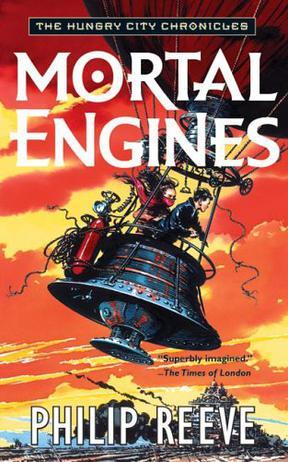
Mortal Engines by Philip Reeve

This book was quite a bit of fun while I was in it, but apparently hasn't left much of an impression on me, or a desire to read any other books in this series. In general, I'd watch the movie version if the opportunity ever presented itself, and I'd generally recommend this to middle-grade readers who enjoy action and good world-building (futuristic steam-punk, really interesting world). It's pretty good, but not fantastic.


The Royal We by Heather Cocks and Jessica Morgan

Man, this one was stupid. And long. In general, definitely feel free to skip this one. I like the royal family about as much as the next person (okay, that's probably a lie, some people are obsessed, and I definitely don't fall into this category), and I was looking for a fun, light spoof on Kate and William. This would've been better if it actually had been that, but they just packed in so much extra drama I couldn't handle it. I kept reading it because I just wanted to get to a description of the big wedding day, so imagine my complete disappointment when the book ends the night before!!! Ugh, what a waste of my time.

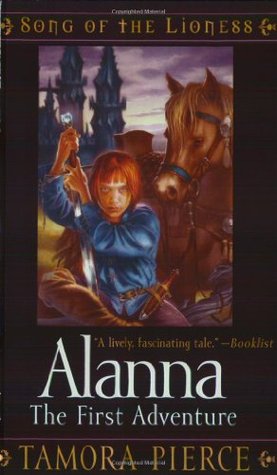
Alanna: The First Adventure by Tamora Pierce

Okay, don't judge a book by its cover, because the girl on this cover is definitely saying "Don't read this book, or I will burn you with the intensity of my disapproving glare!" But anyway, this is an older middle-grade fantasy series I'd never heard of but randomly ran across a recommendation that made it sound worth looking into, and I was not disappointed. It was short and quick, but packed in a lot of story! The main character is quite a fierce little girl (which is what that picture is trying to depict). She pretends to be a boy so she can learn to be a knight, and she fights hard to keep up with the other boys. It was a fun story, and I enjoyed the writing and the world enough to immediately jump into the second one...

In the Hand of the Goddess by Tamora Pierce

And this one took a turn and surprised me a bit. In the first book, she grows from age to 10 to 14, and that feels like the target audience age for the book too. But in this one, she goes from age 14 to 18, and has much more "adult" experiences, but the writing style and pacing still place this firmly in middle-grade territory. So that felt a little weird. I mean, there was nothing graphic or descriptive, but it was all pretty casual, which I didn't see coming. Anyway, the plot in this one got rather exciting, and I enjoyed it enough to continue on with the series.


The Girl You Left Behind by Jojo Moyes

I read Moyes uber popular Me Before You and didn't love it as much as the rest of the world, but I could tell I liked Moyes' writing style. So I decided to pick this one up. It flashes back and forth in time between contemporary London and WWI France. And guess what? I do like Moyes... when she's writing historical fiction. I didn't care as much for the contemporary story (why do I have such a hard time with contemporary fiction?) but the overall plot was interesting enough to keep me hooked until the end. I liked all the war/looted art history stuff, and I think this would make a really interesting book club book because man, is there some controversial stuff to discuss (not just about looted art, but especially about "consent" in war time)! I'm not entirely sure how I feel about the plot, but I think it was just good enough this is a recommend.

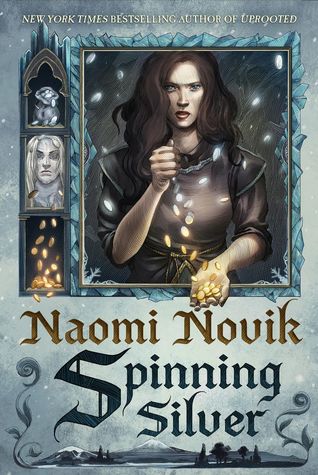
Spinning Silver by Naomi Novik

Oh man, you guys! I loved this book! I'm really on a historical-fiction-Russian-fairy-tale-retelling kick (see these books), and this one fit that bill perfectly. I can't even really say what it is that I liked about this book so much. I think it was the fact that the story revolved around two women who were generally under-appreciated by their families, who both found themselves in less than ideal accidental marriages, and then who both displayed their true value and worth in saving their respective kingdoms! The romances were both slow burns (considering you wanted both husbands to die slow and torturous deaths for most of the book), but I wish this book could've gone on longer and longer and longer. It was everything I love in a good fairy-tale retelling!
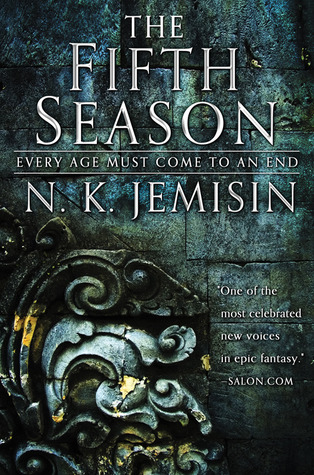
The Fifth Season by N.K. Jemisin

I read some really positive and really intriguing reviews of this, so I decided to check it out, and yeah, this is kind of incredible. Jemisin has built a really cool world here with a really interesting magic (?science?) system, and I loved the way the plot unfolded. I especially appreciated that the main character was a mother (because so often in fantasy/sci-fi, mothers tend to not exist as real people), and there were just a lot of really cool things about this book. However, I can't recommend it. One of the story-lines just had some really gross graphic situations and was generally crude enough that I just couldn't love it the way I wanted to. I may still continue on with this series, but I'm letting it sit a while before I decide.

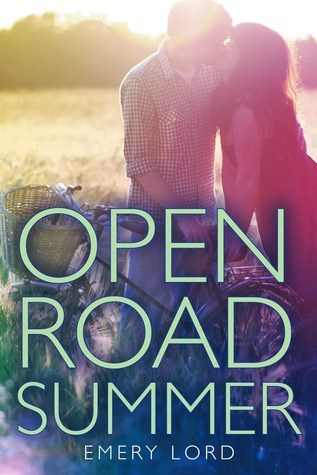
Open Road Summer by Emery Lord

Not much to say here, but light, fluffy, mostly fun. The main character supposedly had this hard edge to her, but the book itself was quite clean. If you want a fluffy YA summer romance, this one is just fine. I've mostly forgotten about.


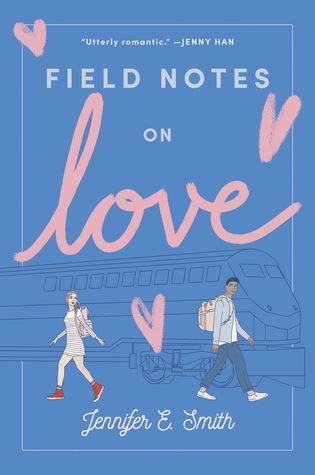
Field Notes on Love by Jennifer E. Smith

Another light, fluffy YA summer romance, but I will say I liked this one quite  a bit more than the last one. I don't know why. The plot is utterly ridiculous (just read the Goodreads summary) and predictable, and yet... I liked it. However, this one likely won't stick with me long term either.


Front Desk by Kelly Yang

This one is getting a lot of (well deserved) buzz recently, and I am on the bandwagon! I loved this book! It is such a fantastic middle-grade novel and hits really heavy topics (immigration, racism, poverty, etc.) with just the perfect tone. The main character is spunky and so fantastic! I loved the cast of characters. I will admit, I felt like some of the plot-line was a little far-fetched, until I read the author's note at the end about how many of these events are based on her actual life story!!! Unbelievable and so cool! I can see this one being read in schools all around the country, it's just so great. I highly recommend, to adults and middle-grade alike!

One True Loves by Taylor Jenkins Reid

This one is supposed to be a light contemporary romance, but man, I came away so depressed from this one. I both agree and disagree with how this book ended. I mean, the main character is in an impossible position (it's Castaway, but from the wife's point of view, where she's engaged to be married when her dead husband turns out to be alive after being stranded on an island for three years), and we are meant to be sympathetic to how she's changed and moved on and become a new person who is not the same person she was before grieving the "death" of her husband. Yet! I believe in eternal marriage! So yeah, this one was just depressing.

The Woman Who Rides Like a Man by Tamora Pierce

Knocked out the third book in this series in a day, and yeah, same thoughts as the second book. I like this world, this character, this story, but I just don't feel like it's appropriate for middle-grade? But I guess I'm just super prudish? Anyway, there really is zero graphic description, so I do recommend this for older fantasy readers (who can handle a middle-grade plot pacing).


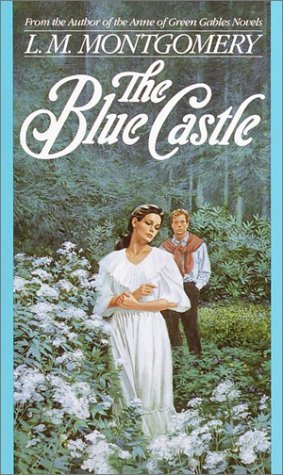
The Blue Castle by L. M. Montgomery

How has it taken me this long to read this book!!! I know how, because this book does not exist in audio book format!!! Ugh, that has been so frustrating for me, because this book has been on my list for ever now, but I had to wait for school to end before I could sit and read it in paper (well, e-paper, but you know, still had to use my eyes instead of ears). Anyway, I loved it! So much! I think the plot is incredibly predictable, and I think "Barney Snaith" is the worst name for a hero ever conceived, but this book was just delightful on every level. Oh, how dreamy Valancy's year in the Blue Castle sounded! What a sweet and lovely little story! I will definitely be re-reading this one some time, it was just so wonderful! Highly, highly recommend (especially if you like Montgomery).

What Alice Forgot by Liane Moriarty

Okay, so I read this one by accident. I thought I would be reading a book about a woman with dementia/Alzheimers, but turns out that book is called Still Alice (can you see how I got those two titles mixed up?). Anyway, I realized pretty quickly this was not the book I thought it was, and I also realized pretty quickly that this book had an almost identical plot to a Sophie Kinsella book I read a while ago and didn't care for (called Remember Me? but at least there weren't children involved in that one). Anyway, I ended up getting sucked into this one, and it ended up being pretty good. I'm glad it ended the way it did. If you like contemporary fiction, this one is okay (some swearing, some infidelity, nothing graphic). It was better than the other Moriarty book I've read (The Husband's Secret).

Whew! Can you believe that was just one month? Man, this is going to be a good summer! As always, which ones of these have you read, and what are your thoughts? I always want to know!