Quantcast
Showing posts with label Audio Books. Show all posts

Wednesday, June 26, 2019

How My Kids Listen To Audio Books (Plus a Few Favorite Titles)

Okay, I'm alllllll for letting kids listen to audio books, but in these days when cds are going the way of tapes and records, and digital files can only be played off screen devices, it is honestly so tricky to figure out how to let kids listen to audio books.

And I don't necessarily have it figured out. I wish we had a better system, a better way for my kids to access especially library app audio books other than through my phone (I'm selfish, I don't like sharing my phone with my kids one bit). Janssen over at Everyday Reading talks about how she lets her girls listen to audio books in this post here, and they own several tablets (Kindle Fires, I believe) that their kids use.

I can totally see the convenience of this option, but I also can't in any sort of realistic way see me purchasing such expensive devices (screen devices, with internet and games no less) for such young children (no judgment on Janssen, her girls seem to handle them extremely maturely, I just don't think that would work for our family). Maybe in a few years I might consider this option, but right now... no.

So, what do we do right now?

Well, mostly I check out cds from the library and we listen to them in the car (we do not own a cd player, unless you count the dvd player, which we very occasionally use). My younger two spend just as much time in the car as I do because they come on my commute out to campus every day, and while they request a fair amount of music (The Piano Guys and Mama Mia soundtrack being current favorites), we often listen to audio books. At their age, I mostly stock picture book audio books, we grab a handful of those every time we're at the library. When we go on road trips I'll grab some longer cd audio books for my older son. This is probably the number one way they consume audio books right now.

For night time, my boys have an extremely old (we're talking maybe 9 or 10 year old, which is ancient in electronics) iPod and speakers that has a few audio books loaded on it, along with some other music and stuff. The benefit of this option is that it doesn't hook up to the internet or present any real interest beyond playing music/books (there are a few ancient games, like TicTacToe, but they haven't posed too much of a problem yet). The problem with this option is that it doesn't hook up to the internet. It's a beastly process to load new material onto this iPod, because it's so old that iTunes freaks out every time we hook it up to a computer, and it's so limited on space that we have to carefully select what we can add. We've had the first 8 Magic Tree House books on there for a while now, and they get lots of listens, but I've been wanting to switch them out for some of the Harry Potter books, but we're kind of too discouraged to even try. Curse the inexorable march of technology!

So occasionally for longer trips I will download kid books through my library app on my phone, especially titles we're all interested in listening to as a family. The problem with this is that, once again, I'm selfish with my phone and want to listen to my own books, thank you very much.

Anyway, this is still a kind of pinch point I'm trying to figure out. If any of you have any brilliant solutions for how you let your kids listen to audio books that don't involve handing over expensive screen devices, I'm all ears! But now, for a few recommendations of kid audio books that we recommend.

Harry Potter - All 7 of them, by J.K. Rowling, narrated by Jim Dale

You guys had to have seen this coming, right? I mean, while the Harry Potter series is incredible in its own right, all of the audio books together are possibly the greatest audio book collection of all time. Jim Dale (who I talked about in my last post) won all sorts of awards for this narration. It's just timeless and classic and absolutely perfectly done. We have MP3s of all seven books, but only let my son listen to the first two right now (as far as he's read in the series).


Magic Tree House - All 55 of them, by Mary Pope Osborne, narrated by Mary Pope Osborne

I must confess that these are not my favorite books to read aloud. I personally find them repetitive and boring. But I'm more than happy to let my son read as many as he wants on his own, or, as he prefers, to listen to as many as he wants to on his own. They are narrated by the author, and Osborne does a great job.


Beezus and Ramona - and really again, the whole series, by Beverly Cleary, narrated by Stockard Channing

You guys, we borrowed the complete Ramona Quimby audio collection from our library for a road trip a few years back, and completely fell in love. Stockard Channing does such a fantastic job as narrator, and these books were so much fun for the entire family. We were all so entertained. Highly recommend!


Mercy Watson - again, the whole series, by Kate DiCamillo, narrated by Ron McLarty

This one might just prove my theory that good books make good audio books. We love Mercy Watson so much, these books are hilarious fun, and that makes the audio books hilarious fun as well. Ron McLarty does a great job with the narration. These are just fun for the whole family.


Skippyjon Jones - again, all of them, by Judy Schachner, narrated by Judy Schachner

Okay, I had to include at least one picture book on this list (well, technically Mercy Watson has lots of pictures), but I posted about these Skippy books on Instagram last week and I have to give a plug for them here as well. These books are just the most fun to listen to, and I love listening along myself because the audio books are narrated by the author herself, and I've learned how to pronounce/say/sing some of the trickier parts of these books by listening along. My kids love getting these ones from the library and listening to them in the car.

Okay, I could go on and on, because my old belief holds true that if it makes a good book, it likely makes a good audio book (and there are so many good kids books), but we'll leave it at these top favorites for now. Maybe someone will find this useful. I'd love to hear, what are your favorite children's audio books? Let me know!

Tuesday, June 25, 2019

How I Listen To Audio Books (Plus Some of My Favorite Listens)

Continuing on with my theme in my last post, I'd figure it might be helpful to talk about how I listen to audio books, and list some of my favorites that I think you should check out. I'm assuming most of you know how to get audio books, but just in case anyone out their remotely cares or finds this useful, here is how I get my audio books.

Short Answer: Library apps on my phone.

Long Answer:

Okay, if you've been following my stories over on Instagram, you know that there has been major drama in my life over the past few years about where I get my audio books. Since I started listening to audio books regularly way back when I lived in Chicago, I've used my local library to access free audio books. Both the Chicago Public Library and the Houston Public Library system (where we lived after Chicago) offered Overdrive as their service for electronic material checkouts, and I was a huge Overdrive fan. Yes, you had to wait for books to come off hold lists, but both those library systems had really great selections and I learned how to manage my holds list so that I was rarely without a book to listen to.

Then we moved to Kansas, and surprisingly, our local library here did not offer access to Overdrive. I kept using my Houston library account for a few months, until they kicked me off their system because of a long and complicated, but actually rather funny, overdue book problem (I blame my husband entirely, he accidentally packed up a stupid little counting book when we were moving, and by the time I realized it was overdue, it was stuck in a box in a storage facility somewhere in Oklahoma or something, and we didn't find it until we bought our house and moved in and unpacked months later, and then we had to mail it back to Houston, and at that point they had charged me a $43 fine and blocked my account from all services... grrr!)

Anyway, that left me with only what the local Kansas library system offered, which was a pathetic little app called Axis 360. The selection offered on this app was abysmal. I mean, they offered a handful of new and popular titles (with super long wait times, and sometimes the book would get removed from the app before I ever got off the wait list!), but their backlist was terrible, and they offered a grand total of 60 titles in their "Classics" genre. I don't have enough exclamation points to express my frustration with this app.

By March of this year, I was getting pretty desperate. I had just exhausted what Axis 360 had to offer, so I started considering paid app options. I believe 100% in libraries and free books, even if it means I don't get to read the hottest titles for a few months, so it was a bit painful for me to consider paying for my audio books. But like I said, I was desperate. I need audio books to survive my commute every day.

I know the big favorite audio book app out there is Audible, run by Amazon. And Audible has it's (few) advantages, mainly in that it offers any and every audio book ever. But the cost! I cannot get over the cost of that stupid service! You pay $15 dollars a month for one measly audio book credit! Ridiculous! Robbery! Okay, maybe not robbery, considering owning an audio book is probably worth that amount (and I know there are certain free titles you have access to, etc., etc.), but look, I have zero interest in owning audio books, unless we're talking about Harry Potter. But generally, I'm just not interested in owning audio books. And, I consume far more audio books than one (or even three) a month. I usually consume anywhere between 5 to 10 audio books a month (last month alone I finished 16!), and if I had to purchase every single one of those, that would be some serious money (hundreds or thousands of dollars, no thank you!). All that is to say that I could simply never rely on Audible as my sole source for audio book consumption.

So I finally decided to check out Scribd, which is an audio book app that I've heard described as the Netflix of audio books. It cost $8.99 a month, which is a great deal cheaper than Audible and just about on the threshold of what I could stomach paying for limitless audio books. If Scribd truly had a Netflix platform, I think this service would've won me over and been pretty ideal. However, their claim that they provide "limitless" access is misleading at best. I used the service for two months to get a good feel for it, one month on their free trial and one month as a bona fide paying customer, and at first I thought it was perfect. They had a great selection of new and popular titles and back-list items, and I had my pick of any of them! I quickly created a favorites list of all the books I want to listen to, but after listening to two fairly newer titles, suddenly all the other new or hot titles on my favorites list became restricted. I couldn't access them for another month. It wasn't too much of a problem at first, because I always like listening to classics, but the more and more books I finished, the more and more the rest of the titles became restricted. After about 5 books, I was left with zero available titles I was actually interested in (the classics options left were all amateur recordings, so frustrating!). I ended up being in an almost more desperate position than I had been with Axis 360.

But then my wonderful mother-in-law stepped in. Knowing about my plight, she generously sent me her library card information and let me set up an account on my phone in her name. So maybe this isn't a strictly honest solution, but guys, her library system is awesome. Like, the best (for any who are interested, she lives across the border in Missouri, part of the Mid Continent Public Library system). I'm all set up with Libby now (Overdrive's new user-friendly app) and back to endless free books (as long as I manage my holds well enough), and all is right in the world again.

So, how is any of this helpful to you? Well, first is to say, if you live in a library system that offers Overdrive/Libby, count your blessings and take full advantage of it! If you do not live in a library system that offers Overdrive/Libby, and you don't happen to have a generous mother-in-law willing to let you "borrow" her account, I learned about a spiffy alternate option: non-resident cards. Apparently many library systems allow you to purchase non-resident cards for access to electronic materials, which is going to be more expensive than free, but is generally quite a bit cheaper than paying a subscription service for Scribd or especially Audible. The Mid Continent Public Library system my mother-in-law lives in offers non-resident cards to anyone in Missouri or Kansas for $65 a year, which is one of the cheapest rates I've seen (but is still restricted to residents of those two states). So I would say check out library systems around you to see who offers non-resident cards and what their prices look like (most I've seen are under $100 for a year).

However, if you are one of those people who hates dealing with holds lists and waiting for audio books to come in, and if you listen to audio books regularly but only at the rate of 2 or 3 a month, then I think Scribd is a fantastic option. I'm still waiting for an actual Netflix of audio books app, but until then, Scribd is pretty good for the casual consumer.

And I only recommend Audible if you really really care about owning the actual audio book, say like with Harry Potter. But even then, I recommend only using the service as long as it takes you to build credits you need to buy the ones you care about, then cancel the subscription.

Okay, finally, I thought it might be useful to list some of my personal favorite audio books. When someone asked me a few weeks ago what specific titles I would recommend as great audio books, I had to stop and think about it for a moment, because I'm sort of at the point now where if I love the book, I love it as an audio book. Yes, things like the quality of the narrator or the production can influence how good of an audio book it is, but generally, if it's a good book, it's a good audio book. Honestly, I don't even notice narrators most of the time anymore. I used to be really bothered or irritated by certain narrative styles, but like reading physical books where it does matter but also doesn't matter all that much if you read the cheap paperback or the expensive leather-bound coffee table version, with enough listening practice the same holds true for audio books, and you forget about the narrator and get lost in the story. Narrators and production matter, but sometimes a good story is good no matter who's reading it.

That being said, I do have a few books that I found particularly enjoyable as audio books for various reasons:

The Night Circus by Erin Morgenstern, narrated by Jim Dale

Okay, this is not a book for everyone, but it was absolutely perfect for me. I loved the world, the magic, the color scheme, the way the plot meandered... I thought it was all just perfect. Then add the fact that this is narrated by Jim Dale who just is the voice of magic, and this audio book just carries me away every time I listen to it (yes, it's been more than once). Jim Dale is one of the few narrators I know by name and will listen to anything he reads (he did the Harry Potter series, although I'm assuming you already knew that).


The Guernsey Literary and Potato Peel Pie Society by Mary Ann Shaffer and Annie Barrows, narrated by cast

Okay, confession. Often I hate full cast recordings. This is when they bring in different people to narrate different voices, and, especially if it is a regularly narrated novel, I find the abrupt change between voices to be disruptive to the flow of the story. And often, full cast recordings will change things around to make it more like a stage play or script or whatever. Usually, it doesn't work for me. However, in this epistolary novel, the full cast recording was just perfect. I loved the voices they picked for each character, and because there is no narrator voice at all, just the letters in the voices of the characters themselves, the flow works beautifully. I've also listened to this one multiple times and it is just so enjoyable every time.

Echo by Pam Munoz Ryan, narrated by cast

Yes, this is a middle-grade novel (it won a Newberry Honor in 2016), but I'm including it here because honestly, this audio book blew me away. The production of it was brilliant. The plot of this book revolves heavily around a key musical instrument which winds up in the hands of three very different kids and ties their three very different stories together in a unique and wonderful way. That means that music is a huge part of this story, and the audio production people did a fantastic job of combining music with the narration. I would say, don't even bother with the paper version, the audio book here is where it's at.

As You Wish: Inconceivable Tales From the Making of The Princess Bride by Cary Elwes et. al., narrated by Cary Elwes and others

You guys! If you love The Princess Bride at all (and who doesn't love The Princess Bride?) then you should definitely listen to this book. And yes, you should listen to it, because they bring in as many living actors/directors/people involved with the original film to narrate small parts that it's just fantastic. Elwes, who wrote most the book, naturally narrates most of it, and hearing his own stories in his own voice is just such so fun. I cannot recommend this as a good listen strongly enough. You will find it delightful, and then you will want to go watch the movie again as soon as possible (no matter how many times you've seen it in the past).

The Graveyard Book by Neil Gaiman

Yes, another middle-grade book, but this one is narrated by Gaiman himself, and I must say he is fantastic. I love when books are narrated by their own authors (I think it's especially crucial with memoirs and self-help books, but great with fiction too), and Gaiman's voice is so fantastic (British accent and all), plus the music of the Danse Macabre plays a role in one especially memorable scene. I like Gaiman a lot, but prefer sticking to his middle-grade fare as much as possible. P.S., this one makes a fantastic seasonal read around October.


Okay, now, I really want to know, what would you add to this list? What are your favorite audio books? How do you listen to your audio books? How many audio books a month/year do you listen to? Are there any other questions you have for me about listening to audio books? Let me know!

And I'll be back shortly (tomorrow, maybe, but I make no promises) to talk about kids and audio books, how my kids listen, and some of my favorite kid audio books.

See you then!

Monday, June 10, 2019

The Case for Audio Books

Audio books, listening, ear buds, woman with ear buds, books, favorite accessory

Okay, it's 2019 now. Audio books have made great strides in becoming accepted forms of "reading". Most of us have realized how awesome audio books are in terms of convenience, allowing for multi-tasking, and just sheer entertainment value. Audio books are here to stay for good.

However, there are still some purists out there. Some book lovers who hold to the hard line that if your eyes don't actually see the words on a piece of paper, then it doesn't "count." And look, I'm not here to bash those people down and say they are wrong.

All I want to do is give some historical context for this debate.

But let's start with science. Science has weighed in on this argument before, with studies coming down on both sides. On the pro-audio-books-side we get studies like the following:

1. This one, a blog post by Dr. Daniel Willingham, is perhaps my favorite. He's an educational psychologist who focuses on the science of reading, and he lays out my favorite defense of audio books.

2. Then, I love studies like this one, that show how beneficial audio books can be for developing literacy in children. Yes and yes!

3. And then there are a bunch of other studies on some more random positives, like this one about emotional impact (don't love that this one is sponsored by Audible, always a red flag, but interesting findings nonetheless!).

But then there are articles like this one from Time, which acknowledge some of the benefits of audio books, but land on the side of paper books for the following reasons:

-Inability to go back and re-read material to aid in comprehension
-No underlining/highlighting/marginalia, and no ability to see textual cues (like bolded headings, etc.) that help organize information in the brain.
-And, the multi-tasking thing can really be a distraction! Your brain can't focus on two activities at once!

I don't disagree with any of these points. They are valid positives for reading books in print. I love reading many types of texts in print for the benefits of these very reasons!

However, I do want to talk about how all of those arguments might not matter as much as some "paper books or die" hard-liners think.

There is one quote from that Time article that I actually think is really, really important for understanding this whole debate. One researcher, Dr. David Daniel, participated in a study that found that people who listened to information on a podcast vs. reading it in print performed significantly worse on a comprehension quiz, but he made the following observation: "We get good at what we do, and you could become a better listener if you trained yourself to listen more critically." In other words, perhaps we don't comprehend from listening as well as from reading simply because we don't practice critical listening nearly as much.

And this is the point I want to make. Historically speaking, the human mind is far more adapted to receive and comprehend oral information than written information. We were speaking and telling stories and orally communicating for centuries before writing ever developed. In fact, writing is so new on the evolutionary time scale that we as humans haven't actually evolved any physiological features specific to writing and silent reading, we just borrow from all the language areas of the brain that were already in place for spoken communication.

And even after the invention of writing, sound and phonetics and oral communication remained dominant or at least equally important for information sharing for centuries. Much of this was due to the scarcity and expense of writing materials. Papers, inks, writing utensils, and books were all prohibitively expensive for the vast majority of the population, and so when households were lucky enough to have a book or two, reading was usually a communal experience, with one person reading aloud for the rest of the household to listen to. We know from some interesting historical accounts that reading was still very connected to the oral for a long time: when people read, even if it was just to themselves, they read aloud. Words were sound, they were not separated.

Even after the printing press and the drastic influx of printed material and literacy rates, it really wasn't until the Romantic period, about the end of the 18th, early 19th Century, when reading became a solitary and silent activity. It was about at this point when writers began writing more for that silent type of reading as well. Before the Romantics, the dominant literary forms were drama (Shakespeare) and poetry, both of which benefit greatly from being read aloud. The rhyme, the cadence, the whole literary form is deeply connected with the sound of the words being said aloud. But after the Romantic period (which did have it's fair share of poetry), the novel really became the dominant literary form. Prose novels disassociated spoken and written language like never before, and with the longer and longer works, it became easier and faster for readers to read silently in their heads.

But what I want to stress is that silent, individual reading is a fairly new trend in the grand historical perspective. We seem to think it is the "best" way to consume information, but that is only because it is what we are taught and what we spend most of our time practicing. I've read the studies all about how we comprehend complex information better if we read it on paper, underline, highlight, or how note-taking on paper helps us retain information we listen to. But I think that some scholars of antiquity  (think Socrates, Plato, Aristotle, you know, those really stupid people) would have grounds for accusing us of "cheating" when we do that. Can't we just remember what we hear? Those guys used to have serious memories, and we "cheat" ourselves of a great deal by relying on paper notes and books to store all the information for us, with only the need for us to remember where it is stored, not what the information actually is. After all, we can always go look it up!

I've found personally in my own experience that listening comprehension really is a skill that can be improved with practice. When I first started listening to audio books, I could only handle listening to a few genres (lighter, fluffier, entertaining novels) at single speed. I didn't like listening to non-fiction or super flowery literary texts. Soon, I worked my way up to listening at 1.5 speed, and while it was disorienting at first, my brain soon caught up and it began to feel normal.

Now, I listen to everything--non-fiction, literary fiction, all the genres--at double speed and it doesn't even begin to phase me (and there was even a period where I accidentally listened to a few books in a row at triple speed, but my brain did have trouble with comprehension then). Initially, my rule for myself was that I would only listen to books I read for personal enjoyment, and that I would read on paper all my school work. But last year, after years and years of audio book listening, I finally decided to try listening to some of my homework on audio. And we're not just talking about how I listened to Jane Eyre and Emma, I also tried out listening to Chaucer's Canterbury Tales and Beowulf on audio, and other more complex texts that I could find audio versions of. And guess what! It worked great! Did I retain as much as I would've if I'd read them on paper? I don't know for sure. But I do believe with more and more practice, my critical listening skills will only get sharper and sharper. I'll be able to comprehend more, remember more, and have just as profound literary experiences through listening as through traditional reading.

I do want to note that my comprehension experience with texts like the Canterbury Tales and Shakespeare's plays may actually have been enhanced by listening due to the fact that these plays and poems were meant to be spoken aloud, and hearing them can add a lot that a silent reading experience misses out on. But I will admit that this type of enhancement may not hold true for every genre, especially modern literature. The last time I tried listening to an audio book of Virginia Woolf, I struggled to understand what was going on, not because I'm not a good listener, but because that specific text was very much written by an author who was writing for the silent, individual reading audience. I will absolutely agree that some texts are better in written form, not because reading with your eyes is inherently better, but simply because that is the type of reading the text was designed for.

However, I will still contend that complex ideas can be communicated verbally. Think of university lectures. Think of TED talks and presentations. Think of famous speeches. Think of religious sermons. We can listen to big ideas, complex ideas, and understand them without the aid of our eyes looking at words. The same is true for stories. Even long ones (heck, both the Illiad and the Odyssey were oral poems performed in front of live audiences before they were written down). We can listen and understand and follow long narrative (and not narrative texts) without ever looking a single written word. Our brains were designed to do that.

One final note, about the criticism of multi-tasking. The Time article states that listening to audio books is bad for comprehension because we will be tempted into multi-tasking and be unable to concentrate. I'm the first to agree that multi-tasking is bad for the brain. You simply can't focus on two intellectually demanding jobs at once. You can't listen to an audio book and respond to emails at the same time. At least not well. But there are plenty of activities people do every day that do not require any sort of conscious attention: washing dishes, driving that familiar commute to work, folding the laundry. Those tasks are perfect for listening to audio books: your hands stay busy (an important part of attention and focus) but your mind is free to listen and pay full attention to the book.

So there it is. My case for audio books. Don't dismiss them because you don't think they are as "legitimate" as reading a paper book. Audio literature was legitimate before paper books were even invented. And don't assume that just because you may find it difficult to listen or remember or understand as well with audio information that the entire form is not as good. You've just been raised in a paper-oriented world and trained yourself to learn/understand/read that way. With a little practice, your audio/listening skills can prove to be just as sharp. Remember, your brain really was designed to process language that way!

Wednesday, May 10, 2017

Listening Comprehension and Children's Audio Books: Some Thoughts

In March's Book Blab Episode, Amy and I talked about the importance of reading aloud to kids (of all ages). We covered a lot of material, but two things we didn't talk about in that episode (but which I've been thinking a lot about since we started reading longer chapter books aloud to our boys last year) were listening comprehension, and children's audio books. These two issues are related, but let's take them one at a time.

First, comprehension. One of the biggest concerns I had with starting longer chapter books with my then four-year-old was whether he would be able to follow and understand a longer story that took days and weeks to read. Drawing on my training as an English teacher and my experience of reading aloud to my son for the past few months, here's my best advice on increasing listening comprehension while reading aloud.

1- Choose age appropriate books with stories that your kid naturally finds interesting. This is easier said than done, and it takes some trial and error to figure out the books that work and the books that don't. Reading aloud is a chance to expose your children to books that are above their own reading level, because children can usually have higher listening comprehension than reading comprehension (another reason it's great to read aloud), but if you go too far above comprehension can plummet. Likewise, if your child isn't interested in the characters or story, they are less likely to pay attention. It takes some work to find books that hit the sweet spot for comprehension, and we've had a couple of duds (but it's always fine to stop reading a book that's not working and just move on).

Wednesday, May 11, 2016

FREE! AUDIO! BOOKS! (Did I Mention Free?)

I had 39 items checked out from my school library. Books with titles like Adulterous Alliances: Home, State, and History in Early Modern European Drama and Painting, and The Antitheatrical Prejudice, and Agent of Change: Print Culture Studies after Elizabeth L. Eisenstein. Real page turners, let me tell you what. These hefty tomes have slowly been collecting in neat stacks on my bedroom floor, desk, and bedside table throughout the semester, and today was the day! The blessed and glorious day when they all got returned! The sign that all my papers are turned in and the semester is finally over!

But let me tell you, it's a lot easier to check books out three or four at a time, than it is to return 39 in one go. I had to take my stroller, sans baby, loaded up to the brim in order to get them all back without multiple trips. I'm sure I was quite the comical sight pushing that conveyance across campus.


Anyway, that was a tangent. The real point of this post is that SUMMER IS HERE! And that means it's time for another season of FREE AUDIO BOOKS courtesy of audiobooksync.com. Those of you who've followed my blog for a while know that I make this public service announcement every May, because I love this service so much. I mean, free audio books! What's not to love?


Friday, April 1, 2016

Books I Read in March

You guys, March was a comedy of errors when it came to my reading life. It was just one of those things where a bunch of audio book holds became available all at once, and I (naturally) decided to listen to the longest one first, but it was a too long for me to finish in the check-out time (I listen on double speed, but 25 hours is still a hunk of time to devote to any one book), so then I didn't get it finished before it was returned, and I lost all the other books that became available at the same time. Then when I tried to recheck everything out, I was bumped to the bottom of the waiting lists again. Argh!

There were other issues too: forgetting to charge my phone and missing out on an entire commute's worth of reading (well, listening), Spring Break and family in town disrupting my normal schedule, struggling to find back-up audio books that were available for immediate download and hating one enough (Astonish Me) that I just couldn't finish it. Excuses and problems aside, I did manage to finish three books this month, and the ones I finished were all generally very good (and mostly short, which helped).

Thursday, October 1, 2015

Books I Read in September

Considering I'm back in school, September was a delightfully good month reading-wise for me. Yay for audio books during the commute! I read a few really good ones (and a couple of just okay ones) this month. Let's get started.

Book Cover Collage

Tuesday, August 11, 2015

Does it Count as "Reading" if You're "Listening"?


My lovely sister-in-law Ashley posed this question on an earlier post, and since I have lots and lots of love for audio books, I thought today might be a good idea to discuss this question a bit more in depth.

Does it count as "reading" if you're "listening"?

Short answer: Absolutely positively.

Long answer: I suppose we could wax philosophical here about what exactly "reading" is. Is it an experience? A series of neurological transactions that take place according to certain stimuli? What role does the visual or aural senses have to play in this definition?

Okay, I'm not going to get too deep into the philosophical or even scientific question of what "reading" is. I'll keep it simple here. For me, reading is simply about comprehension of information. Granted, the vast about of information we "comprehend" comes in the form of visual cues, whether it be words on a page or emotions on a face, but comprehension can occur aurally too. So to answer the question of whether or not "listening" counts as "reading," I'd say it depends on comprehension level, and there are three big factors that can influence aural comprehension: your learning style, the book in question, and the context in which you are listening.

Learning Style
Do you have a visual learning style, or an auditory learning style? I think this is the crux at the heart of the question of whether "listening" to a book counts as "reading" it, because it defines how well a person processes information in these two mediums. I think I have a slight preference toward auditory learning (although I also consider myself a strong visual learner, luckily it's not an either/or thing), so to me, audio books feel like a completely natural way to consume the written word. I can follow and comprehend a story just as well as if I were reading it. To me, this means that even if I'm listening, I'm fully "reading" a story. Sometimes, I even get more out of a story when I listen to it or read it aloud to someone else, mostly because when I read silently I tend to skim and skip copiously and speed read. But even when I listen to a book at double speed, the narrator still has to say every word so I really get the details.

However, if you have a strong preference for visual learning, if your mind processes information better that you see in print, or if your mind tends to wander while listening, then you might want to stick to printed books. It's all about how your brain processes information. (I suspect Ashley might be more of a visual learner, and thus her conflicted feelings about audio books).

The Book in Question
Some books just don't work in the audio book format very well. Is this a non-fiction text that relies heavily on graphic information, or contains lists or quizzes? Might want to stick to the book format for that. I made the mistake of listening to Gottman's Seven Principles for Making Marriage Work as an audio book, and I do not recommend that. The book is full of lists and quizzes, and it was not only a fruitless way for me to consume this information (rather difficult to take a quiz when you are listening to it while driving), but it made for pretty tedious listening when the narrator read every. single. item. on the quizzes, even repetitious phrases like "Sometimes, always, or never" for each question. Ugh.

That being said, I also "read" The Life Changing Magic of Tidying Up by listening to the audio book, which is not the format I would recommend for that book either, but we all know how that managed to impact my life. So I guess that just proves that learning style matters more than medium.

However, there are some books that make better audio books than real books. If you get a good production and a stellar narrator, listening to the audio version can be an immersive experience. Here is where I will whole-heartedly plug anything performed by Jim Dale, who is without question the best narrator in the history of everything. I loved Harry Potter in print just fine (understatement), but I haven't actually re-read Harry Potter in print, because once I listened to Jim Dale's version of those stories, there was just no other way to "read" Harry Potter for me.

Audio tends to work really well for me for lighter fiction novels, books that are plot or narrative heavy, stories with really engaging immersive worlds, books where the characters speak in accent, or books with lots of hard-to-pronounce names or made-up language (#fantasyproblems).

Context

So, you can be listening to the best audio book in the world, but if you keep getting interrupted, it can really mess with your "reading" experience. This is true for my daily life with a talkative and demanding preschooler who expects me to actually listen and respond to him (the effrontery!) whenever he wishes to converse (which is pretty much every moment of all day long). While he's awake (most of the time now, since he doesn't nap), I prefer to have paper books on hand because they're easier for me to pick up and put down at a moment's notice. Audio books are less convenient for such interruptions. They require some focus, and if you get distracted, it's much more difficult to go back and re-listen to an audio book.

That being said, I still prefer audio books for certain activities, like whenever I work on a hands-on projects when the kids are sleeping. Nothing makes cleaning the bathroom more palatable than a good audio book. I also love audio books in the car, but generally only when I commute to school, not so much when I'm toting the kids around (that interruption thing).

In short, if you have a strong enough audio learning style, the book lends itself well to audio, and you have some good time with minimal distractions and interruptions (and even better, something to do with your hands), then I absolutely believe that listening to a book counts as reading it.

Which medium do you prefer? Are you an audio or visual learner? Do you consider "listening" to count as "reading"? What are your favorite audio books?

Thursday, May 14, 2015

Free (Audio) Books (Or, the Best Part of Summer)

It's time for my yearly public service announcement about the awesome program that is Sync. For those of you who have never heard of this program (which, if you've been reading my blog for the past two years, you should have heard of this program), here's the deal. Every summer Sync offers free audio books that you can download right to your computer, and that you then own for ever and ever. Each week they post two new audio books, a YA book paired with a similarly themed "classic" (sometimes I think they're a bit generous with their definition of classic, but whatever, it's a free audio book, I'm not complaining). You have one week to download those titles before they are gone and two new titles are released. So you kind of have to be on top of the schedule, know ahead of time what books you want, and mark your calendars so you don't forget to download your books the week they are available.

Due to all that nonsense with the semester ending, I'm a bit late this year, and unfortunately the first week is already over (which is so sad, they were offering Rebecca, which if you haven't read yet, you really should, even though you're too late for the free audio book). Still, there are 13 more weeks and 26 more potential titles for awesomeness, so all is not lost.

Like every year, I haven't heard of many of these titles and cannot vouch for their quality, but every year I always find at least one or two gems (sometimes more) that make me so grateful this program exists.

Also, it's FREE. What could be better?

Here are the titles I'm excited about this year:

A Corner of White by Jaclyn Moriarty

I've seen a few positive reviews of this one around, and the description is terribly intriguing. I think I will definitely be snagging this one, especially since from the summary I can't for the life of me figure out why it's paired with...


Dracula by Bram Stoker

My husband read this a few years ago, really enjoyed it, and told me I should read it. It's been on my too-read list ever since, but, you know, never made it to the top (it feels like I should already know what this story is all about, but according to my husband, this Dracula and the Dracula of pop culture are completely different). Well, with a free audio version of it, maybe this will be the year.


The Perfect Storm by Sebastian Junger

Haven't seen the movie, but good nonfiction always intrigues me, and this one sounds fascinating.


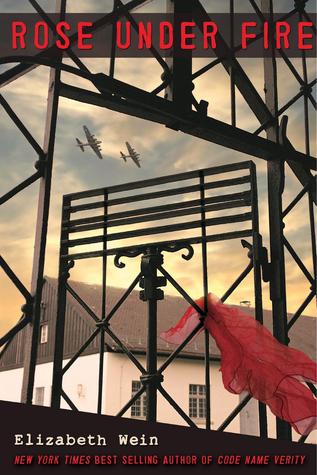
Rose Under Fire by Elizabeth Wein

This is a sequel to Code Name Verity, which I really liked, but which was also kind of intense. I'm not sure if I'm ready for the sequel (set in a concentration camp, no less), but you can bet I'll be downloading this one anyway.


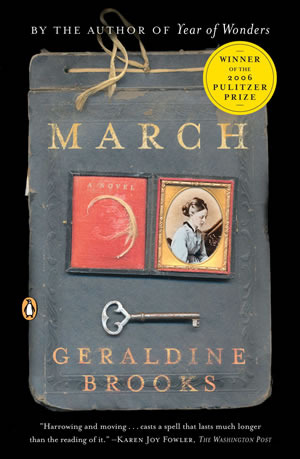
March by Geraldine Brooks

I love Little Women (which is the other title offered this week, so snag it if you want it on audio) with all my heart. I am trepidatious about how this made-up back-story might totally ruin an already perfect thing, but then, it won the 2006 Pulitzer, so someone thinks it's good. I'm willing to try it out.


I strongly encourage you to go check out Sync's lineup for the summer, pick out your titles (there are plenty of other good ones that I didn't list here), and mark your calendars. It's going to be a great summer.

Tuesday, July 29, 2014

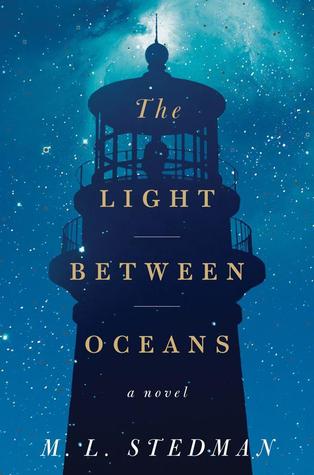
Book Review: The Light Between Oceans

The Light Between Oceans by M.L. Stedman

Summary (Courtesy of Goodreads): After four harrowing years on the Western Front, Tom Sherbourne returns to Australia and takes a job as the lighthouse keeper on Janus Rock, nearly half a day’s journey from the coast. To this isolated island, where the supply boat comes once a season and shore leaves are granted every other year at best, Tom brings a young, bold, and loving wife, Isabel. Years later, after two miscarriages and one stillbirth, the grieving Isabel hears a baby’s cries on the wind. A boat has washed up onshore carrying a dead man and a living baby. Tom, whose records as a lighthouse keeper are meticulous and whose moral principles have withstood a horrific war, wants to report the man and infant immediately. But Isabel has taken the tiny baby to her breast. Against Tom’s judgment, they claim her as their own and name her Lucy. When she is two, Tom and Isabel return to the mainland and are reminded that there are other people in the world. Their choice has devastated one of them. 

I've just got to say upfront that I listened to the audio version of this book, and I can't say I recommend that. I mean, yes, it was nice to hear everything pronounced in an Australian accent, but the reader's voice was not my favorite. He was so soft spoken that I kept having to turn my volume way up to try and catch what he was saying, and even then I feel like I missed out on a lot of the finer details (seriously, it was like he was mumbling). Also, I'm just not sure about the choice to use a male narrator here. I understand that Tom Sherbourne is probably the most common point of view in the story, but the language and descriptions (especially about babies) just felt so feminine to me that I think a female reader would have felt more natural. But whatever. It was fine.

Besides the fact that I didn't care for the audio production, and the fact that it took me FOREVER to finish this book (I think I started it back in February, which is seriously pathetic), I actually loved this book quite a bit. It was beautifully written, and the characters were so real and believable. Which was the tragic part. Especially Isabel. I felt like her flaws were so real, so understandable, and yet so unforgivable. The conundrum these people get into! It's terrible and heart-wrenching. And even though I knew the whole time that they should have notified the authorities and turned the baby in, and even when I sympathized with Tom for doing the "right" thing in the end, my heart just broke for Isabel. Being a mother myself, I felt her desire and longing and pain, and it was excruciating. And poor Tom just loved her and just wanted her to be happy, but couldn't live with a guilty conscience.

This was one of those books that really made me think, "What would I do if I were in their place?" I would like to think I would have enough sense not to keep a baby that wasn't mine, but then again, I've never had a miscarriage (knock on wood, real hard please). I can only imagine how hard it would be to lose a baby, and then have one turn up unexpectedly that for all the world looked like an unwanted orphan. I can really understand how Isabel thought it was a sign from God. But poor Hannah (the real mother)! I can't imagine her pain. What a terrible mess. There were so many times when I wondered, "What is the right thing to do here? Who really is to blame?" When I described the scenario to my husband, it was as clear as black and white who was wrong and who was to blame, but I tried explaining that when you get involved with the emotions of the characters (and in my present pregnant condition, I can't help sympathizing with the emotions of everyone in this book, especially the mothers), it's really not so clear (my dear, sweet, extremely logical husband has never been good about sympathizing with hormonally-charged emotions). This book is just about honest good people who make misguided decisions that lead to terrible messy situations where a lot of people end up hurt. And you just wonder how good people can make such a mess of things.

Anyway, I hope I'm not giving too much of the plot away for those of you who are interested. I thoroughly recommend this book to anyone looking for a well-written, heart-wrenching little story. I can't say I think this one will go down as a classic exactly, but I found it a very thought-provoking and worthwhile read. Right now I'm giving it four stars (though I might change it to five, we'll see how long it sticks with me).

Tuesday, May 27, 2014

It's That Time of Year Again

Folks, I am just not on top of it this year. I can't believe we're already two weeks into Sync's summer audio book program, and I only just remembered to check out the line-up.

I wrote about this last year, because it really is one of my favorite parts of summer. For those of you who don't know, every summer Sync offers two free audio books for download every week all summer long. Usually one book is a new-ish YA book, and the other is a classic along a similar theme. This year, some of the classics don't seem quite as "classic" to me, but I'm still excited for many of the books on the list. I don't download every book every week (my ancient laptop here doesn't have quite that much available memory, and not all of them seem to be my thing), but every summer I always find a few new gems that are completely awesome. Here are a few I'm excited about this year:


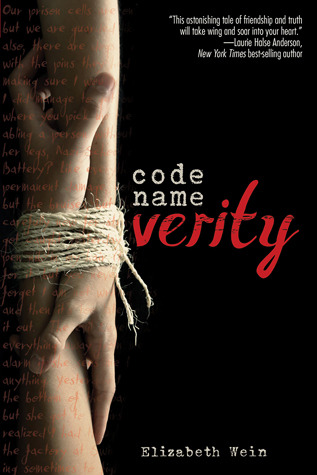
Code Name Verity - I've already read this one (review here), but my husband needs to read it, and since he only does audio books these days I'm excited to download it for him. If you're in to World War II spy dramas with female heroins, this is a fabulous story.

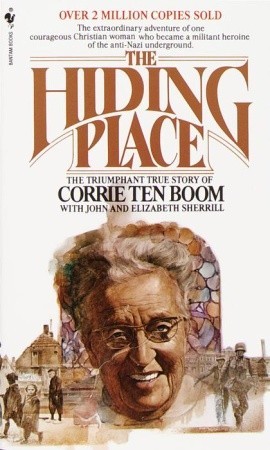
The Hiding Place - I've also already read this one, but again, my husband hasn't, and he absolutely NEEDS to. I think everyone needs to read this one. I've read it several times, just because it is that powerful of a book, and really makes me want to be a better person.

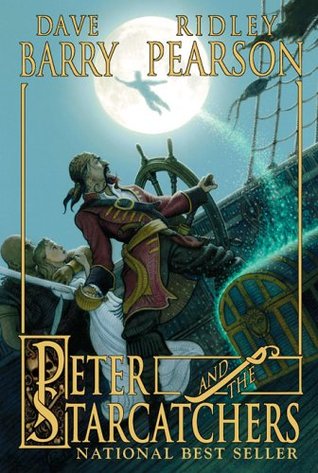
Peter and the Starcatchers - So this is one I hadn't heard of before, and I'm a bit mystified about how I missed out on it because I'm a huge Dave Barry fan. How did I miss that he wrote a Peter Pan themed novel? I'm kind of terribly excited for this.

So go to it. Take a look at the schedule, mark your calendars, and don't miss out on your chance to score some awesome free audio books this summer.

Wednesday, January 15, 2014

Book Review: The Odyssey

Okay, this isn't so much a book review, as it is my thoughts on this specific radio adaptation. Because, does The Odyssey really need a book review here? What can I really say about this book that hasn't already been said by the 2,000+ years of history this story's been around for. I mean, this book is a classic. End of story. Does anyone really care if I rate it four stars or five? This book is going to be around for another thousand years at least, so my opinion matters little.

Also, do you need the plot summary? Really? In all your years of education, did no one really make you read this? Guys, if you haven't read this one, you should. If only just to understand all the cultural references made to this book (everywhere all the time). Make it a goal or something. Or go back to grad school, which is exactly why I recently reread this book. Or, more accurately, listened to this adaptation.

This semester I'm taking a course called, wait for it, The History of Narrative! I can't decide if I'm super excited for this class, or if I'm kind of terrified, because if you saw the reading list, it is comprehensive. Everything from Virgil to Dante to Spenser to contemporary stuff. And while Homer isn't on the list specifically, the professor hinted in his course description that The Odyssey would be referenced frequently and it might be nice to brush up on it before class. The last time I read The Odyssey was in about sixth grade, so I figured a refresher might be a good idea. I suppose I could have found an audio book of this word for word somewhere, but I saw my library had this dramatized radio adaptation created by Yuri Rasovsky available, and it piqued my interest.

This adaptation was actually a series of radio broadcasts produced in the 1980s for The National Radio Theater. And guys? I know people talk about how radio is a dying medium, but considering how many stations out there are still alive and thriving, I kind of thought radio had it's niche and was doing just fine. I had no idea stuff like this used to be on the radio. I mean, this was like a serialized theater production with a full cast of actors and music composed specifically for this production. I did not know they used to make such quality entertainment programs for the radio. It was kind of cool to think about the stodgy old professor types who tuned in every week with their audiobills (all you had to was call this number and get a free audiobill in the mail, how awesome is that?) to listen to this dramatized version of The Odyssey. Kind of like how I tune in every week to get my Downton Abbey fix (except, Downton Abbey is a soap opera dressed up in period costume, not a splendid epic poem that will be loved for centuries).

So, the story was broken up into episodes, but what I thought was really fun was how at the end of every episode they had a bit of a journalistic piece where they interviewed experts about some aspect of The Odyssey. So I learned all sorts of interesting things about Oral Culture, about the guest-host relationship in ancient Greece, about political structures in ancient Greece, etc. I suppose some people might find these scholarly bits to be a distraction from the story, and boring or annoying. But I'm a pretentious snob, or whatever. I found it fascinating.

My one complaint about listening to this adaptation was that I felt it should have been edited a bit more for audio book format. This thing was, quite literally, the exact broadcast that aired in 1980, including commercials for Radio Theater and other sponsors, and recaps at the beginning of each episode. All of that was entirely unnecessary for the audio book format, and should have been edited out by someone (Blackstone, I'm looking at you). But other than that. I thoroughly enjoyed this dramatic adaptation of The Odyssey. I thought it was a great way to refresh myself on the story, learn a few interesting facts, and discover the glory that once was Radio Theater. Fun stuff.

Monday, August 12, 2013

Road Trip Reads

I think I mentioned this in my last post, but we were on a massive road trip last week (just got home tonight, in fact). When I say massive, I mean 40+ hours in the car in the space of eight days. With a toddler. It was a recipe for potential disaster, but luckily our little man was a road warrior, and we ended up having a blast.

It also helped that we had a good a supply of audio books on hand, because nothing makes time on a road trip more enjoyable than a good audio book. I thought this trip would be a good opportunity to listen to a few of the free Sync downloads I've collected this summer, and we made it through three of them. All of them were super charming and very fun, so I thought I'd just do a quick review of all three in one post.

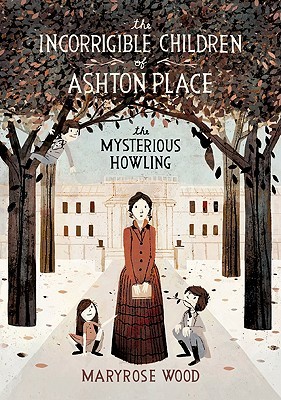
The Incorrigible Children of Ashton Place: The Mysterious Howling by Maryrose Wood

This little story was perhaps the weakest of the three books as far as plot was concerned, but the writing was so clever and witty that it more than made up for it. This book is British humor at it's best, and had so many gems in it. My husband and I laughed our way through this one, and while we might not be intrigued enough to pick up the next book in the series, it was delightful fun.


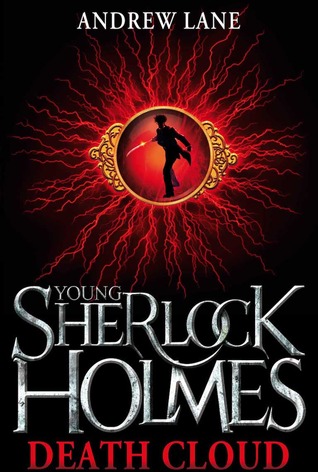
Young Sherlock Holmes: Death Cloud by Andrew Lane

This one was my least favorite of the three, but it was my husband's favorite. As the title implies, this series follows the development of a young (14 year old) Sherlock Holmes, and I think I only disliked it because I would have imagined a younger Sherlock Holmes differently. I guess that's the problem you have when you start with a character created by another author (endemic to all fan fiction). My husband had no problems with the way the young Holmes was portrayed, however, and I must say that I found no fault with the plot. It was a nicely intricate and exciting story very worthy of a Holmes character. My husband and I talked about how this book would probably be perfect for intellectually inclined teenage boys.

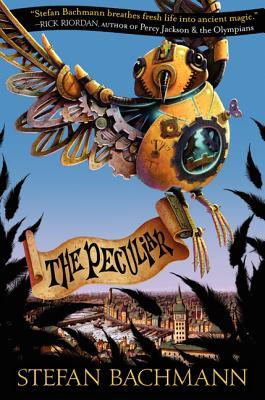
The Peculiar by Stefan Bachmann

This one was just fun. The setting was certainly unique, think "fairy" meets "steampunk." It wasn't necessarily standout in any other way. It felt like a bit of a cliche story; young, disadvantaged boy must save his sister from the clutches of an evil conniving politician and ends up saving the whole of Great Britain in the process (with the help of a bumbling, cowardly privy council member who would much rather be sleeping in bed then accidentally saving the world), but it was well written and fun nevertheless. Although, can I gripe about the fact that once again, this was only the first book of a series? Seriously, why does every single YA book have to be part of a series? Every single one of these books would have made a fantastic stand alone. For the love, just learn how to wrap your stories up, okay? (I know, I know, publishers like series because it means more money. Ugh. Sometimes it works, but I think this multiple series stuff is ruining some really good stories).

Anyway, these were three fun reads that definitely made our road trip so much more enjoyable. I'd put all of them in the three star range. You don't necessarily have to seek these books out, but if you come across any of them, feel free to pick them up.

Wednesday, June 5, 2013

Audio Books vs. Real Books

I used to be a firmly hard-copy-in-my-hands kind of book reader. I'm kind of a visual learner, so I remember words so much better if I actually see them on a page. Plus, I just like the physicality of actually holding a book in my hand, smelling the ink and glue, bending the spine, dog-earing pages, underlining or writing notes, that kind of thing. I like being able to skim through the boring parts, or slow down and re-read a favorite passage. I like making up my own voices for characters and my own pronunciations for funny names. I love experiencing a book this way, with no outside influences.

With an audio book, you are at the mercy of the narrator. If the recording is twenty hours long, then you must sit through all twenty hours to finish the book, no speed reading or skipping ahead. If the narrator gives a certain accent to a certain character, well, then, that becomes the voice of the character. Which is fine if you have a good narrator (oh, how I love Jim Dale), but if you have a bad narrator, it can just ruin a book.

So yeah, I used to be firmly against audio books.

But...

I've been slowly changing my mind. Recently, I've really become aware of the benefits of audio books, which include:

-Hands Free Reading. I can cook, I can clean, I can play with my kid on the floor, all while "reading" a book. Seriously, the multi-tasking enabled by audio books is a beautiful thing for a stay-at-home-mom (of course, most of the time I just sit and listen while browsing Pinterest, but we don't need to bring that up, now do we?).
-Ease of Access. No more trekking out into the cold or wind or rain to check a book out from the library. Or waiting several days for it to arrive from Amazon. Nope. With just a click of the mouse those little audio files are delivered straight to my laptop, and I'm listening in minutes. Oh technology, what would I do without you?
-Road Trips. Ever since that awful, horrible, no-good, very bad first trimester of pregnancy, I cannot bring myself to read in a moving vehicle. Even checking my email on my phone while sitting in a moving car can bring on waves of nausea. But, with our upcoming cross-country move and other summer road-trips (we just got back from a two-day road trip yesterday), there is simply too much travel time not to make literary use of. Audio books are invaluable on the road now. Luckily my husband and I generally share the same taste in books, so we can listen together.

Essentially, I'm a convert. Bring on the audio books.

What camp are you in?

Wednesday, May 29, 2013

My Favorite Part Of Summer

It's not the beach or the pool or the sun or the sandals.

As much as I love those things, seriously my favorite thing about summer is the free audio books offered by Sync. So yeah, that may sound kind of nerdy, but really, if you haven't heard of this summer program you are missing out. Each week all summer long, Sync offers two new audio books, a young adult paired with a classic, for FREE download. Yes, that's right, FREE! I mean, who doesn't like free stuff?

I've just checked out the lineup for this summer's offerings, and it's looking pretty good. Generally, the classics speak for themselves, but in years past I haven't been as familiar with the YA titles they offer. This year, however, there are several YA titles that have been on my to-read for a while. Here are a few titles that I'm particularly excited for:

Of Poseidon by Anna Banks. I've heard some good things about this young adult book, and I'm excited to check it out. Also, it's paired with The Tempest, which you know from this post is my pretty much my favorite Shakespeare play of all time. So I've got high hopes. Both of these are available for one week starting TOMORROW, so don't forget.


Jane Eyre by Charlotte Bronte. I haven't read this one since high school, but it is definitely a favorite and I think listening to it on audio will be the perfect way to reread.


The Raven Boys  by Maggie Stiefvater. I've heard so much about this one, and I'm excited it's being offered for free. If you've heard of the popular Scorpio Races (another on my long to-read list), this is by the same author. Both have been on my to-read list for a while, and now I'll get to cross this one off.


There are plenty more titles, so go check out what's for offer, then mark your calendars and don't forget to go back for your free audio books. Of course, I'll be reviewing all the titles I listen to here.

Enjoy your summer reads (or in this case, listens).