Quantcast
Showing posts with label YA Lit. Show all posts

Monday, March 20, 2017

Well Behaved Women Seldom Make... Great Protagonists

Heroines, interesting girls, YA lit, Children's lit, strong female protagonists

I finished a middle grade/YA book at the beginning of this month, Wolf Hollow, that's been getting some buzz lately (I think it got a Newberry Honor award). The number one thing I'd read about this book before starting it was some variation of: It's being touted as a new To Kill a Mockingbird, but it's no To Kill A Mockingbird! And after reading it, I understood both sides of those sentiments. I can see the comparisons to TKAM. It's about children getting wrapped up in some very serious adult politics, and the choices one girl makes to fight for justice. It has some heavy stuff to it that is handled in a very compelling way. Things don't necessarily end happy. But the material and themes of that book is a post for another day.

What I've mostly been thinking about since finishing that book is the second half of the popular sentiment I kept reading about: this book is no TKAM. I agree. Despite the heavy material and seemingly similar set-up, Wolf Hollow simply does not live up to To Kill A Mockingbird. I've been trying to pinpoint just exactly why that is, and for me it boils down to this: Annabelle is not Scout.

Thursday, September 15, 2016

Two Traits of Fictional Teenage Boys that Really Bother Me (or, Never Send Your Boys to Boarding School)

Okay, so, it's come up before. Of all the categories of human beings in the world, I find teenage boys to be the least... likable. In middle school and high school, I mostly just tried to ignore them. Individually there were some nice ones, but as a group they seemed incredibly stupid, so I figured they just generally weren't worth my time. Even after falling madly in love with my husband, I was appalled by stories of his high school self, and I've told him repeatedly it was a very good thing I never knew him as a teenager, because I'm not sure I could've gotten over it (in all fairness, the feeling would've been mutual had he met my own awkward, snobbish, overly-opinionated teenage self).

Books have done little to help me overcome my distaste for the male adolescent portion of our species. It's a bit funny, because I'm actually quite capable of swooning with the best of them if the story is told from the perspective of a teenage girl and the male adolescent in question happens to be the handsome and charming nice guy in love with her (oh, Gilbert Blythe, I would've forgiven you for calling me "Carrots!"). But if the main character is a teenage boy himself, and the book tends to dwell in any measure on the inner-workings of his adolescent mind... it just gets depressing so fast. To support my arguments, I present the following evidence:

Tuesday, June 17, 2014

A Few Bookish Tidbits

You guys, June is killing me. I mean, how are we over half way through this month? Where is my lazy summer going? (Oh yeah, I might be sleeping it away).

Anyway, here are a few bookish things from the internet I've been reading/pondering/interested in recently.

1. This article from Slate made the rounds on my Facebook feeds a couple of weeks ago, and I can't stop thinking about it because it made me so angry. Adults should be ashamed to read YA literature!? Obviously, this sad author has lost touch with her childhood, her innocence, and any sense of decency, and I feel bad for her. It's not that I love The Fault in Our Stars so much (I don't), but I will stand up unequivocally for the value of young adult and children's literature. Take, for instance, this paragraph:

Most importantly, these books consistently indulge in the kind of endings that teenagers want to see, but which adult readers ought to reject as far too simple. YA endings are uniformly satisfying, whether that satisfaction comes through weeping or cheering. These endings are emblematic of the fact that the emotional and moral ambiguity of adult fiction—of the real world—is nowhere in evidence in YA fiction. These endings are for readers who prefer things to be wrapped up neatly, our heroes married or dead or happily grasping hands, looking to the future. But wanting endings like this is no more ambitious than only wanting to read books with “likable” protagonists.
How sad! How sad indeed that adults are only allowed "emotional and moral ambiguity" and we should feel ashamed to believe that stories actually should have endings. Excuse me if I believe in happy endings.

2. This little list from NPR last week made me super happy. I can't say I remember the show Gullah Gullah Island, but Reading Rainbow? Wishbone? These were the shows that defined my childhood! There are so many books today that I can't look at without remembering that little dog costumed as the main character. Also, my husband can still sing the entire theme song to Where in the World is Carmen Sandiego. Yep, we had some quality public programming in those days.


3. You guys, I need my favorite bookish bloggers to stop posting summer reading guides, because my to-read list has exploded recently, even as my time devoted to actual reading has plummeted. It's a conundrum for sure. Nevertheless, if you find yourself looking for that next great read this summer, my two favorite guides so far have been this one by Janssen at Everyday Reading and this one by Modern Mrs. Darcy.

4. Okay, so I was totally late to the Lizzie Bennett Diaries bandwagon, but after finally stumbling across it I binge watched all 100 episodes over two days (each episode is only five to ten minutes). It was a fantastic web-video-blog (whatever the word is) adaptation of Pride and Prejudice, and I loved it, so I was delighted to discover Emma Approved last month (still late to the game, but only half-way through this time), which is obviously an adaptation of Emma. I think this new series is a bit less charming (it took me a lot of episodes to warm up to Emma), but I still highly recommend it to all those Austen-obsessed fans out there. However, they're only on episode 53 right now, so you might want to wait until all the episodes have been released and binge watch it all at once (a highly satisfying, if time consuming experience). Either way, it's a fun way to experience Austen.

Monday, February 3, 2014

Book Review: Bomb

Bomb: The Race to Build-- and Steal-- the World's Most Dangerous Weapon by Steve Sheinkin

Summary (Courtesy of Goodreads): In December of 1938, a chemist in a German laboratory made a shocking discovery: When placed next to radioactive material, a Uranium atom split in two. That simple discovery launched a scientific race that spanned 3 continents. In Great Britain and the United States, Soviet spies worked their way into the scientific community; in Norway, a commando force slipped behind enemy lines to attack German heavy-water manufacturing; and deep in the desert, one brilliant group of scientists was hidden away at a remote site at Los Alamos. This is the story of the plotting, the risk-taking, the deceit, and genius that created the world's most formidable weapon. This is the story of the atomic bomb.

Okay, so I love me some good non-fiction. Especially historical non-fiction. Throw in a little interesting physics, and I'm all over it (I almost minored in physics). But I was a little bit skeptical when I heard this was a YA non-fiction book. I mean, hm. When was the last time I read a really good non-fiction book aimed at teenagers?

But Sheinkin knows what he is doing. He knows how to take historical facts and turn them into a crazy suspenseful, spy-thriller, action-packed story. Honestly, this is the way history needs to be taught in our schools. I personally learned most of my history through novels anyway, (nearly all of my knowledge about the Napoleonic campaigns comes from reading War and Peace), but historical fiction is not always the best way to get your facts right. I would have devoured a book like this in middle school, and I say more of this kind of YA stuff, please!

So, I thought I knew a bit about the development of the atomic bomb before I started this book, but at the Russian spy intrigue? Fascinating stuff! Really, I thought that kind of espionage was only in the movies. Also, who knew Dr. Oppenheimer was such a character? You're quintessential absent-minded genius. All of the characters in this book were fantastic, mostly because Sheinkin really did his homework and was able to drop in little interesting stories and tid-bits that just made these characters come alive. It was so much fun.

Five stars. If you have even an inkling of interest in well written non-fiction, you should definitely read this book. It's fabulous.

Tuesday, January 7, 2014

Book Review: Okay for Now

Okay for Now by Gary D. Schmidt

Summary (Courtesy of Amazon): In this companion novel to The Wednesday Wars, Doug struggles to be more than the "skinny thug" that some people think him to be. He finds an unlikely ally in Lil Spicer, who gives him the strength to endure an abusive father, the suspicions of a town, and the return of his oldest brother, forever scarred, from Vietnam. Schmidt expertly weaves multiple themes of loss and recovery in a story teeming with distinctive, unusual characters and invaluable lessons about love, creativity, and survival.

I read The Wednesday Wars a few years back, and while I found it a little improbable (a seventh grade kid who comes to actually appreciate Shakespeare? I taught seventh grade kids, so call me skeptical) that didn't stop me from loving it. Schmidt really is a master of the middle-grade genre, and I love the way he tackles big issues and themes with such simple language. So anyway, when I found Okay for Now available for immediate download from my library, I jumped at it.

And... it was just as good as The Wednesday Wars. Maybe even better. It was essentially the same formula: troubled, base-ball obsessed, middle-school boy makes some unlikely friends, finds inspiration from a high-culture icon (this time Audubon instead of Shakespeare), and finds inner strength in the face of serious issues (slightly more serious in this book-- an abusive father and a friend with cancer), but Schmidt does a really good job with this formula and I wouldn't mind if he wrote ten more books just like it.

I especially appreciate how great these books are for boys. I mean, I don't actually know any middle school aged boys at the moment, so I don't know how well they are actually received by that target audience (I might just be wishing here), but sometimes it feels like no one is writing good fiction for young boys anymore. So many books these days feature female protagonists, and I know the boys I taught were very turned off by any book with a female protagonist (The Hunger Games being the one exception I can think of). So it's really nice to see quality middle-grade books with really well written male protagonists. Schmidt's boys are funny, sweet, at times frustrating (like all boys that age) and very believable. They are just fantastic characters.

I recommend this one to anybody who enjoys a good a middle-grade book (FYI, you don't need to have read The Wednesday Wars first, but these books are connected a little bit). This was good one to start the New Year off with.

Friday, December 13, 2013

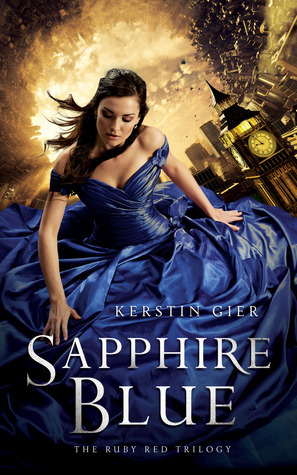
Book Review: Ruby Red and Sapphire Blue

Ruby Red and Sapphire Blue by Kerstin Gier

Summary (Courtesy of Goodreads): Gwen’s life has been a rollercoaster since she discovered she was the Ruby, the final member of the secret time-traveling Circle of Twelve. In between searching through history for the other time-travelers and asking for a bit of their blood (gross!), she’s been trying to figure out what all the mysteries and prophecies surrounding the Circle really mean. At least Gwen has plenty of help. Her best friend Lesley follows every lead diligently on the Internet. James the ghost teaches Gwen how to fit in at an eighteenth century party. And Xemerius, the gargoyle demon who has been following Gwen since he caught her kissing Gideon in a church, offers advice on everything. Oh, yes. And of course there is Gideon, the Diamond. One minute he’s very warm indeed; the next he’s freezing cold. Gwen’s not sure what’s going on there, but she’s pretty much destined to find out.

Okay, so judging purely by the covers shown here, these are exactly the
kind of books I would normally skip over. Call me judgy, but I don't do pretty girl in pretty dress covers. It usually means less than stellar writing and lots of fluff. But there I was, drowning in my flu-induced woe-is-me pity party last month, and I just needed something light and fluffy to read after finishing Code Name Verity. Actually, listen to. I was scrolling through my library's available auidobook collection, and both of these books were available for immediate download. I'd heard several people rave about these books, and I wasn't in the mood for serious reading anyway, so it was perfect.

And here are my thoughts. The writing is not terrible. The main character's voice is actually quite fun. Come to think of it, most of the characters were pretty well developed (not sure about the love interest, I don't understand his motivations yet). And the premise (time travel mystery) is unique enough to be interesting. These books were short, action packed, and designed to keep you hanging in suspense. And even if there is a kind of sort of love triangle, it's not the main romantic tension (hallelujah). So these books are fun, clean, fluffy reads that I found very enjoyable. I will certainly be reading the third one just as soon as it becomes available at my library.

Final notes: Apparently these books were written in German first? Which I found confusing because, first, they were obviously translated very well, and second, the setting is London. Also, I understand the title Ruby Red, but I'm not sure about the other gem titles (maybe I wasn't reading carefully, but Sapphire Blue didn't make a lot of sense to me in the context of the story). My final complaint is that this story really wasn't meant to be a trilogy. These two books are very short, and honestly, it should have been released as one longer novel because it's all just one continuous story anyway. These two books did not really have separate plot curves with climaxes and resolutions. They just ended kind of abruptly right after an action scene, and I think it's stupid it had to be a trilogy. But whatever, sell more books that way, okay.

So, solid three star reads. I recommend to anyone looking for some fun easy reading.

Wednesday, December 4, 2013

Book Review: Code Name Verity

Code Name Verity  by Elizabeth Wein

Excerpt (Courtesy of Goodreads): I have two weeks. You’ll shoot me at the end no matter what I do.

That’s what you do to enemy agents. It’s what we do to enemy agents. But I look at all the dark and twisted roads ahead and cooperation is the easy way out. Possibly the only way out for a girl caught red-handed doing dirty work like mine — and I will do anything, anything, to avoid SS-Hauptsturmführer von Linden interrogating me again.

He has said that I can have as much paper as I need. All I have to do is cough up everything I can remember about the British War Effort. And I’m going to. But the story of how I came to be here starts with my friend Maddie. She is the pilot who flew me into France — an Allied Invasion of Two.

We are a sensational team.

So, there I was in the middle of November, dreadfully behind in my word count and swearing off reading any more books until I finished my own novel. Then I got the flu. And did absolutely nothing but lie on the couch for six whole days while my offspring watched more television in one week than in his entire previous life (when my husband saw that we were on episode 26 of The Magic School Bus, he asked if we had really watched 13 hours of TV that week. I didn't tell him about all the Curious George episodes we mixed in there). Anyway, sleep wasn't always an option because of all the nasty congestion/hacking cough issues, and so of course I had nothing else to do while my body desperately tried to recover than read. And this book happened to have been sitting on my nightstand since early October, so I thought it as good a time as any to check it out.

And, wow.

Yes, it's another WWII book. I am quite sick to death of WWII books (which is why this one sat on my night stand for so long), so for me to say this is a good book means it is a really good book. Now, it's no Book Thief (another book I judged because it is a WWII novel and then got proved oh so wrong), it doesn't have quite that kind of emotional punch to it, but I still cried at the end. This is a completely different kind of story told in a very unique way, and I really, really liked it.

This is one of those books I should not have read while attempting to write my own novel, because it just highlighted how completely inadequate I am at creating awesome characters (this book has awesome female characters) or framing a story in a unique and engaging way (the way this story is told is just so perfect). Basically, I stand in awe of Elizabeth Wein and her creative genius.

Unfortunately, I have to be rather vague about the specifics of the plot, because I don't want to give anything away. Really, this book is so much more fun if you go into not knowing anything, because in the first few pages you're like, "Is this really happening? Should I be cheering for this character, or hating her?" and then by the end, when you figure everything out, it's just all so awesome. So all I can really say is it's about a fictional female British spy and female airplane pilot in WWII, and it's kind of a thriller but also so much more than that.

So I know that's pretty vague, but just trust me on this one. It's worth your time. I mean, doesn't that excerpt up there just totally intrigue you?

So, briefly, what I can say is that I loved the characters. The two main female characters were both awesome. This was not necessarily a book with a feminist agenda or anything like that, but it nailed how to have awesome strong female leads with no real love interest (hints of one, but only tangentially). Both these girls were just real, and I loved them both. Especially Queenie. Except for her foul language, she's exactly the kind of person I envision myself as being, if I were ever to write myself into an awesome female lead action role.

A few warnings: there is some salty language, and there are some disturbing things described (Nazi torture, it's not pretty stuff), but I would still recommend this one to most high schoolers. Also, there are a lot of technical descriptions of planes and stuff. I can see how that might bore some people, but honestly, I thought it just gave the story a lot of credibility.

Wednesday, November 6, 2013

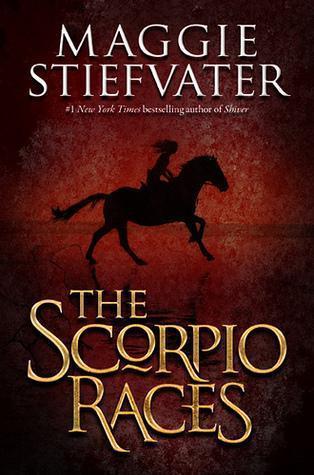
Book Review: The Scorpio Races

The Scorpio Races by Maggie Stiefvater

Summary (Courtesy of Goodreads): It happens at the start of every November: the Scorpio Races. Riders attempt to keep hold of their water horses long enough to make it to the finish line. Some riders live. Others die. At age nineteen, Sean Kendrick is the returning champion. He is a young man of few words, and if he has any fears, he keeps them buried deep, where no one else can see them. Puck Connolly is different. She never meant to ride in the Scorpio Races. But fate hasn’t given her much of a chance. So she enters the competition — the first girl ever to do so. She is in no way prepared for what is going to happen.

So, if any of you have actually been following this closely along, I reviewed Maggie Stiefvater's book The Raven Boys back in June. I'd heard a lot of good things about Stiefvater so I was pretty excited to read the book, but I must say I was largely disappointed in it. The Raven Boys just didn't impress me very much, and I was kind of ready to write Stiefvater off as not my thing. But then, the other week, when I was in need of a new audio book to listen to while mopping my floors (I just can't do housework unless I'm listening to a book), and this was the only half-way decent book in my library's online collection available for immediate download, I decided to give it a shot.

And now, I must take back all those dismissive things I said about Maggie Stiefvater, because even though I didn't like The Raven Boys, The Scorpio Races is a masterpiece. I mean, this was honestly one of the best YA novels I've read this year. I now see why all those people were heaping such praise on Stiefvater, because THIS book deserves all that praise. The characters were just unbelievably well crafted, the plot was tight and the story... well, it was one of the best written stories I've read in a long time. And this was actually the thing that bugged me the most about The Raven Boys. I felt like that book meandered and lost focus and the story just wasn't engaging for me, so it was amazing to see Stiefvater nail it so perfectly in this book. I loved the tight time frame (essentially two weeks leading up to the big race), the way tension built throughout the training period, the suspense of really not knowing who was going to win or which character you wanted to root for (I really was torn, I loved both Sean and Puck so much), the explosive climax of the race itself, and then the absolutely perfect resolution of everything (hallelujah for a good stand-alone novel!). Add to this recipe an incredible setting (fictional island of Thisby), some fantastic mythology come to life (killer water horses), a little romance, and just plain lovely writing, and you get a completely wonderful book.

Highly recommend this one to anybody who likes a good story.

Monday, October 21, 2013

Why I Don't Like John Green

Image Source
Okay, if you haven't heard about John Green, you probably don't read much contemporary YA fiction. Because John Green is huge these days. He has come out with a few wildly popular books over the past decade that have won all sorts of awards, most recent of which is the 2013 Teen Book of the Year: The Fault in our Stars (which, I believe, is being made into a movie).

He also happens to be a hugely controversial author because of the content in his books, and if you read the reviews people tend to either love him or hate him.

I read The Fault in our Stars some time last year, and I came away from it deeply conflicted. I mean, obviously the book had some staying power with me because here I am, still thinking about it over a year later, but I just couldn't bring myself to love it the way other people love this book. I decided to give Green another chance, so this past week I started listening to Looking for Alaska, which is his next most highly rated book. This book displayed more of Green's writing genius, but at the same time confirmed to me that I do not like John Green's books. I've been thinking and thinking and thinking about just why I don't like these two books. I've been reading reviews and lying in bed stewing over the question and trying to figure it out, but writing always helps me the most when I think these things out, so here I am to try and articulate just why I don't like John Green.

We'll start with the positive first. After all, I wouldn't be so conflicted if there weren't a lot of good things here.

Things I Like About John Green

-His characters. Green creates the most fantastic, funny, smart, and realistic teenage characters I have ever read. He is a genius at this. These characters pretty much breathe, they are so alive. I have to give Green credit for this.

-The substance. Yes, these are YA books, but Green is not afraid of attacking big life questions. Basically, he explores the meaning of existence through the eyes of these teenagers, and I have to admit it is refreshing to see a contemporary YA author get this deep. I wish there were more YA authors like this.

-The emotional punch without being sappy. I still have not figured out how Green can do this, but somehow he can write about teenage kids with cancer, or kids dying from drunk driving, and get me all incredibly weepy without crossing the line into sentimentality. It's just genius writing.

Things I Don't Like About John Green

-The mature content. Maybe I'm just a huge prude, but I would NEVER actually recommend a John Green book to a real teenager. The Fault in our Stars wasn't necessarily too shocking, but Looking for Alaska was simply awful in terms of language, drugs, and sex. Maybe it is realistic, maybe teens really talk and act this way, but please, no! My teenage years were far more innocent than this, and I hope they are far more innocent for my children. I think all of Green's issues and themes could be discussed without the language and sex.

-The agnosticism. I think, in the end, this is what actually tips the scale to disfavor for me. Maybe I could look past the mature content as just being "realistic," but what I struggle with the most is watching these smart, funny, brilliant characters face the hardest realities of this life without any sort of hope in God. It is downright depressing, and it makes me hurt all over to read. These poor kids face all of the pain and suffering this life has to offer, and they have nothing but their own grasping, flailing, limited understanding to help them through. I see what Green is trying to do, using world philosophies and the Humanities to try and scrape some semblance of meaning together in the face of all this suffering, but what Green offers is so woefully inadequate it hurts. It feels empty to me. Real or not, I just want to gather these children up and tell them there is a God who loves them, there is life after death, and real peace can be found in this life. But I suppose that is too much of a cop-out answer for Green.

And that is why I don't like John Green.

I admire him. I think he is a brilliant writer. And I appreciate what he is doing to push the genre of YA to a more substantial place. Of all the contemporary YA books I've read recently, Green's certainly have the most potential of being canonized as classics. I even appreciate his attempt to use the Humanities to help kids deal with real-life pain and suffering.

I just find it too depressing, too inadequate, a substitute for God.

Wednesday, October 9, 2013

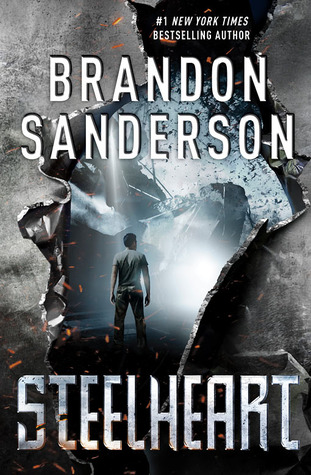
Book Review: Two Sanderson YA Novels

After our little nerdy birthday date, I was definitely in the mood for reading some Sanderson this past week, so I got on that and read two: The Rithmatist and Steelheart. Before this I'd only read Sanderson's mainstream fantasy (is that an oxymoron?) stuff, but both of these were YA-- one a revisionist historical fiction and the other a dystopian. It was fun seeing Sanderson's signature style in these slightly different genres. Let's discuss!

The Rithmatist 

This one takes place in an early 20th Century steampunk America, only instead of being a unified continent as we know it today, this America is a collection of islands with a loose political connection. The islands are plagued by a deadly pest: the wild chalklings. Only Rithmatists, special individuals chosen by The Master himself to bring chalk drawings to life, can fight them back and keep humanity safe. The story follows Joel, the son of a chalk maker at Armedeus Academy, who is fascinated by Rithmatics but was not chosen by The Master to be one. When students at the school start mysteriously disappearing, Joel teams up with one of the Rithmatist professors to figure out what is going on. The surprising answer reveals a bigger threat than any of them had imagined.

I thoroughly enjoyed this one. I mean, the premise is a little weird (chalk drawings that come to life?) but Sanderson is nothing if not good at developing a believable magic system, and this totally worked. Sanderson had every element of his successful formula here: unique and intriguing world-building, quirky characters, page-turning suspense, and a surprising twist at the end that, try as I might, I can never anticipate. Honestly, it's knowing that twist is coming that keeps me hooked on Sanderson books. He is just so masterful at it. Anyway, it was a lot of fun to see this formula at work in a YA book (re: less time-commitment than his usual fare). It was great fun.

Side note: I listened to this one as an audio book, which I don't actually recommend. There are a lot of diagrams explaining the chalk drawings, and it's just so much easier to see them in the book than try to picture them from the descriptions. I didn't feel like it was a big enough issue to stop listening and get the real book, this is just a courtesy warning to anyone who wants to read this book in the future.

Steelheart 

This book, Sanderson's most recent release, was the reason for the book signing we went to. At the signing, Sanderson said the inspiration for this novel came when someone cut him off in traffic one day and he thought, What if I just had the power to blow that guy off the road? Thus the idea came: ordinary humans who are suddenly gifted with superhuman powers. Instead of being the superheros that we read about in the comics, these Epics (as they're called) are corrupted by their absolute power and proceed to terrorize and dominate mankind, taking what they want, killing at will, and ruling with fear. This is the story of David, who as a young boy watched Steelheart, one of the strongest and most ruthless Epics, kill his father. David wants nothing more than to find the Reckoners, a small group of mortals who are fighting back, and convince them to take Steelheart on once and for all. And, he happens to know a secret that could change everything.

Okay, so this one was not my favorite. To me, it didn't seem quite as well-written or well executed as some of his other books. It felt a little sloppy, like he wrote it quickly and then didn't really take the time to polish it up much. It also felt darker and a little more violent, though that may just be the nature of the dystopian genre and not so much a fault of the book. I guess I like my violence to be a little more fantasy-based, and not so action-movie-ish.

That being said, it still contained most of the trademarks that I love about Sanderson. There were some very fun characters in this one. I loved that the main character, David, was a nerdy teenager who was super awkward around girls and came up with the worst metaphors (reminded me of my husband, who always cracks the lamest jokes). And once again, the twist caught me by surprise. I really thought I had this one figured out, but while I was close on some things the ending had some unexpected curveballs. I love that.

Anyway, I'd recommend The Rithmatist  before I'd recommend Steelheart, but they were both enjoyable reads. Also, be aware that that both these books have sequels (possibly series?) planned. While I think they both could be read as fairly satisfying stand-alones, there were questions left unanswered in both books. Usually I'm not a fan of YA series, but Sanderson has yet to disappoint me, and his sequels to date have all been fabulous, so I'm actually a little excited to read more of these worlds and see what new directions he takes.

Wednesday, October 2, 2013

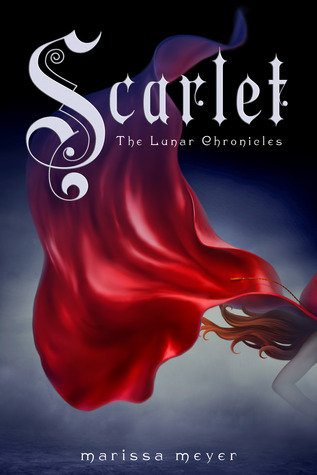
Book Review: Scarlet

Scarlet by Marissa Meyer

Summary (Courtesy of Goodreads): Cinder, the cyborg mechanic, returns in the second thrilling installment of the bestselling Lunar Chronicles. She's trying to break out of prison—even though if she succeeds, she'll be the Commonwealth's most wanted fugitive. Halfway around the world, Scarlet Benoit's grandmother is missing. It turns out there are many things Scarlet doesn't know about her grandmother or the grave danger she has lived in her whole life. When Scarlet encounters Wolf, a street fighter who may have information as to her grandmother's whereabouts, she is loath to trust this stranger, but is inexplicably drawn to him, and he to her. As Scarlet and Wolf unravel one mystery, they encounter another when they meet Cinder. Now, all of them must stay one step ahead of the vicious Lunar Queen Levana, who will do anything for the handsome Prince Kai to become her husband, her king, her prisoner.

This is the second book in a series. Not that I have a long tradition on this blog (I only started last May), but I usually review series as a whole, or skip the second book entirely. I only did a partial review of Cinder here, so the fact that I'm doing a full solo review of the sequel is something to note. It's just, I couldn't not. Because this book was so much fun. In fact, I think I liked it even more than Cinder, and I liked that one quite a bit.

What I liked: Frankly, Meyer just knows how to do a good fairy-tale adaptation. She knows what elements to keep, how to adapt them to her setting and world, and how to make it just different enough that it's not predictable. Cinder  was an adaptation of Cinderella (obviously), but this one was Little Red Riding Hood. And she did it brilliantly. Honestly, the way this story unfolded was just perfect. I liked the character of Scarlet, and how she made a strong foil for Cinder's character (Cinder was trying to run away, Scarlet was running toward the action). I wasn't sure how I felt about Wolf for most of the book, but by the very end I liked him quite a bit, even if he was more violent than I preferred (at least that wasn't his choice).

Also, I loved how Cinder's story was intertwined. I know a lot of people were worried about this sequel being about completely different characters, but the narration skips back and forth between Scarlet and Cinder, and the story really picks up where the first book left off. Eventually both characters end up meeting and their stories mesh, and I don't know how many times I can say "brilliant" but really, Meyer just did a brilliant job of crafting her plots and getting everything to fit right.

What I didn't like: Hm, I'm not sure if there was anything I didn't like about this book. I felt like Cinder had a few issues or areas that could've been developed better, but I didn't feel that way about this book at all. Maybe the thing I hate is that I'm going to have to wait till next year for the next book in this series to come out. I'm definitely excited for it.

So, if you like fairy-tale retellings, good YA fiction, or just a fun story, I totally recommend this series. It just gets better.

Monday, August 12, 2013

Road Trip Reads

I think I mentioned this in my last post, but we were on a massive road trip last week (just got home tonight, in fact). When I say massive, I mean 40+ hours in the car in the space of eight days. With a toddler. It was a recipe for potential disaster, but luckily our little man was a road warrior, and we ended up having a blast.

It also helped that we had a good a supply of audio books on hand, because nothing makes time on a road trip more enjoyable than a good audio book. I thought this trip would be a good opportunity to listen to a few of the free Sync downloads I've collected this summer, and we made it through three of them. All of them were super charming and very fun, so I thought I'd just do a quick review of all three in one post.

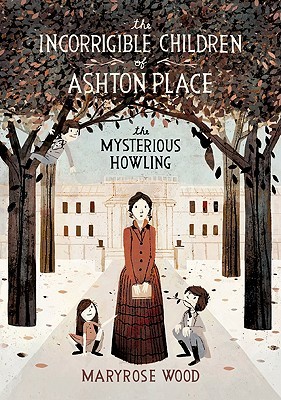
The Incorrigible Children of Ashton Place: The Mysterious Howling by Maryrose Wood

This little story was perhaps the weakest of the three books as far as plot was concerned, but the writing was so clever and witty that it more than made up for it. This book is British humor at it's best, and had so many gems in it. My husband and I laughed our way through this one, and while we might not be intrigued enough to pick up the next book in the series, it was delightful fun.


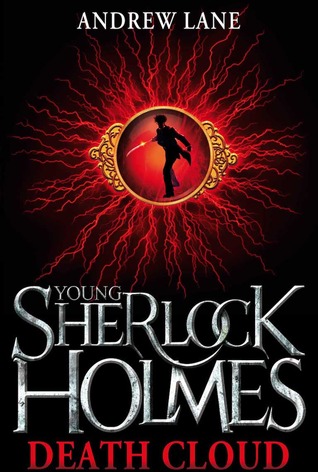
Young Sherlock Holmes: Death Cloud by Andrew Lane

This one was my least favorite of the three, but it was my husband's favorite. As the title implies, this series follows the development of a young (14 year old) Sherlock Holmes, and I think I only disliked it because I would have imagined a younger Sherlock Holmes differently. I guess that's the problem you have when you start with a character created by another author (endemic to all fan fiction). My husband had no problems with the way the young Holmes was portrayed, however, and I must say that I found no fault with the plot. It was a nicely intricate and exciting story very worthy of a Holmes character. My husband and I talked about how this book would probably be perfect for intellectually inclined teenage boys.

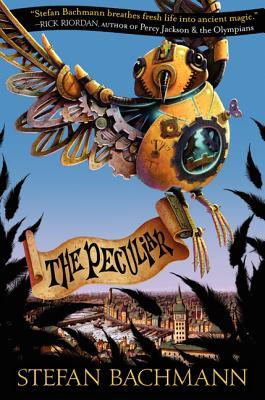
The Peculiar by Stefan Bachmann

This one was just fun. The setting was certainly unique, think "fairy" meets "steampunk." It wasn't necessarily standout in any other way. It felt like a bit of a cliche story; young, disadvantaged boy must save his sister from the clutches of an evil conniving politician and ends up saving the whole of Great Britain in the process (with the help of a bumbling, cowardly privy council member who would much rather be sleeping in bed then accidentally saving the world), but it was well written and fun nevertheless. Although, can I gripe about the fact that once again, this was only the first book of a series? Seriously, why does every single YA book have to be part of a series? Every single one of these books would have made a fantastic stand alone. For the love, just learn how to wrap your stories up, okay? (I know, I know, publishers like series because it means more money. Ugh. Sometimes it works, but I think this multiple series stuff is ruining some really good stories).

Anyway, these were three fun reads that definitely made our road trip so much more enjoyable. I'd put all of them in the three star range. You don't necessarily have to seek these books out, but if you come across any of them, feel free to pick them up.

Monday, July 29, 2013

Book Review: Graceling

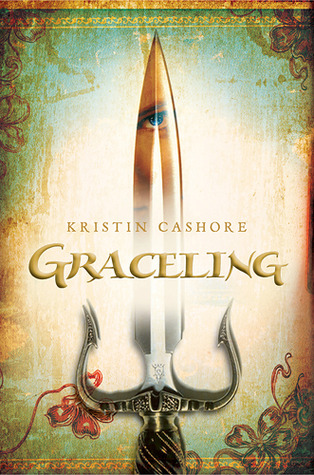
Graceling by Kristin Cashore

Summary (Courtesy of Goodreads): In a world where people born with an extreme skill—called a Grace—are feared and exploited, Katsa carries the burden of the skill even shedespises: the Grace of killing. She lives under the command of her uncle Randa, King of the Middluns, and is expected to execute his dirty work, punishing and torturing anyone who displeases him. When she first meets Prince Po, who is Graced with combat skills, Katsa has no hint of how her life is about to change. She never expects to become Po's friend. She never expects to learn a new truth about her own Grace—or about a terrible secret that lies hidden far away...a secret that could destroy all seven kingdoms with words alone.

Another YA fantasy series. My summer reading list is becoming thoroughly predictable. I'm almost getting sick of this genre (but not quite yet) and will need to branch out soon.

Anyway, this one's been on my reading list for a while because of all the hype around it. And I liked it, but I didn't love it. A solid three stars, but no more.

So here's what I liked. Cashore's world was quite interesting. I really did like the concept of these graces, or special talents, and the way they were used and exploited by the various countries. I liked the political intrigue, and the story line was very engaging and well paced (except for that one part, when they were trudging through the cold and snow over the pass, and I just skimmed through it). I'm intrigued enough that I will probably be picking up the second book in this series just to see what Cashore does with a different set of characters.

Because here's where we get to the part I didn't like: the characters. Specifically, the main character. I get that Katsa is supposed to be this strong female role model, the type of character girls can look up to. I get that it's supposed to be great that she's not needy and clingy and is not going to change who she is just because some boy happens to fall in love with her. I mean, I hate the Bellas and the Ewards as much as the next self-respecting independent-minded woman, and Katsa is NOT a Bella. BUT, here is where I'm going to get on my soapbox for just a minute, because Katsa is not a good role model for young girls either. So yes, it's great to be strong and independent, but you can be strong and independent and still be in a committed relationship. I had SERIOUS issues with Katsa's anit-marriage (and anti-motherhood) stance, because I firmly believe this is the wrong message to send young girls today. Sure, it's great to teach girls to wish for more than a ring on their finger, I for one whole-heartedly agree that there is more to life for women than being some man's trophy wife. But teaching girls that uncommitted sexual relationships are the new ideal is potentially more harmful for women in the long run, not to mention society. So maybe my issue isn't with Katsa so much as it's with the messages she stands for.

Along those lines, I had some serious concerns with the portrayal of violence in this book. My issue isn't so much with the idea of a young teen girl killing people (The Hunger Games already broke me in to that idea), but with the physical fighting between Katsa and Po. So yes, it's cool that Katsa is physically stronger than Po. And it's very nice that Katsa is able to defend herself against all male predators so effectively. The message that girls should be strong and able to defend themselves against attackers was loud and clear. But Po was a good man that she genuinely liked (and *spoiler* came to love), so I found the amount of physical fighting between the two of them... bewildering. Cashore walked a fine line, and I'm not saying she crossed it at any point (she was very careful to show the amount of concern they took for each other's physical well-being, and the fact that Po never hit her outside of "training"), but I don't think it's ever a good idea to portray violence in a relationship as normal. Especially the one time their fighting episode turned *cough* amorous *cough*. That is just a bad association to teach young girls. Maybe others disagree, maybe I'm just old fashioned, but I did not like that aspect of their relationship (or really, any other aspect).

So, after those two long paragraphs of griping, you might think I hated the book. But remember, I really did enjoy it for the most part. It was a nicely developed story, and I really am interested in reading the next book. My only beef is with the messages being sent to young girls, so I don't actually recommend this book to young adults. To anyone else who enjoys this genre, go for it.

Monday, July 15, 2013

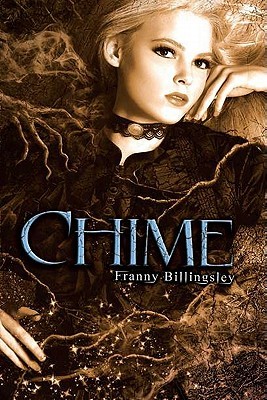
Book Review: Chime

Chime by Franny Billingsley

Summary (Courtesy of Goodreads): Before Briony's stepmother died, she made sure Briony blamed herself for all the family's hardships. Now Briony has worn her guilt for so long it's become a second skin. She often escapes to the swamp, where she tells stories to the Old Ones, the spirits who haunt the marshes. But only witches can see the Old Ones, and in her village, witches are sentenced to death. Briony lives in fear her secret will be found out, even as she believes she deserves the worst kind of punishment. Then Eldric comes along with his golden lion eyes and mane of tawny hair. He's as natural as the sun, and treats her as if she's extraordinary. And everything starts to change. As many secrets as Briony has been holding, there are secrets even she doesn't know.

So when I saw the cover of this one, I was a bit wary. Usually a really pretty cover means it contains an unsubstantial story, and I know you're not supposed to judge a book by it's cover and all, but really. I tend to shy away from glamorous cover models. However, this one was recommended to me by a very reliable source (Liesl Shurtliff, actually) so I decided to withhold judgment until after reading it. And in the end, I found it to be a breath-taking, addicting, fantastic story that I didn't want to end.

I will caution, this book was disorienting at first. The narrative style is first person, but it's really unlike any other first person narration I've ever read. You get inside this girl's head, and it is very much a teenage girl's head: confused, insecure, full of undeserved self-loathing, jumbled, and barely coherent. It took me a few pages to wrap my head around this style that jumped from thought to thought with nary a segue in sight, but once I picked up on her voice, it was a totally enjoyable ride. It helped that Briony was such an interesting character in general, smart and witty (biting sarcasm) but deeply insecure and full of guilt. I'm not sure how Billingsley was able to so thoroughly capture the mind of a somewhat scarred teenager, but she did it brilliantly.

Which leads me to the other characters, and my only complaint of the book. Except for her sister (who I'll get to in a minute), every other character was disappointingly underdeveloped. This is possibly a byproduct of the strange first person narration, but I felt like I hardly got to know, much less understand, any of the other characters. Particularly Eldric. I never felt like I really had a clear picture of him or his personality. Briony's father was practically a nonentity. The other townspeople were little more than names mentioned in passing. The only character where this lack of development made sense was the step-mother, and that was on purpose for the pivotal plot twist. But, like I said, this neglect of other characters may have been on purpose, since everything is filtered through Briony's very inwardly-focused mind.

The one exception to this was Briony's sister, Rose. In modern medical terms, Rose would perhaps be labeled with some disorder on the autism spectrum, but in this time period (early 20th century) and setting (rural England) she is just a special, beautiful character whose tics and odd behaviors were simply presented and expected to be accepted. Briony's complicated relationship with Rose was also beautifully developed, with the deep love underlying the heavy sense of responsibility, guilt, and annoyance felt by Briony. It was a wonderful relationship.

Now, a word about the setting. Early 20th century England where the Old Ones are real, magic exists alongside religion and industrial technology, and witches are still hanged? I loved it! Very creative and interesting place to put this story. Even though I didn't understand everything about how the Old Ones worked, I liked the world and the magical realism elements.

And what is there to say about the plot? It is complicated, and deals with Briony working through issues relating to her step-mother's death a few months before, and trying to save the children of the village from the  swamp cough, and maybe perhaps falling in love, although that only happens to normal girls and not witch girls like Briony. I don't want to say too much more about it, because I don't want to spoil anything for anyone. I want all my friends to go out and read this one because I think (hope) they will love it as much as I did.

Yes, sure, it might be just another YA fantasy with a love triangle, but no, it's not just that. The way this character is presented, the way she thinks and feels, is so different for this genre that it makes this book stand out among the crowd. I thoroughly enjoyed the story, found it completely addicting (in a can't-put-down-this-book kind of way), and highly recommend this book to anyone who likes a good YA fantasy.

Monday, July 8, 2013

Book Review: The Raven Boys

The Raven Boys by Maggie Stiefvater

Summary (Courtesy of Goodreads): Every year, Blue Sargent stands next to her clairvoyant mother as the soon-to-be dead walk past. Blue herself never sees them—not until this year, when a boy emerges from the dark and speaks directly to her. His name is Gansey, and Blue soon discovers that he is a rich student at Aglionby, the local private school. Blue has a policy of staying away from Aglionby boys. Known as Raven Boys, they can only mean trouble. But Blue is drawn to Gansey, in a way she can’t entirely explain. He has it all—family money, good looks, devoted friends—but he’s looking for much more than that. He is on a quest that has encompassed three other Raven Boys: Adam, the scholarship student who resents all the privilege around him; Ronan, the fierce soul who ranges from anger to despair; and Noah, the taciturn watcher of the four, who notices many things but says very little. For as long as she can remember, Blue has been warned that she will cause her true love to die. She never thought this would be a problem. But now, as her life becomes caught up in the strange and sinister world of the Raven Boys, she’s not so sure anymore.

I was very excited for this book, mostly because I've heard so many good things about Maggie Stiefvater but hadn't read any of her books yet. Maybe I should've started with The Scorpio Races, because I'm just not sure about this one. It left me feeling very conflicted.

I'll start with what I liked about this book. It was creepy and mysterious in a good Edgar Allen Poe sort of way, and I enjoyed that. Between the graveyard scenes, the psychic fortune telling, dead bodies, ghosts, magic, and ancient Welsh folklore, there was lots of creepy ambiance that would make this a fun read around Halloween. There was also plenty of mystery and suspense. I really quite enjoyed the quest aspect of the storyline, the search for the magic lay lines and the tomb of an ancient Welsh king, and that is the storyline that I kept reading for. I wanted to find out what was going to happen with all that paranormal stuff.

I will hand it to Stiefvater, she's good at developing complex characters. Each of these characters had such different personalities, such detailed personality traits and complex backgrounds, and they came together and fit so well as a group, it was quite impressive. But this is also where the book lost me, because it felt like the back story and character development came to over run the plot. It was like this book couldn't decide if it was going to be a contemporary coming-of-age novel, or a contemporary fantasy novel. Maybe she was trying to make it be both, but I kind of wanted it to just be one or the other. There was just so much of what felt like interruption where Adam had to deal with his abusive father, or Ronan had to work out his issues with his past and/or older brother (who seemed like he was going to play a big role in the book at first, but then just disappeared half-way through the book), and while all of these issues made for some really deep character conflict, I just wanted them to get back to the paranormal stuff. Not to mention that some of the issues were just really disturbing, and would make me hesitant to recommend this book to actual young adult readers (but that's a rant for another post).

Also, the construction of the novel itself was very meandering. While I was fine with the story being told from multiple points of view, the conflict development was just not tight. Parts of the book were incredibly slow with way too much descriptive detail, and other parts were almost frantic in pace with everything happening all at once and not enough explanation. It was just a strange ride through this story, and I felt like it could've been reworked to build more steadily to a more fleshed out climax, instead of jolting and hobbling along to a rushed and inconclusive end.

Also, this is a "cycle", meaning there are four books in this series. Ugh. I don't know if I have it in me to read the next one, much as I am dying to know what happens with the magic stuff. So, in conclusion, I can see how Maggie Stiefvater is a good writer, but I'm hoping one of her other books is better.

Monday, July 1, 2013

Book Review: Rump

Rump: The True Story of Rumpelstiltskin by Liesl Shurtliff

Summary (Courtesy of Goodreads): In a magical kingdom where your name is your destiny, 12-year-old Rump is the butt of everyone's joke. But when he finds an old spinning wheel, his luck seems to change. Rump discovers he has a gift for spinning straw into gold. His best friend, Red Riding Hood, warns him that magic is dangerous, and she’s right. With each thread he spins, he weaves himself deeper into a curse. To break the spell, Rump must go on a perilous quest, fighting off pixies, trolls, poison apples, and a wickedly foolish queen. The odds are against him, but with courage and friendship—and a cheeky sense of humor—he just might triumph in the end.

So before starting my review, I must confess that I might be a bit biased on this one because I happen to know the author personally. Liesl is one of the dear friends we left behind in Chicago, and she is just one of those deep, thoughtful, sweet, lovely people with interesting ideas pouring out of her, so when I heard she was a published author with her first book coming out last April, I thought, "Well, that just makes sense." And of course I also thought, "How cool! I know a published author! And I own a signed copy of her book!" It's little things like that that just get me all star struck excited. So anyway, I will try to be as unbiased as possible.

First off, I love me a good fairy tale retelling (Ella Enchanted, all time favorite), but it often feels like the same fairy tales get rehashed over and over again, so it was completely refreshing to see this one was about Rumpelstiltskin, a lesser known but still fantastic fairy tale. And telling it from Rump's point of view was sheer genius (akin to the "True Story of the Three Little Pigs" told from the innocent wolf's point of view). I mean, how many male protagonists do you see in fairy tales? Especially of the non-prince variety?

Second, I thought Liesl nailed the middle-grade genre. The language is simple, descriptions are not overly-flowery, but the world is still rich with imaginative detail and the little moral messages (ideas about why some people are mean to others, what it's like to be different, and finding inner strength) are powerfully expressed. And it was funny! Of course, there are lots of jokes to be made when the main character's name is "Rump," but it was nice to see the protagonist himself poke fun at his own name. Beyond "rump" jokes, the humor in the rest of the book is subtle and clever. Also, I loved the little rhymes sprinkled throughout the story. All in all, this was a simply delightful little read.


I recommend this one in full to any middle-grade readers out there (especially the boys), their parents, or anyone who loves a good fairy-tale retelling.

Wednesday, June 26, 2013

My Problem With YA Lit

I have such a love/hate relationship with YA literature.

I love classic YA lit. I love the To Kill a Mockingbirds and the A Tree Grows in Brooklyns. I love the dystopias and the coming-of-ages and the fantasies. But I love them for a reason, and that reason is usually a beautiful nugget of human wisdom wrapped in a sweet and simple story. These classic YA novels are the reason I keep coming back to the genre, reading all the new YA books I hear about, hoping to find that next great YA classic with that new beautiful nugget of universal truth.

The problem is that many of the popular YA books receiving so much attention these days don't have enough substance to launch them into the realm of classics.* I've read a lot of really good stories with a lot of creative twists. I've read a lot of steamy teen romances (a lot of triangles, not sure why there are so many love triangles, but whatever). I've read a lot of fun books, and I've liked many of them. But there's just not a lot more to them than that. They are just fun or creative stories with nothing beneath the surface. No nuggets of human wisdom. No deeper universal truth. They won't last.

Take Of Poseidon by Anna Banks, a book I listened to recently courtesy of Sync. I'd heard some good things about this book, but in the end, it wasn't much more than a "Little Mermaid" story flipped around (merman prince falls for landed girl). It was a fun story for sure, with a suitably steamy romance. But there was nothing else there, really. And I found it disappointing.

But a part of me wonders if I should be so judgmental. After all, I am not the target audience of YA literature. If young adults like these kinds of stories, should I come along with my snooty English-teacher nose-in-the-air and declare them NOT WORTHY because they will never be considered a classic? I mean, sometimes kids just want a story. They just want to be entertained in fresh and creative ways. And I can understand that. As a humanities person, I know the value of story for story's sake. The human brain loves stories, whether their be some deep moral message or not. Should I ask YA literature to be "deeper" than it is just because I am an adult who enjoys deeper stories? Or should I just let YA lit be for young adults, let them have their fun little stories that at least get them reading with no judgment on my part?

I'm still struggling with this. I'm still trying to decide what makes "good" YA literature. What I do know is that I love this genre, and I will keep reading it in search of that next "classic" book.

*John Green being a notable exception here, but I've got other issues with Green's book, which maybe I'll talk about when/if I review one of his books here.