Quantcast

Monday, December 1, 2014

Books I Read in November

I know November is a month devoted to gratitude, but mostly I'm grateful that November is over. That month just about killed me. November was the month of the never-ending recurring cold (the combination of newborn sleep deprivation and breast-feeding seems to have shot my immune system and destroyed any ability my body has to fight off infection) and the infamous six-week peak in fussiness. If my sweet little Baby #2 doesn't have colic, than I don't know what colic is, because the crying! The hours and hours of inconsolable crying! November was just about the perfect storm of physical and mental torture, and I barely survived with my sanity (and marriage) in tact. It was a rough month.

But there were still a few quiet hours of nursing where a little bit of reading got done, so I'm back here to report.

Bread and Wine by Shauna Niequist

I've developed an interest in food books recently, and this one? This one is a huge winner. This is my most recent favorite book of ever, and I want to own it. I've decided that if I ever write a book, this is the kind of book I want to write. It's a bit hard to describe, but this book is a collection of memoir-type essays focusing on the spiritual, communal, and nurturing aspects of food and meals in Niequist's life. I loved Niequist's perspective and voice (I'm pretty sure she's read Daring Greatly), and I found myself really inspired to throw some dinner parties and cook good food for my family. Bonus: there were recipes included at the end of almost every chapter, and I've already tried (and loved) about half of them. This was simply a lovely book, and I may have to give it a full review some time soon. (P.S. This would make a great gift for any foodie in your life, or anyone who just enjoys good, thoughtful writing).

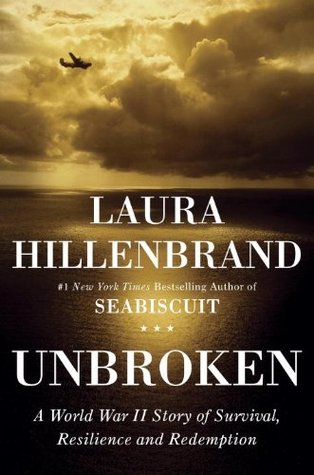
Unbroken by Laura Hillenbrand

I know, I know, I'm way behind everyone else on getting around to this bestseller, but I knew it was going to be a depressing slog, and I just couldn't bring myself to put it on hold at the library until my virtual book club picked this one for November. And I was right, it was a completely depressing slog. Every time I thought my colicky baby was going to drive me insane this month, I would think, Well, at least I'm not in a Japanese POW camp. Way to put my small trials in perspective. And in the end, this story truly was inspiring and hopeful and really, really beautiful. I definitely see what all the fuss was about and I'm glad I read it (although I still can't decide if I want to see the movie).

The Forgotten Garden by Kate Morton

This was my second Kate Morton book this year, and while I still found her ability to craft such an intricate plot to be incredible, this was the exact same formula as The Secret Keeper, and I found myself less impressed. Also, I listened to The Secret Keeper as an audiobook, so I didn't realize until reading this one how many unnecessary sentence fragments Morton uses. It pretty much drove me insane. Honestly, who was the editor here, and why didn't they fix this? Also, there were a few characters in this one that I felt were underdeveloped and their motivations weren't explained well. That being said, I still enjoyed this, and recommend to anyone who enjoys a good story.


And now for one in the inauspicious category of Did Not Finish:

Outlander  by Diana Gabaldon

Okay, I know people who love this series, and on the outset it sounded like just my sort of book. After all, I have a weak spot for good historical fiction. But this book reconfirmed why I mostly stick to YA historical fiction. I've actually become a lot less prudish about "adult content" in recent years, but when the main romantic relationship became aggressively violent, and Gabaldon tried to pass this violence off as passionate romance, I just couldn't read anymore. The feminist inside me was too disgusted, because I'm sorry, I don't care  if it is historically accurate that wives were whipped in the 18th Century, portraying that kind of abuse as "deserved" and romantic is not acceptable. Never. No. And that wasn't even the worst of it. I just couldn't read any more. I do NOT recommend this one.

And with that, good riddance to November! Bring on December, with it's Christmas music and twinkle lights and holly and joy! Hopefully December will bring with it less sickness, more sleep, and happier times all around. I'm predicting nothing but good things this month. Here's to December!

Thursday, November 6, 2014

To All The Pregnant Ladies

So, you're pregnant, and you want a book to read about it?

Way back four years ago or so when I got pregnant for my first time, I was scared and excited and completely ignorant about everything that was going to happen, so off I went to my local library to search for whatever they had on "Pregnancy". I think the very first book I checked out was What to Expect When You're Expecting, and if you want to know physically what is happening to you at every stage, and freak yourself out reading about all the warning signs of things that could possibly go wrong, and want a very ADA approved list of foods to eat and avoid, this is a great book to start with. Go for it. Very safe and not controversial at all.

Also kind of completely useless when it comes to preparing yourself for labor (at least it was in my case).

This second time around, I wised up a bit and rather than ask my library, I asked my friends for recommendations for good pregnancy books, especially about labor and delivery. My good friend Sarah really came through for me, and let me borrow her entire pregnancy library. So here are my thoughts and recommendations on some good/interesting books to read while you are pregnant.

HypnoBirthing: The Mongan Method by Marie F. Mongan

Check out my full review of this book here. So be prepared for some pretty crunchy-granola stuff, but I completely recommend this one with a grain of salt. She spends a lot of time talking about how labor can be painless and even enjoyable. Yeah, no. That was certainly not my experience. But all of the advice about mentally and emotionally preparing, the relaxation techniques, all of that is golden. If you can, take the class. I've only ever read the book, but this is by far the most helpful for practical ways to endure a natural labor.


Birthing From Within by Pam England and Rob Horowitz

Okay, if you thought HypnoBirthing sounded fringe and crunchy-granola, this one is even beyond that. This book is more like therapy for the pregnant woman. There's all sorts of talk about exploring your emotions and creating pregnancy art. Yeah, I don't know much about therapy, and it sounded pretty weird to me at first. There's all sorts of art pictures from actual students that took her classes, pictures of baby bumps and female bodies and vaginas and stranger stuff. The art is all about helping women (and men) process their emotions about pregnancy. I couldn't bring myself to actually paint a picture, but I did try some journaling using the recommended questions because I really did suffer some trauma from my first pregnancy, and that was a nice therapeutic experience. This one is definitely interesting, but also very weird and not conventional at all, so just be prepared for that.

Active Birth by Janet Balaskas

This one is less touchy-feely, more medically mainstream. Sort of. The premise here is that women should be active during labor, moving into different positions, delivering in a squatting position, that kind of thing. It goes over all sorts of exercises to prepare for labor, all the positions to labor in, etc. At first I thought this one was great and very helpful. One of the major reasons I didn't want an epidural was so I could labor in different positions if I wanted to. Then I went through labor without an epidural and discovered changing positions was the last thing I wanted to do. In fact, what I wanted most desperately was to NOT MOVE at all. I remembered all the pictures and stories of women laboring in standing positions in this book, and I thought How? How? How? I barely had the strength to breathe, I don't know how any woman has the strength to labor in a standing position. So, this one ended up not being my thing, but I still recommend it. Warning though, there are some very graphic pictures of completely nude women in the process of laboring. It's not sexualized at all, but I still found myself skipping over the pages with photographs a lot. It's just a lot of naked woman.

The Gift of Giving Life by a collection of LDS women

By far my favorite of any of the books I read this pregnancy, this one is not so much a How-To, but more a series of essays and birth stories reflecting on the spiritual side of pregnancy and birth. Yes, all the authors are LDS and they write for an LDS audience familiar with the doctrine, but I think this one could translate well to any Christian faith. Just a note of caution to even the LDS readers, the first section was a bit rough for me, and I almost didn't continue reading (the first few essays talk about Heavenly Mother, and they delve into some very questionable grey area that is NOT mainstream doctrine), but I'm glad I pushed on because nearly everything else about this book was completely beautiful. With my first pregnancy, I thought a lot about the physical preparation of bringing a new baby into the world, but I never thought about spiritually preparing for this experience. I loved the way they compared labor and delivery to the atonement, and using the power of the atonement to help you through your hardest moments in labor. Also, I really appreciated the section on meditation. The birth stories are fantastic too. I love birth stories, and there are hundreds of birth stories in this book. Honestly, I think reading all these birth stories was more helpful during my own labor than any other book I read, because the thought that kept me going was if all those other women survived, I will survive too. I do want to reiterate that this book does not come from church leadership and should not be considered church doctrine (with 90% of the stories being about natural labor, someone could walk away from this book feeling like they are sinning if they get an epidural), but there is some beautiful stuff in here for every pregnant woman (I do NOT recommend this book for those suffering from infertility). I want to reread this book with each pregnancy, which is why I now own it. And I plan on giving it to all the pregnant women in my life.

Monday, November 3, 2014

Books I Read in October

October was actually a pretty good reading month for me (yay for all those hours and hours of nursing!), but I only finished two books, so it looks like it was a bad month. My problem was that I kept getting distracted, starting new books without finishing the books I was already in the middle of. I was just so excited about reading again (after the brainfog that was my pregnancy), and a bunch of books came in from my holds at the library, and I couldn't bring myself to be disciplined about finishing. So I'm in the middle of about 10 books right now, and only managed to finish two that whole month.

Oh well, here's the update.

Parnassus on Wheels by Christopher Morely

This book was published in 1917, but if you haven't heard of it, that's okay. I wouldn't exactly call this a classic, it's not nearly substantial enough to be required reading in a high school English class. But it is a completely delightful little read. It's full of whimsy and funny characters and comical situations. But most importantly, this little novel is love letter for book lovers. It is about a little man named Roger Mifflin who is on a mission to bring great literature to the rural farmers of America, and thus he travels about the countryside with a book-shop wagon (essentially a book mobile, except pulled by a horse named Pegassus). And when he meets Helen McGill, a thirty-nine year old farm housekeeper who up and leaves the only life she knows to buy the Parnassus and have an adventure of her own, the story takes off. It's completely adorable, and I thoroughly recommend this to any book-lover looking for a fun, old-timey classic read.


A book about home decor. Hmm. You wouldn't think a book about something as fluffy as paint colors and arranging $10 tchotchkes would be all that thought provoking. But! This one caused lots of thoughts. Lots of thoughts on the philosophical level. Be prepared, a longer post is coming with all my deep thoughts about home decor, but for now just know that I whole-heartedly recommend this one, especially to any woman out there with house-shame (do you know what I mean by that?). Smith has a fun voice and is a good story-teller, and this is a lovely little read.

Thursday, October 30, 2014

A Bookish Halloween (Or, I Love Coordinating Costumes)

Okay, so confession. Halloween is not my favorite holiday. However, I can't deny that I love dressing up. Especially when we have a stroke of brilliance for an absolutely adorable coordinating family theme and pull off four homemade DIY costumes for under $5.

Coordinating costumes are just the best, aren't they? They just tickle me to death. And ours turned out so cute this year I can't help but sharing.


So I'm really hoping the readership of this blog is savvy enough to discern not just the theme, but also the identity of each costume from the picture alone. But just for the sake of spelling it out, here we go: I am dressed as Miss Frizzle from The Magic School Bus. Our 2 year-old is dressed as the coconut tree from Chicka Chicka Boom Boom, the wee babe is dressed as The Very Hungry Caterpillar, and my husband is channeling Harold and the Purple Crayon (his costume really needed a light blue footie onesie to complete the look, but my husband has his limits, and I settled for just the blue shirt).

I'm sure no one really cares, but here's the story behind these costumes. Back at the beginning of October, we tried to take our 2-year-old to the zoo dressed as a cowboy for an early Halloween trick-or-treating experience, but he was having none of that costume. He wouldn't wear the hat or the bandanna, and we didn't have boots anyway, so the costume was a total flop. So we sat around asking ourselves what kind of costume he actually would wear. Most kids want to wear costumes based on what they are currently interested in; trains or cars or princesses or whatever Disney movie is hot at the moment. My kid is a bit weird. His current obsession is the alphabet (this is a post for another day), and so I said something like, "If only we could figure out a way to dress him up as letters, he would totally love that." My brilliant sister, who was visiting at the time, made the suggestion that we dress him up as the coconut tree, because he is OBSESSED with that book. As in, he has it memorized and recites it over and over again all day long. As soon as she suggested it, I knew we'd struck gold.

So the idea was hatched and we devised a costume made entirely out of construction paper and foam sticker letters. It was brilliant, but I really wanted the family to have coordinating costumes, because like I said, coordinating costumes are the best. So the question became, what to do for the babe? My lovely sister came to rescue again, as her little boy had been the Hungry Caterpillar the year before, so she generously sent me the hat, we had the green onesie on hand, and the theme of Classic Children's Literature was set. I chose Miss Frizzle because somehow I thought sewing paper cutouts of stars and planets on a dress would be easier than any other costume and our only expense there was a three dollar wig of red hair. My husband's costume was by far the easiest, once we figured out what he was going to be. He spent an hour crafting his crayon out of construction paper, threw on the shirt, and off we headed to the ward trunk-or-treat.

So here are my take-aways from our costume experience this year:


  • It's a bit tricky to breastfeed in a dress, especially one that has construction paper bits sewed all over it.
  • It's totally exciting to have a child old enough to "get" Halloween, and to be super excited about his costume. Seriously, he loved being that coconut tree so much he wanted to sleep with his costume (there was a total meltdown when we told him no).
  • About 70% of people have never read Harold and the Purple Crayon. Seriously people? Why are so many people clueless about this classic? Maybe we just really needed that adult footie pajama.
  • Classic Children's Literature is just about the most adorable costume theme ever. And the possibilities for costuming are endless. I have a feeling I'll be using this theme again in future years.

Happy Halloween!

Monday, October 27, 2014

Book Review: Daring Greatly

Daring Greatly by Brene Brown (I don't know how to get the accent over the last e in her name, and I'm too lazy to figure it out. Apologies.)

Summary (Courtesy of Goodreads): Researcher and thought leader Dr. BrenĂ© Brown offers a powerful new vision that encourages us to dare greatly: to embrace vulnerability and imperfection, to live wholeheartedly, and to courageously engage in our lives. Every day we experience the uncertainty, risks, and emotional exposure that define what it means to be vulnerable, or to dare greatly. Whether the arena is a new relationship, an important meeting, our creative process, or a difficult family conversation, we must find the courage to walk into vulnerability and engage with our whole hearts. In Daring Greatly, Dr. Brown challenges everything we think we know about vulnerability. Based on twelve years of research, she argues that vulnerability is not weakness, but rather our clearest path to courage, engagement, and meaningful connection. The book that Dr. Brown’s many fans have been waiting for, Daring Greatly will spark a new spirit of truth—and trust—in our organizations, families, schools, and communities.

This book came highly recommended to me by several very trusted sources but it took me a while to get around to it. And when I finally did pick it up, I wasn't sure I would personally get a lot out of this book. After all, Brown's big revelation that "vulnerability" is necessary to experience true connection and joy wasn't all that big of a revelation to me. Honestly, that was something I figured out the first time I fell in love (because I was the first one to say "I love you," and I experienced all sorts of vulnerable emotions that long week before he plucked up the courage to say it back to me).

And as far as the "shame" issues she discusses, I felt like I was beyond that too. Brown talks a lot about shame, and how when people feel shame (over body image, money, lifestyle, whatever it is) they will use coping techniques to hide their shame in an attempt to control how people perceive and connect with them. Of course, back in high school I experienced all sorts of insecurities and shame (who doesn't), and I definitely used to be a perfectionist (one of the unhealthy coping strategies she talks about). But somehow I managed to get over it. By and large, I feel like I more firmly belong in the category of "whole-hearted" peopled she described as coping well with shame, and I didn't think this book would offer me much.

But the more I read, the more I realized what a prideful assumption that was on my part. I may not feel the same types of shame as most other people in our society today, but I still feel shame about a lot of things, and I still have coping techniques that are not healthy. In some types of relationships, I am great at being open and honest and connected. But in other relationships, I feel nothing but disconnect. I feel vulnerable or uncertain, so I close up and shut down. Most of the time I attribute this to my introverted nature, but Brown helped me see how a lot of my relationship problems come from shame, and a lack of willingness to be vulnerable.

The chapter I found most insightful was how to be open to vulnerability as a parent in order to really connect with our children, and most importantly, never to use shame with our children. I've found myself thinking and reflecting about this constantly. Brown talks about how some parents use shame in an effort to control a child's choices, but that is never healthy or productive because it often leads to a child who feels fundamentally unworthy of love. Suddenly I wondered if my attempts to potty-train my toddler by pointing out all his friends who are potty-trained and telling him only babies wear diapers are communicating a sense of shame instead of motivation. I really want my children to feel comfortable with me, to feel like they can be open with me and tell me things without fear of shame or judgment from me, and that's one of the main reasons I will keep coming back to this book over and over again.

This book had some other great insights too, about feeling like we have "enough" in our lives instead of "never enough," and allowing ourselves to truly feel joy without any sort of caveat (this one was big for me, I am almost always suspicious of happy moments in life because I'm sure it means something terrible is going to happen soon). And even though I feel like I intuitively understood many of the lessons it took Brown twelve years of research to figure out, this book was still incredibly helpful for me in understanding the motivations and behaviors of others. It's heartbreaking to realize how many annoying or confusing or abrasive behaviors are motivated from a place of shame. If anything, this book has helped me have more compassion for other people, and greater courage in how I navigate relationships with other people.

In the end, I determined this book was one I needed to revisit and reread. This is a book for marking up and taking notes. It is one I needed to own (so my sister got it for me for my birthday), and like I said in my last post, that is the highest praise I can give a book.

Friday, October 24, 2014

Owning vs. Checking-Out: Where Do You Get Your Books?


Usually, I have a policy against buying books. This may seem strange, seeing as how I love all things bookish, but I have two reasons for this policy.

1.) I have no room for more books. Our bookshelves are currently stuffed to capacity (over-capacity, with books piled on top), and since we don't have space in our little apartment for more bookshelves, any new books get shoved in the boxes in the closet, under the bed, or if they're lucky, added to the pile on my nightstand. It pains me that so many of my books don't have a permanent home, and I don't want to buy more books until I have adequate space and housing for them (someday I will have my dream home library...).

2.) The public library. Why on earth would I spend money on a book that I could get for free at my library?

Generally, the only time I break this policy about buying books is when I've read a book that is so good, I know that I will want to reread it, mark it up, take notes, and generally have the book on hand for future reference and referral. The two most recent books that broke this policy were The Gift of Giving Life and Daring Greatly.  I haven't talked in depth about either of these books yet, but they were both so good I asked for them for my birthday. Honestly, the highest praise I can give any book is to actually spend money on it (remember how I hate spending money).

Here's where we get to the story for today. At my local branch library, they have a little shelf set up near the front entrance with books that are available for sale. I used to always ignore this shelf because a.) my general policy, and b.) I assumed the shelf was full of trashy romance novels and dirty retired library books that had seen better days. It wasn't until one day over the summer, when we had arrived a little too early for story-time and I had a few minutes to kill, that I actually stopped to look this shelf over.

And guys, I was totally wrong about this shelf. I mean, yes, there were plenty of trashy romance novels to go around, but there were actually some quality books there as well. Books that were on my to-read list. And they weren't old used library books either, most of them were brand-new. Then I saw the price list: 25 Cents for paperbacks.

Say what?

I don't care how little shelf-room I have at home, how can I pass up a perfectly good like-new book from my to-read list for only a mere quarter?

I can't, is the answer. Since making the discovery of this shelf, I've purchased six books (pictured above, sans The Forgotten Garden by Kate Morton which was hiding under a pile of burp cloths on my nursing chair).

Now, every time we go to the library (at least once a week), I find myself perusing this shelf with great attention. They don't always have good stuff, but often enough I find these little gems that I can't help bringing home. This shelf is proving to be a serious detriment to my commitment against unnecessary consumerism.

But if I have one weakness, it is the temptation of a good book.

What's your book-buying policy?

Wednesday, October 22, 2014

On Money and Spending Philosophies.

I know. Money is such a controversial topic. Everyone has such strong opinions about money. So why am I bringing it up? This month marks the one year anniversary of my husband starting his real job. Which means we've had one full year of living on a real salary.

Before this year, when we were students living off grants and student loans and part-time jobs, my philosophy on money and spending was very simple: we can't afford anything. We never bought anything unless it fell into that Absolutely-Desperately-Necessary category. In the first two years of our marriage, our grocery budget was $30 a week, which I generously expanded to $35 a week when we moved to Chicago (higher cost of living). My husband likes to tell how I encouraged him to use the restroom while he was on campus to save on our toilet paper purchases (but seriously, he uses way more toilet paper than is necessary). And when it came to things like new clothes, those were special birthday or Christmas presents. I'm all about presents serving a practical purpose.

You would think having a real salary would feel liberating, after all those years of scrimping every penny. But actually, no. I find it kind of disorienting. Now when we're at the store, and my husband asks if he can buy a pair of sunglasses, my old response of "We can't afford it" doesn't work anymore. Because we can afford it. So now the question becomes is it a necessity, or just a want? But this is actually a fairly complicated question to answer because usually there's an argument to be made about necessity on some level (because yes, sunglasses are "necessary" for eye protection). So the next question becomes should we buy the cheapest pair, or is it okay to spring for the fancier nicer pair with polarized lenses? Because there is that argument to be made about investing in quality products because they will last you longer and potentially save you money in the end. And suddenly what was once not even a question now becomes a really complicated question with lots of hemming and hawing over options and values and priorities and how do we want to spend our money? And believe me, these questions and options tend to leave me way more stressed now than I ever was in our student days.

In honor of this one year mark of employment, we've been working on some spreadsheets to analyze our spending habits and create a budget going forward. Of course, we had a budget in place for this year, but it's amazing how many expenses popped up that we didn't plan for. And it's been fascinating (and a bit discouraging) to see where our money has actually gone this past year. Needless to say, this spreadsheet project has inspired a lot of discussion between me and my husband about our spending philosophy.

So I found it a bit serendipitous when I stumbled across an article recently about how to spend in a way to increase your happiness. I think most sensible people understand that "money can't buy you happiness." I grew up believing money wasn't for happiness, it was for security, and the only way for money to bring you security was to be as frugal as possible and save, save, save. So I find the idea that spending in certain ways could actually make you happier to be intriguing, and I've been thinking about this a lot. The article was actually a book review of Happy Money: The Science of Smarter Spending by two behavioral science professors, Elizabeth Dunn and Michael Norton.


Now, I'm freely admitting that I haven't read this book yet, and therefore I'm not recommending it (however, I have added it to my to-read list), but the article I read summed up five of the major points this book makes about spending, and I found them very interesting.

1. Choose Fun Over Stuff

Sometimes this one feels a bit counter-intuitive to me, because obviously "stuff" is going to last longer than "fun," and is usually the more practical option. But my husband is all about spending money on "fun", or on experiences that are super memorable. And it's true, when I look back on our student days, my favorite memories are the trips we made even when I thought we couldn't afford them, and the fun we had exploring Chicago and the surrounding area. I don't regret spending money on those experiences one bit.

2. Make it a Treat

The idea behind this one is that you take something you enjoy regularly (eating out, for example) and voluntarily restrict how often you do this thing, because your enjoyment of it actually increases the more rare an experience it becomes. I'm a big believer in this one. Growing up, my parents let us pick where we wanted to eat out on our birthdays. Because we NEVER ate out, not even at fast food places, I remember this being the greatest treat ever. My younger siblings even chose to eat at McDonald's for their birthdays. It's hard to imagine now thinking of McDonald's as a treat, but when you never go there otherwise, it becomes special. My problem now is deciding how frequently we deserve "treats". Just birthdays and special occasions? Once a month? Once a week?

3. Buy Time

This one also feels a bit counter-intuitive to me too. At my core I believe that saving money should always be the priority, even if it means investing a lot of time. But Dunn and Norton argue that we could be happier if we spend on things that will maximize how we spend our time. For instance, they contend that buying a smaller house (or in our case, renting an apartment) closer into the city will make you happier than moving out to the cheap suburbs where you can get a huge house, but pay for it with a long commute. This one is a big question for us, because we will probably be moving within the next year, and we are trying to make the cheap suburb vs. expensive city decision. Right now my husband's commute to work is about twenty minutes during rush hour, but if we move to the (much cheaper) suburbs, that commute time will triple, if not quadruple. When he already spends so much time at work, neither of us want him spending more time on the commute.

Another quick example is using a house-cleaning service. My mother's philosophy of course is to never pay anyone to do something you can do yourself (she comes from good, honest, hard-working farmer stock), and this includes housework and yard work. But honestly, I hate cleaning. We live in a tiny, two-bedroom apartment, and I struggle to keep it even decently clean (let's be honest, when I was pregnant, I didn't even try at all). So I was delighted when my husband gave me a voucher for a two hour cleaning service for my birthday this year. Not only was it a treat (see above), but it's time well maximized. A cleaning service will accomplish in two hours what it would take me a miserable week to do. (I haven't used the voucher yet, I'm waiting until all my help with the new baby leaves and I'm left on my own with two kids again).

4. Pay Now, Consume Later

This one seems mostly to be talking about the happiness that comes from anticipation, like buying your plane tickets now and then having months to anticipate that trip to Europe. The anticipation is almost as satisfying as the trip itself. For me, this one works because the worst part about any experience, in my opinion, is paying for it (I am not one of those "retail therapy" types, shopping is almost always a stressful and painful experience for me because it involves paying money). But once money is spent, once the tickets are purchased or the hotels booked, it's a sunk cost. The money's gone, so I am free to enjoy the experience when it comes. So yes, I appreciate the idea of pre-paying for experiences or goods. The pain happens up front, and then I get over it and enjoy what I paid for. I think this is a much better experience than waiting for the bills to come after you've had a good time (way to end a vacation on a sour note).

5. Spend on Others

This is one that has been the topic of lots of our money discussions lately, because it turns out that many of our unforeseen expenses this past year were gifts (we didn't anticipate how many baby showers and toddler birthday parties we'd be invited to) or donations to close friends and family (there's been a lot of tragedy recently). This one is a puzzle for me, because while it's nice to feel like we are in a financial position to be generous, how do you budget for it? My gut instinct is to nix all expenditures that aren't in the budget (after all, this money has to come from somewhere), but at the end of the day these are also the kind of expenditures that make us feel the best. It feels good to buy all my nieces and nephews birthday presents, even if that expense grows exponentially every year. It feels good to donate to a cancer fund, or some other charity. It feels good to give back when we have been blessed with so much. It's just a puzzle how to decide who and when and how much, especially when most of these opportunities are unanticipated.

Now these tips above don't address a lot of my money questions. We're still sorting through much bigger problems of how quickly to pay off our student loans (oh, the burden of debt!), where our savings should go (rainy-day fund? retirement? house down payment?), and how to allocate our budget. But with the discretionary money we do have, it's interesting to think about how we can use it to increase our happiness. And it might make me feel less anxiety about spending to think of it this way.

I'm curious to know, what's your money philosophy? Are you all about frugality, or do you see spending as a way to increase happiness?