September already. According to most people, this means summer is over. Everyone's talking about back-to-school and fall wardrobes and stuff like that.
Well, in my Texas neck of the woods, where it's still 90+ sweltering degrees on the daily and no one in this house is changing routines or going back to school or anything (oh yeah, did I mention that I'm taking a leave of absence this semester? You know, with the baby coming in a month, I thought I'd give myself a break from school), it still feels like summer to me. Thus is the life of a stay-at-home-mom in Houston. Eternal summer. That may sound glorious, but when all outside activities involve gallons of sweat and man-eating mosquitoes, it's really quite miserable. Worst season ever, actually. I miss fall in Chicago like no other this time of year.
All of that intro was just to say I feel very justified in pursuing my summer reading wishlist right on in to September. I'm quite proud of the fact that even though I've only finished half of them (and the list was six books long, so maybe I shouldn't be proud at all), I've at least started all of them. That's something, right? So I will keep on reading those books no matter what the calender says about it (I mean really, there was nothing seasonally specific about my summer wishlist anyway, so it matters not at all when I actually read them).
Anyway, on to a recap of the books I read in August (where I actually did finish one of the books on that list)! I thought August was going to be a bust of a month because I started out pathetically slow on the book front (I got sick, I'm pregnant, I started potty training my two-year-old, and whatever other lame excuses I have for just being totally exhausted and unfocused all the time), but I got a little mid-month energy boost and ended up matching my June record of...
3 books!
Ugh. How on earth do I call myself a respectable book blogger? I'm still blaming everything on the pregnancy, and I hope that some time next month, when the baby is out and the hormones have settled, I'll feel somewhat normal again about my life's two greatest pleasures (that would be food first, then reading) which have both been savagely sabotaged by this pregnancy.
Anyway...
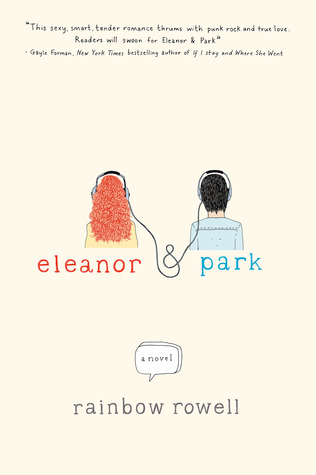
Eleanor & Park by Rainbow Rowell
I've been hearing about Rainbow Rowell all over the place for forever now, so I finally picked this one up just to see what all the fuss was about. Plus, I'm a sucker for a good romance and a nice light YA read. But this? Not my thing so much. So yes, I will credit Rowell for quality writing, really great characters, and attention to detail. But otherwise, this book contained too much of the "realistic" stuff I don't care for in contemporary YA lit. I think there is a way to write about the real issues facing teens today without straying into trashy territory, but unfortunately, this one crossed into trash a little too much for my taste. This is not to say I won't ever read Rowell again, but it's not going to be high on my priority list.
On Becoming Baby Wise: Giving Your Infant the Gift of Nighttime Sleep by Gary Ezzo
Yay for controversial parenting books! I did not read this one with my first baby, but heard plenty about it on various mommy-blogs, so when I saw it on the SALE shelf at my local library (more on that little gem later) for a mere 25 cents, I couldn't resist picking it up. I'm thinking about doing a whole post about the various parenting/sleep/baby books I've read and what my (humble and personal) opinion is about all this stuff, so I'll spare you my opinions now.
The Secret Keeper by Kate Morton
Several of my favorite book bloggers have written about Kate Morton before, so she's been on my to-read list for a while, and I finally got around to this one. In general, I loved it. I thought the writing was smooth and the characters were lovely, but by and far Morton's strongest point was how she structured the plot. It was fascinating, watching the mystery slowly unravel while jumping back and forth between present and past story lines. I was sure I had the whole thing figured out at one point, but then she threw in one final twist that I was not anticipating but that really satisfied everything that previously bothered me about the story. This is not necessarily a deep or profound story, a novel that will stay with me, or even one I highly recommend, but I enjoyed it immensely and will definitely seek out more Kate Morton in the future.
Thursday, September 4, 2014
Thursday, August 28, 2014
Awesome Title
I've been thinking about titles recently. Book titles, blog post titles, that sort of thing. Titles can be very important. Titles can make a book sound unbelievably boring, or incredibly interesting. Titles can reveal everything, or conceal everything.
I'm not very good at coming up with titles, if you couldn't tell by the very title of this post.
I've always struggled with titles because, well, they are supposed to be short and creative and encapsulate the entire essence of what you've written. But the conundrum for me has always been, if I just spent so much time writing so many words to express the essence of what I want to say, whether it be a blog post or an academic paper or a novel, how do I boil that down to a mere few words in a title? So I end up with a title that is generic, obvious, or more often incoherent (the number one comment I got back from classmates who edited my last paper was that the title didn't seem to describe the paper I had written).
The ladies over at Brilliant Business Moms recently wrote a post about how to craft a killer blog post (from which I gleaned that I write very un-killer blog posts), and here's what they had to say about titles:
I realized that probably over 50% of my post titles begin with "Book Review:" Hmm, now isn't that just a thrillingly evocative hook.Research shows that many readers do not make it past the title of your post. Was your title too long or confusing? Did you hook your reader by making them curious or evoking emotion?The research says that the first 3 words and last 3 words of your title are all that your readers will see. Did you pack the most important words towards the beginning and end of your title? The beginning of your title is also more weighted for SEO, so fit your key words into the title quickly.
However, I do think I'm a bit better at coming up with titles than novelists of the 18th Century. I recently saw this list floating around facebook of actual novel titles from the 1700s, and I must say it gave me a chuckle. My particular favorite is The Adventures Of An Ostrich Feather Of Quality, followed closely by The Adventures Of An Irish Smock, Interspersed With Whimsical Anecdotes Of A Nankeen Pair Of Breeches.
I mean, are those fantastic titles, or are they fantastic titles?
And yet, somehow, I'm not inspired to read one of the books listed.
So, maybe I'm slightly better than most 18th Century authors, but still. I think I could work on coming up with better titles, in every genre I write. It's an artform, crafting titles, and one I haven't put a lot of thought into. But this is my new writing goal (manageable because it is small). I'm going to pay more attention to titles, the ones other people write and the ones I come up with on my own. I'm going to reflect more on how titles influence the way I feel about a piece of writing. I'm going to be more purposeful in how I create titles. Hopefully this will be one small way I can improve my writing overall.
Tuesday, August 19, 2014
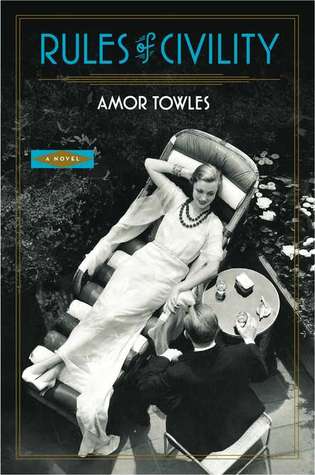
Book Review: Rules of Civility
Rules of Civility by Amor Towles
Summary (Courtesy of Goodreads): On the last night of 1937, twenty-five-year-old Katey Kontent is in a second-rate Greenwich Village jazz bar with her boardinghouse roommate stretching three dollars as far as it will go when Tinker Grey, a handsome banker with royal blue eyes and a tempered smile, happens to sit at the neighboring table. This chance encounter and its startling consequences propel Katey on a yearlong journey from a Wall Street secretarial pool toward the upper echelons of New York society and the executive suites of Condé Nast--rarefied environs where she will have little to rely upon other than a bracing wit and her own brand of cool nerve. Wooed in turn by a shy, principled multi-millionaire and an irrepressible Upper East Side ne'er-do-well, befriended by a single-minded widow who is a ahead of her time, and challenged by an imperious mentor, Katey experiences firsthand the poise secured by wealth and station and the failed aspirations that reside just below the surface. Even as she waits for circumstances to bring Tinker back into her life, she begins to realize how our most promising choices inevitably lay the groundwork for our regrets.
So I don't exactly remember where I first heard about this book, but I do remember it popped up in several places all at once the same day I was filling up my holds request list at my library, so this one was on the brain and I decided to add it to the list.
I didn't necessarily think I was going to love it. Actually, I was pretty sure I was going to hate it.
You see, this book is touted as a sort of Great Gatsby wannabe, and call me crazy, but I really dislike F. Scott Fitzgerald. I know, I know, as a former English teacher that's practically blasphemous for me to admit, but it's true. I just find his portrayal of the American dream so sad and empty and depressing. I find his characters shallow and vapid and morally reprehensible. I don't relate to those people at all.
But I do recognize that Fitzgerald was a pretty incredible writer, and I do understand why The Great Gatsby is considered a classic, so I was willing to give this one a try to see if it had any redeeming value.
And the answer is... yes and no.
I'm actually quite torn over whether I really loved this book, or hated it as much as Gatsby. It's set a decade after the roaring twenties, but even after the Great Depression there is still plenty of shallow, vapid, morally reprehensible behavior exhibited in this story of climbing the social ranks of New York. And just like the Great Gatsby, I really hated most of the characters.
But the main character? Katey, or Katherine, or Kate, or whatever people happened to call her, was someone I really related to. She was smart and level-headed, and a wonderful little introvert, and she loved Dickens! How can you not love a character who reads Dickens?
The only thing I couldn't understand about Katey was why in the world she wanted to hang out with the people she did. By and large every other character in this book (excepting maybe one or two) was completely horrible. And Tinker Grey? I mean, I kind of see why she liked him at first, but I got over him real quick, and I couldn't figure out for the life me why Katey still loved him for so long. Especially in the end, when Tinker turned out to be a bigger scumbag than even I'd anticipated, the book is still so sympathetic to him and I was just like, Why? Why does anybody like him?
So there was lots of social climbing and shallow parties and people sleeping around and all that stuff I hate about The Great Gatsby (tangent: I have such a hard time comprehending how the characters in these books can drink all the alcohol described, and not walk around completely inebriated all the time. Granted, I have zero experience with alcohol consumption, but just reading about all the drinks these people consume is enough to make me feel nauseated).
But! Then there were gems like this one (I know it's an awful long quote, feel free to skip):
I think the real test of this book for me will be time. If I'm still thinking about those little nuggets months from now, if next year this book still stands out among all the others I've read, then I think I'll be able to truly recommend it and say it's one to read. But for now, I think it's still mostly a no. If you love Gatsby, go ahead and give this one a try. You'll probably enjoy it. But otherwise, don't go rushing this to the top of your to-read list.
Summary (Courtesy of Goodreads): On the last night of 1937, twenty-five-year-old Katey Kontent is in a second-rate Greenwich Village jazz bar with her boardinghouse roommate stretching three dollars as far as it will go when Tinker Grey, a handsome banker with royal blue eyes and a tempered smile, happens to sit at the neighboring table. This chance encounter and its startling consequences propel Katey on a yearlong journey from a Wall Street secretarial pool toward the upper echelons of New York society and the executive suites of Condé Nast--rarefied environs where she will have little to rely upon other than a bracing wit and her own brand of cool nerve. Wooed in turn by a shy, principled multi-millionaire and an irrepressible Upper East Side ne'er-do-well, befriended by a single-minded widow who is a ahead of her time, and challenged by an imperious mentor, Katey experiences firsthand the poise secured by wealth and station and the failed aspirations that reside just below the surface. Even as she waits for circumstances to bring Tinker back into her life, she begins to realize how our most promising choices inevitably lay the groundwork for our regrets.
So I don't exactly remember where I first heard about this book, but I do remember it popped up in several places all at once the same day I was filling up my holds request list at my library, so this one was on the brain and I decided to add it to the list.
I didn't necessarily think I was going to love it. Actually, I was pretty sure I was going to hate it.
You see, this book is touted as a sort of Great Gatsby wannabe, and call me crazy, but I really dislike F. Scott Fitzgerald. I know, I know, as a former English teacher that's practically blasphemous for me to admit, but it's true. I just find his portrayal of the American dream so sad and empty and depressing. I find his characters shallow and vapid and morally reprehensible. I don't relate to those people at all.
But I do recognize that Fitzgerald was a pretty incredible writer, and I do understand why The Great Gatsby is considered a classic, so I was willing to give this one a try to see if it had any redeeming value.
And the answer is... yes and no.
I'm actually quite torn over whether I really loved this book, or hated it as much as Gatsby. It's set a decade after the roaring twenties, but even after the Great Depression there is still plenty of shallow, vapid, morally reprehensible behavior exhibited in this story of climbing the social ranks of New York. And just like the Great Gatsby, I really hated most of the characters.
But the main character? Katey, or Katherine, or Kate, or whatever people happened to call her, was someone I really related to. She was smart and level-headed, and a wonderful little introvert, and she loved Dickens! How can you not love a character who reads Dickens?
The only thing I couldn't understand about Katey was why in the world she wanted to hang out with the people she did. By and large every other character in this book (excepting maybe one or two) was completely horrible. And Tinker Grey? I mean, I kind of see why she liked him at first, but I got over him real quick, and I couldn't figure out for the life me why Katey still loved him for so long. Especially in the end, when Tinker turned out to be a bigger scumbag than even I'd anticipated, the book is still so sympathetic to him and I was just like, Why? Why does anybody like him?
So there was lots of social climbing and shallow parties and people sleeping around and all that stuff I hate about The Great Gatsby (tangent: I have such a hard time comprehending how the characters in these books can drink all the alcohol described, and not walk around completely inebriated all the time. Granted, I have zero experience with alcohol consumption, but just reading about all the drinks these people consume is enough to make me feel nauseated).
But! Then there were gems like this one (I know it's an awful long quote, feel free to skip):
There were several passages like this that just made me stop and think, Wow, that was actually profound. And I loved this book for those nuggets of profound wisdom.One night near the end, as I was sitting at [my father's] bedside trying to entertain him with an anecdote about some nincompoop with whom I worked, out of the blue he shared a reflection which seemed such a non sequitur that I attributed it to delirium. Whatever setbacks he had faced in his life, he said, however daunting or dispiriting the unfolding of events, he always knew that he would make it through, as long as when he woke in the morning he was looking forward to his first cup coffee. Only decades later would I realize that he had been giving me a piece of advice.Uncompromising purpose and the search for eternal truth have an unquestionable sex appeal for the young and high-minded: but when a person loses the ability to take pleasure in the mundane—in the cigarette on the stoop or the gingersnap in the bath—she has probably put herself in unnecessary danger. What my father was trying to tell me, as he neared the conclusion of his course, was that this risk should not be treated lightly: One must be prepared to fight for one’s simple pleasure and to defend them against elegance and erudition and all manner of glamorous enticements.In retrospect, my cup of coffee has been the works of Charles Dickens. Admittedly, there’s something a little annoying about all those plucky under privileged kids and the aptly named agents of villainy. But I’ve come to realize that however blue my circumstances, if after finishing a chapter of a Dickens novel I feel a miss-my-stop-on-the-train sort of compulsion to read on, then everything is probably going to be just fine.
I think the real test of this book for me will be time. If I'm still thinking about those little nuggets months from now, if next year this book still stands out among all the others I've read, then I think I'll be able to truly recommend it and say it's one to read. But for now, I think it's still mostly a no. If you love Gatsby, go ahead and give this one a try. You'll probably enjoy it. But otherwise, don't go rushing this to the top of your to-read list.
Wednesday, August 13, 2014
Books I Read in July
When I started this blog, my goal was to write a review for every book I read. I mean, honestly, I rarely read more than a book a week, so how hard can that be?
But, with all my blogging, um, laziness recently, I keep falling behind on reviews. And the further and further I get away from reading some books, the more and more I realize that I don't actually care about writing a long, in-depth review for every book I've read. Of course, for the really good books, or the reads that I have a lot to say about, I still intend to do full reviews. But for the others (for now, until my blogging steam picks up again), I think I'll stick to these simpler end-of-month round-ups.
Also, I love how we're almost half-way through August and I'm only now writing about July books. I am just coming to accept the fact that this pregnancy is going to continue kicking my trash until the bitter end, and I will never be on top of my game.
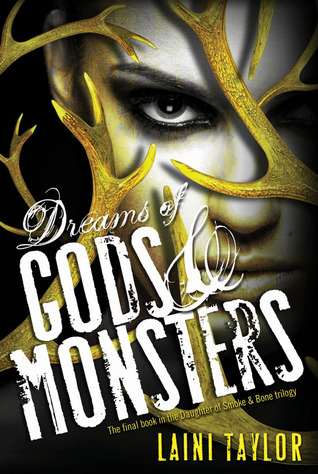
Dreams of Gods & Monsters by Laini Taylor
I've enjoyed this series since the beginning. Despite a few risque moments that mean I would never actually recommend this series to a teenager, I actually think it was quite well-written. If you enjoy solid fantasy/dystopian-ish YA trilogies, this is a good one. However, I don't think this is one that will particularly stay with me. It was just nice escapist fiction to lose myself in for a while.
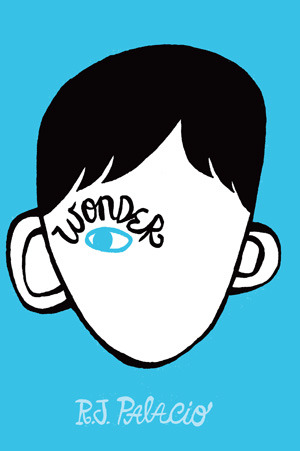
Wonder by R.J. Palacio
I read this one for my virtual book-club, and can I just say how much I LOVED it? This is quite sincerely the best middle-grade novel I think I've ever read. Yes, at times is was perhaps a bit sappy or overly sentimental, but what great middle-grade novel isn't a little heavy on sap sometimes? This one was just well written, the characters were amazingly crafted, and of course I cried through the end of it (though I AM pregnant, so I cry at everything). If you care about middle-grade fiction at all, this one is a must read.
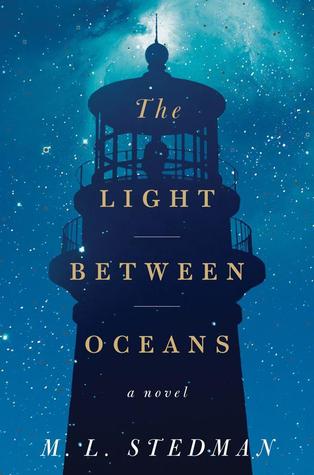
The Light Between Oceans by M.L. Stedman.
Okay, technically I only finished this one in July (I started it in February, or something ridiculous like that). But, I actually wrote a full review here. It was that good.
Rules of Civility by Amor Towles
Ah, I had such a love/hate relationship with this one. So many thoughts. In fact, I think I will do a full review on this one, because my feelings are too complicated to explain in a blurb. But you'll have to wait till next week, because how could I possibly write two posts in one week?
So, four books! Yay for July being a fairly successful reading month (better than June at least). August is not looking like it will not be quite as successful, but there are still over two weeks left, so I'm not writing this month off yet.
But, with all my blogging, um, laziness recently, I keep falling behind on reviews. And the further and further I get away from reading some books, the more and more I realize that I don't actually care about writing a long, in-depth review for every book I've read. Of course, for the really good books, or the reads that I have a lot to say about, I still intend to do full reviews. But for the others (for now, until my blogging steam picks up again), I think I'll stick to these simpler end-of-month round-ups.
Also, I love how we're almost half-way through August and I'm only now writing about July books. I am just coming to accept the fact that this pregnancy is going to continue kicking my trash until the bitter end, and I will never be on top of my game.
Dreams of Gods & Monsters by Laini Taylor
I've enjoyed this series since the beginning. Despite a few risque moments that mean I would never actually recommend this series to a teenager, I actually think it was quite well-written. If you enjoy solid fantasy/dystopian-ish YA trilogies, this is a good one. However, I don't think this is one that will particularly stay with me. It was just nice escapist fiction to lose myself in for a while.
Wonder by R.J. Palacio
I read this one for my virtual book-club, and can I just say how much I LOVED it? This is quite sincerely the best middle-grade novel I think I've ever read. Yes, at times is was perhaps a bit sappy or overly sentimental, but what great middle-grade novel isn't a little heavy on sap sometimes? This one was just well written, the characters were amazingly crafted, and of course I cried through the end of it (though I AM pregnant, so I cry at everything). If you care about middle-grade fiction at all, this one is a must read.
The Light Between Oceans by M.L. Stedman.
Okay, technically I only finished this one in July (I started it in February, or something ridiculous like that). But, I actually wrote a full review here. It was that good.
Rules of Civility by Amor Towles
Ah, I had such a love/hate relationship with this one. So many thoughts. In fact, I think I will do a full review on this one, because my feelings are too complicated to explain in a blurb. But you'll have to wait till next week, because how could I possibly write two posts in one week?
So, four books! Yay for July being a fairly successful reading month (better than June at least). August is not looking like it will not be quite as successful, but there are still over two weeks left, so I'm not writing this month off yet.
Tuesday, August 5, 2014
Theory of Mind (or, Why Readers are Better at Relationships)
I stumbled across this article last week, called "Why Readers, Scientifically, are the Best People to Fall In Love With."
Now, in my little corner of the world, this is common sense type knowledge. Of course readers are the best people to fall in love with, because, generally speaking, readers are the best type of people all around. I remember my husband, back when we were "just friends" before we were "officially dating," suggested over a Christmas break that I recommend my favorite book for him to read during the two weeks we would spend apart, and he'd recommend his favorite book for me to read. Guys, if I hadn't been smitten already, that suggestion right there was a deal sealer. I recommended Tess of the d'Urbervilles, which at the time really was my favorite, and he recommended a book I had never heard of before, The Solitaire Mystery. He confessed he was a little bit ashamed when he realized my favorite book was a renowned literary classic and his was a little-known YA novel, but that was a fact I didn't care about all (because I always love me a good YA book, and The Solitaire Mystery was absolutely delightful, and philosophical and deep in it's own way). The most impressive thing to me was that he actually read Tess, and liked it. We even had a little mini book-club-type discussion about the books when we got back after the break, and the whole time I was sort of like, "This guy was not only willing to read a classic, but he can talk to me about it intelligently!" After that, I think marriage was kind of inevitable.
But anyway, what intrigued me about the article above was the "scientific" part of it. The two studies linked to in the article aren't actually about whether readers make better romantic partners, but they did analyze the social skills (or more specifically, the empathy levels) of people who read fiction. And the results are very interesting. Apparently these studies prove that people who read fiction, and are able to immerse themselves in the comprehension of other characters and worlds, are better able than non-fiction readers to transfer those comprehension skills to real-life relationships. In other words, readers who are good at relating to the emotions of fictional characters are also good at relating to the emotions of real people.
The theoretical concept behind all of this is called "Theory of Mind," and here's where I'm going to get a bit technical, but I find this stuff interesting, so please excuse my enthusiasm. I first learned about "Theory of Mind" when reading On the Origin of Stories for my History of Narrative class this past semester. Now, I'm not actually a psychologist or whatever, but basically "Theory of Mind" is the special ability most humans develop around the age of four or five to understand that other people have a different frame of knowledge and belief than their own self. The experiment they do to see if a child has developed "Theory of Mind" goes like this: a young child watches through a window as Subject 1 hides a ball inside a box, then leaves the room. Then Subject 2 comes into the room, moves the ball from the box to another hiding spot, and leaves the room. Then Subject 1 comes back in, and they ask the child where Subject 1 believes the ball to be. Younger children, who watched Subject 2 hide the ball in a new place, will generally answer with the current location of the ball. However, sometime around the age of five, many kids will begin to understand that Subject 1 doesn't know the ball has been moved, and therefore still believes the ball to be in the box. This, in it's most simple terms, is "Theory of Mind." Basically, it's the ability to understand what other people are thinking, feeling, or experiencing.
This is quite an advanced evolutionary skill that is very advantageous for animals who live in cooperative societies, and considering humans are the only known species to have acquired "Theory of Mind," it's a big part of explaining our domination over the rest of the animal kingdom. But, what's really interesting, is that apparently fictional stories help humans develop "Theory of Mind." As in, we are biologically programmed to tell (or, in the modern world, read) and enjoy fictional stories because they help us develop a crucial skill that gives our species an evolutionary advantage over the rest of the animal kingdom.
And that skill is relationships. Understanding other people. Empathy.
Pretty cool, huh?
So the next time someone derides your introverted tendency to stay home getting lost in a good book, you can rest assured that you are actually staying home to hone your social skills.
(Unfortunately, this is not true if you are staying home to read that technical non-fiction textbook. These same studies prove that non-fiction readers actually do have worse social skills. Now, I thoroughly support non-fiction reading, but I love how these studies prove that fictional stories have a legitimate, worthwhile purpose, and my decision to be an English major is actually making me a better friend and spouse and person.)
Tuesday, July 29, 2014
Book Review: The Light Between Oceans
The Light Between Oceans by M.L. Stedman
Summary (Courtesy of Goodreads): After four harrowing years on the Western Front, Tom Sherbourne returns to Australia and takes a job as the lighthouse keeper on Janus Rock, nearly half a day’s journey from the coast. To this isolated island, where the supply boat comes once a season and shore leaves are granted every other year at best, Tom brings a young, bold, and loving wife, Isabel. Years later, after two miscarriages and one stillbirth, the grieving Isabel hears a baby’s cries on the wind. A boat has washed up onshore carrying a dead man and a living baby. Tom, whose records as a lighthouse keeper are meticulous and whose moral principles have withstood a horrific war, wants to report the man and infant immediately. But Isabel has taken the tiny baby to her breast. Against Tom’s judgment, they claim her as their own and name her Lucy. When she is two, Tom and Isabel return to the mainland and are reminded that there are other people in the world. Their choice has devastated one of them.
I've just got to say upfront that I listened to the audio version of this book, and I can't say I recommend that. I mean, yes, it was nice to hear everything pronounced in an Australian accent, but the reader's voice was not my favorite. He was so soft spoken that I kept having to turn my volume way up to try and catch what he was saying, and even then I feel like I missed out on a lot of the finer details (seriously, it was like he was mumbling). Also, I'm just not sure about the choice to use a male narrator here. I understand that Tom Sherbourne is probably the most common point of view in the story, but the language and descriptions (especially about babies) just felt so feminine to me that I think a female reader would have felt more natural. But whatever. It was fine.
Besides the fact that I didn't care for the audio production, and the fact that it took me FOREVER to finish this book (I think I started it back in February, which is seriously pathetic), I actually loved this book quite a bit. It was beautifully written, and the characters were so real and believable. Which was the tragic part. Especially Isabel. I felt like her flaws were so real, so understandable, and yet so unforgivable. The conundrum these people get into! It's terrible and heart-wrenching. And even though I knew the whole time that they should have notified the authorities and turned the baby in, and even when I sympathized with Tom for doing the "right" thing in the end, my heart just broke for Isabel. Being a mother myself, I felt her desire and longing and pain, and it was excruciating. And poor Tom just loved her and just wanted her to be happy, but couldn't live with a guilty conscience.
This was one of those books that really made me think, "What would I do if I were in their place?" I would like to think I would have enough sense not to keep a baby that wasn't mine, but then again, I've never had a miscarriage (knock on wood, real hard please). I can only imagine how hard it would be to lose a baby, and then have one turn up unexpectedly that for all the world looked like an unwanted orphan. I can really understand how Isabel thought it was a sign from God. But poor Hannah (the real mother)! I can't imagine her pain. What a terrible mess. There were so many times when I wondered, "What is the right thing to do here? Who really is to blame?" When I described the scenario to my husband, it was as clear as black and white who was wrong and who was to blame, but I tried explaining that when you get involved with the emotions of the characters (and in my present pregnant condition, I can't help sympathizing with the emotions of everyone in this book, especially the mothers), it's really not so clear (my dear, sweet, extremely logical husband has never been good about sympathizing with hormonally-charged emotions). This book is just about honest good people who make misguided decisions that lead to terrible messy situations where a lot of people end up hurt. And you just wonder how good people can make such a mess of things.
Anyway, I hope I'm not giving too much of the plot away for those of you who are interested. I thoroughly recommend this book to anyone looking for a well-written, heart-wrenching little story. I can't say I think this one will go down as a classic exactly, but I found it a very thought-provoking and worthwhile read. Right now I'm giving it four stars (though I might change it to five, we'll see how long it sticks with me).
Summary (Courtesy of Goodreads): After four harrowing years on the Western Front, Tom Sherbourne returns to Australia and takes a job as the lighthouse keeper on Janus Rock, nearly half a day’s journey from the coast. To this isolated island, where the supply boat comes once a season and shore leaves are granted every other year at best, Tom brings a young, bold, and loving wife, Isabel. Years later, after two miscarriages and one stillbirth, the grieving Isabel hears a baby’s cries on the wind. A boat has washed up onshore carrying a dead man and a living baby. Tom, whose records as a lighthouse keeper are meticulous and whose moral principles have withstood a horrific war, wants to report the man and infant immediately. But Isabel has taken the tiny baby to her breast. Against Tom’s judgment, they claim her as their own and name her Lucy. When she is two, Tom and Isabel return to the mainland and are reminded that there are other people in the world. Their choice has devastated one of them.
I've just got to say upfront that I listened to the audio version of this book, and I can't say I recommend that. I mean, yes, it was nice to hear everything pronounced in an Australian accent, but the reader's voice was not my favorite. He was so soft spoken that I kept having to turn my volume way up to try and catch what he was saying, and even then I feel like I missed out on a lot of the finer details (seriously, it was like he was mumbling). Also, I'm just not sure about the choice to use a male narrator here. I understand that Tom Sherbourne is probably the most common point of view in the story, but the language and descriptions (especially about babies) just felt so feminine to me that I think a female reader would have felt more natural. But whatever. It was fine.
Besides the fact that I didn't care for the audio production, and the fact that it took me FOREVER to finish this book (I think I started it back in February, which is seriously pathetic), I actually loved this book quite a bit. It was beautifully written, and the characters were so real and believable. Which was the tragic part. Especially Isabel. I felt like her flaws were so real, so understandable, and yet so unforgivable. The conundrum these people get into! It's terrible and heart-wrenching. And even though I knew the whole time that they should have notified the authorities and turned the baby in, and even when I sympathized with Tom for doing the "right" thing in the end, my heart just broke for Isabel. Being a mother myself, I felt her desire and longing and pain, and it was excruciating. And poor Tom just loved her and just wanted her to be happy, but couldn't live with a guilty conscience.
This was one of those books that really made me think, "What would I do if I were in their place?" I would like to think I would have enough sense not to keep a baby that wasn't mine, but then again, I've never had a miscarriage (knock on wood, real hard please). I can only imagine how hard it would be to lose a baby, and then have one turn up unexpectedly that for all the world looked like an unwanted orphan. I can really understand how Isabel thought it was a sign from God. But poor Hannah (the real mother)! I can't imagine her pain. What a terrible mess. There were so many times when I wondered, "What is the right thing to do here? Who really is to blame?" When I described the scenario to my husband, it was as clear as black and white who was wrong and who was to blame, but I tried explaining that when you get involved with the emotions of the characters (and in my present pregnant condition, I can't help sympathizing with the emotions of everyone in this book, especially the mothers), it's really not so clear (my dear, sweet, extremely logical husband has never been good about sympathizing with hormonally-charged emotions). This book is just about honest good people who make misguided decisions that lead to terrible messy situations where a lot of people end up hurt. And you just wonder how good people can make such a mess of things.
Anyway, I hope I'm not giving too much of the plot away for those of you who are interested. I thoroughly recommend this book to anyone looking for a well-written, heart-wrenching little story. I can't say I think this one will go down as a classic exactly, but I found it a very thought-provoking and worthwhile read. Right now I'm giving it four stars (though I might change it to five, we'll see how long it sticks with me).
Thursday, July 24, 2014
Getting My Pleasure Reading Groove Back
Pleasure reading has always been my thing. And I mean, since like first grade I've ALWAYS had a book I was deep in the middle of, one I carried around with me and sneakily read under my desk when classes got boring (although after being a teacher myself, I realize I was probably fooling no one. I've even been annoyed by a few students who I knew were distracted by books under their desks, but then I would remind myself that, as an English teacher, that's exactly the life skill I was trying to encourage, and if my lesson that day wasn't interesting to them, well, that was my fault.) (Also, never tell this to my boss, but I used to keep a book hidden in my desk drawer when I worked in university administration., and would read when things were slow, only to slam my desk drawer closed whenever anyone walked by my work space).
Anyway, I've just always been the kind of person to have a book going, to be plowing through my to-read list, and to actually pace myself so I didn't spend ALL my time reading.
But recently? I don't know if this pregnancy is messing with my brain, or if I'm just losing it, or what, because pleasure reading has been way, way down on my to-do list. In fact, on our recent family vacation, I didn't take a single book with me. I'm not sure I even thought about it when I was packing. I had a few audio books on my phone, but considering that my phone was the go-to toddler-distraction-device on all our plane flights and car rides, I didn't actually get a chance to listen to anything. I can't tell you how many times I thought, "I wish I had a book with me." It was such a strange, out-of-character move on my part, that honestly I'm completely flabbergasted by it. How did I not pack even one book? What was I thinking?
But the truth is, I've just been struggling to fit pleasure reading into my life for a few months now. And this is not acceptable. This is not who I am. So I've been consciously working on a few strategies to get me going again, and I thought I'd share them here, just to remind myself in the future in case I ever go through this weird phase again.
1. Have lots of books on hand. When I got home from that family vacation, I immediately went online and put about ten books from my to-read list on hold at my library. I've got about five now sitting on my bedside table, reminding me they need to be read.
2. Give yourself a deadline. I've found that I tend to read library books with more alacrity than the books I actually own, because I know I have to return them. That forced deadline works wonders on my motivation to start a book (whether I finish depends on the book).
3. Have different media options going at once. By this, I mean I need to have audio books, e-books, and good old paper books available to me at all times. In the first two years of motherhood, I totally converted to audio books, and tried to get my hands on the audio version of every book I wanted to read. It was just so much more convenient for multi-tasking with a baby. But recently, I've found that paper books are a little more convenient for this stage of my life (or really, my toddler's stage of life). And e-books are always handy for out and about (it's easier to slip my e-reader into my purse for the doctor's office waiting room than some massive hardback). Anyway, it's just good to have options, for whatever situation is at hand.
4. Read what you like. So, I've got a couple of books going right now that are "should read" books about pregnancy and parenting. Now, I'm a total advocate for reading books to stretch your mind, learn new things, and enrich your life experience. And these pregnancy books are very good and interesting and things I want to read. But in my current situation, where I'm struggling to find motivation to read on a daily basis, the dryer tone of these books isn't helping much. I found myself thinking the other day, "I just wish I had a really good YA fantasy to lose myself in right now." Ask and ye shall receive. I got an email the next day saying my hold for Dreams of Gods and Monsters was available, and I kind of dropped everything to indulge in it for a few days. When you're struggling with pleasure reading, read what is absolutely most pleasurable to you.
5. Make reading an established part of your routine. This is the one that's been the biggest culprit for me, because I feel like my routine has been all disrupted lately (i.e. sleeping so much more than I used to, it really takes a bite out of my reading time). I finally decided to let myself read a chapter or two before bed each night. This used to be a huge no-no for me, because of the ever-present danger of getting sucked into a book and then not putting it down until the wee hours of the morning. But it's a risk I'm taking now because most days, I don't find any time to read until I'm climbing into bed.
6. Make it a priority. This last piece of advice isn't as concrete as the others, but it's still important. I think pleasure reading has been falling off the grid for me because other things are feeling more important. Or generally because I just feel exhausted all the time (yay for being pregnant!). But when I stop and think objectively, I really want pleasure reading to be a part of my life. That's not just the kind of person I am, it's also the kind of person I want to be, even if I have to work a little harder at it. I just have to view reading time as important and worth the effort. Because it is.
Do you ever have reading slumps? What helps you get over them?
Subscribe to:
Posts (Atom)