Quantcast

Friday, April 17, 2015

Link Love


Well, dear readers, 'tis the season. That awful, horrible, wonderful season of final papers. I will likely be MIA for the next few weeks as I bury myself in such obscure topics as the dream psychology of Chaucer's early poetry, and Marlowe's Tamburlaine as a figure of capitalist venturism. Also, something about the Grapes of Wrath, but I haven't actually read that yet. I really need to get on that.

It's going to be terribly dull, but I'm also a little bit excited. Papers are fun. Brutal, but fun.

I'm such a nerd.

Anyway, I thought I'd pop over here for a quick minute and drop some interesting links your way since I don't actually have brain power to write a real post right now.

-I stumbled across this gorgeous set of classics from Barnes and Noble pictured above, and after the discovery I wrote about in my last post, I'm seriously lusting after them.

-Twelve Classic Novels as Summarized by Someone Who Has Not Read Them - short read, I rather enjoyed it. Especially if you actually know anything about the novels.

-I love book clubs. I love them so very much. But this book club has been reading only one book for the past 18 years! I can't decide if this sounds horrible, or completely awesome in a very snooty kind of way. I'm leaning toward the latter. I kind of want to join.

-Another argument for why adults should never stop reading children's books. Such good stuff.

-And maybe it's just me, but I found this article completely fascinating. Usually, I'm a bit annoyed when specific technologies shows up in a book, because then I feel like it's too contemporary and will be dated very quickly. But what are authors supposed to do? Pretend like the technological revolution isn't happening (which some do)? Really interesting topic.

Just three more weeks until the semester ends, and then, if I survive, summer break! I'm oh so ready for summer. Wish me luck!

Thursday, April 9, 2015

Judging Books by Their Cover (or How I Learned Not to be a Book Hoarder)


You guys remember how I have this dream of some day owning a fantastic home library? The dream of that library is why I hold on to pretty much every book I've ever owned. Because when we get that someday house with that someday library, all of my books are going to have a home on a shelf. That, and I'm just a book hoarder that doesn't throw out books. Are you kidding? What kind of respectable book blogger throws out books?

Well, we don't have a dream home library yet. So, tiny current apartment + one set of Ikea Billy bookshelves in the living room + book hoarding habit = A TON of our books sitting in various boxes spread between closets and under beds. We owned more books that sat in boxes than books that could fit on shelves.

Anyway, when I read The Life Changing Magic of Tidying Up a few weeks ago, and Marie Kondo started talking about throwing out books, my thoughts were NO! ALL MY BOOKS BRING ME JOY! I WILL NEVER THROW OUT BOOKS!

But in order to be faithful to her system, I thought I ought to at least give it a good effort and really consider each book for it's joy level. After all, I had a few textbooks from college that maybe I could throw out.

Warning: once you realize how good it feels to get rid of useless, joyless stuff, you CAN'T STOP throwing things out.


This is a picture of all of the books I ended up throwing out. Even I'm a little shell shocked at how ruthless I was in this department. I didn't count, but I threw out literally hundreds of books. Boxes and boxes and boxes of books.

I don't regret it all.

I didn't begin with a set criteria of what to throw out and what to keep, but in the end, here's how I made most of my decisions for what went:

1. Cheap and Ugly: I owned a lot of really cheap paperbacks, Penguin classics and the like, that were already browning or losing their binding or showing a lot of wear even though I've only read them maybe once. Basically, they looked cheap and trashy, so I threw them out (I even had a cheap paperback copy of Les Miserables where the spine was actually split in two, I don't know why I didn't throw that out years ago). This was kind of sad, after all I loved some of these books, but as objects themselves they didn't make me happy.

2. Not Re-readable: I threw out any book that I knew I wasn't going to read again, or if I ever do read it again, I will listen to it as an audiobook or find a different copy (I don't actually enjoy reading those cheap paperbacks, especially when they are falling apart).

3. Duplicates: I threw out any book we had double copies of. This may sound obvious, that you don't need two copies of a book, but apparently my husband and I never went through and inventoried our books when we got married, because I was shocked at the number of duplicates we owned between the two of us (obviously, we have similar taste in books, which is why we got married).

4. Information Overload: I finally threw out all those old college textbooks that we will honestly never read again (I did keep my literature anthologies, mostly because I'm still using them for grad school, but after graduation I'll have to reassess that situation again). I also threw away a lot of hard copies of books or other texts we only access online now (the vast majority of our church manuals, cookbooks, electronics manuals, anything where it's quicker to Google it than to look it up in a book).

What shocked me the most about this whole experience was the criteria I used to keep books on my shelf when I wasn't sure if I loved it enough to keep it. There were only two:

1. Do I Want My Children to Grow Up With This Book in the House? I did end up throwing a lot of my cheap classics out, but I kept every single Newberry I own plus some other books that I really want just hanging around as the kids get older.

2. Is it Pretty? This was the surprise. I ended up keeping a lot of books that I don't necessarily have strong feelings for just because it was a pretty or high quality book. I think I was heavily influenced by all the pictures Ann from Modern Mrs. Darcy has been posting of her pretty books. Check that link. Aren't those books gorgeous? It made me realize that if I want that dream library someday, I don't want to fill it with all these cheap ugly paperbacks. I only want to fill it with pretty books, quality books, books that work on an aesthetic level too. I never knew this was something I valued about books.

Anyway, I wish I had a before picture to show you of my bookcase, but trust me, it's probably best that I don't. Here's what it looks like post-cleanse:


Maybe this doesn't look all that impressive to you (also, my photography skills are amateur at best), but trust me, this is a major improvement over the clutter magnet these shelves were before. I had to work really, really hard to get to a place where there was actually space on some of these shelves for something other than books (like my tea cups from England), but in the end I love these shelves now. They are no longer just a repository for my books, they are a part of my living room decor, a thing of beauty to be looked at and enjoyed. And it makes me much happier to look at these shelves now. In fact, I can't believe it took me so long to realize that all these books in my living room should add to the decor and aesthetic value of the room. It just seems obvious now, like why didn't I think of this before? I still have a long way to go making my books and shelves more beautiful and part of the decor, and now I'm even thinking about DIY projects to repaint or jazz up the bookshelf (all our black furniture looked great in our last apartment, it looks terribly dismal in our current one).

Do you want one more tip? This one doesn't come from Marie Kondo's book, this is one I just figured out on my own and that really worked for me.


Throw Away Your Book Jackets!

Scandal and sacrilege, I know, but trust me on this one. I never would have thought of this, but while I was sorting through my books, the jacket fell off of one and I realized underneath the garish, plastic book jacket was a really lovely hard back book with gold leaf on the spine. I had no idea! So, I started ripping all the jackets off, just to see what was underneath, and when I had all the books lined up together, it LOOKED SO GOOD! I was shocked. The overall effect was calmer, quieter, more elegant, and much more aesthetically pleasing. So I just threw the jackets away. I mean, do you really need them for anything? I kept jackets for books where the jackets added (like our Harry Potter series), but most of the books looked better without. I've even had a few visitors notice how nice they look sans the plastic covers.

Now I am proud to say that we have no more sad little books hidden away in boxes under beds or in closets. All our books have a home (we also have two more small sets of bookshelves in each bedroom too), and all our books are loved. It feels great and wonderful and completely freeing. Books are heavy objects. They occupy a lot of space, physically and mentally. It's nice to know I can be a book lover without being a book hoarder.

And now I know for the future, when I buy books, they need to serve two functions. They need to be great books for the ideas they hold, but they also need to be quality, pretty books worth displaying in my home.

Coming from a background where every book was sacred regardless of what the cover looked like, and also fully believing in the idea that a home needs to be crowded and full of books, this is a completely new mindset for me, and I'm curious to know, do you agree or disagree? Could you ever throw a book out just because it's ugly?

Tuesday, April 7, 2015

Of Closets and Clothes


The very first step in the  KonMarie method of decluttering your home is to tackle clothes. Considering I have clothes in my closet that I wore in high school, I was very much in need of a good clean-out in this department.

I realized I'm a bit of a clothing hoarder (I might just be a bit of hoarder in general, which is why this whole decluttering binge has been so cathartic for me). You see, I really like having lots of options, being able to mix and match, and always having just the right outfit for the occasion. So what if I never wear those heavy black work boots, someday I might end up on a construction site and really need them, right?

Obviously, I have a problem.

(Although, not as big of a problem as my husband, who refuses to throw out his Hawaiin shirts that would fit a large Tongan football player nicely, even though he is considerably smaller than that).

Here are the tips I followed, and the difference they made:

Does It Spark Joy?
You are not supposed to keep clothes based on function, or whether you wear it frequently, or haven't worn it in the last year, or any other paradigm like that. Instead Kondo recommends only keeping clothing that spark joy. I have two observations about this.

First, this meant that while I got to throw out A LOT of clothes (like those nasty light-wash frayed denim boot cut jeans from high school that didn't fit then and still don't fit now, but have remained buried at the bottom of my jeans drawer for over a decade), it also meant I got to keep some clothes that have a few unfortunate stains or other problems because I absolutely LOVE those clothes. I was even inspired to pull out the super glue and fix up two pairs of shoes with loose soles because they are favorites that bring me joy. And it made me happy to know that I didn't have to feel guilty about keeping these well-worn items because even if they have their issues, I still feel incredibly happy every time I wear them.

Second, I realized that sometimes I needed a work-around cheat method on this one. Because do those over-sized T-shirts you pick up from family reunions and the summer corporate barbecue actually spark joy? Individually, no. But do I still want a couple of those T-shirts in my closet to serve as comfy pj's? Absolutely. I just drastically pared down my collection.

Have EVERYTHING Visible
You know how most people store their out of season clothes away? Kondo recommends having all your clothes out, hanging up, and visible at all times, no matter what season they are for. When you keep clothes stored away, it's easy to forget about them. This one didn't seem too difficult to me as I've drastically pared down on my winter items since moving to Houston (where it's summer for nine months of the year, and only slightly cooler for the other three months).

But I decided to make this applicable for other types of clothes that I usually keep stored away, like my maternity clothes. Following the "sparking joy" criteria, I actually threw out most of my maternity clothes because they made me terribly depressed. Now all the maternity clothes I kept are hanging in my closet along with all my other clothes, and surprisingly I find myself reaching for some of those shirts regularly even though I'm far smaller than my pregnant self (maternity shirts generally work great for nursing, I've discovered).

Kondo also recommends hanging clothes in an order that ascends to the right; that is, you hang longer items with heavier fabrics (coats, dresses) on the left, and gradually ascend to the right where you have shorter blouses, lighter fabrics, brighter colors. I thought this would be a tip I would mostly ignore, until I realized that my closet was already accidentally organized that way, so I must have intuited this one on my own.

Fold Your Clothes Right
Kondo has a thing against hanging too many clothes up. She definitely favors keeping most items folded in drawers, because this utilizes closet space more efficiently. I totally get this, but here's the thing. We have huge walk-in closets with lots of bar space for hangers, and only one dresser with smallish drawers, so I actually have waaaay more hanger space than drawer space. Thus, I used to keep everything on hangers in the closet, including jeans and pants.

However, after my clothing purge I had a lot more space in my drawers and decided to move all my pants into one drawer. I reorganized all my drawers to follow Kondo's folding method. I had a hard time visualizing this folding method just from her description in the book, but after watching a couple of YouTube videos (this one and this one were helpful) I totally caught the vision. Now my drawers look like this:

I was wearing pants when I took this picture, that's the empty space. And the items on the right are actually my moby wraps. I had empty space after arranging my pants so I folded them up and threw them in there too.

Doesn't it look so pretty? It makes me so happy whenever I open my drawer to see this. I organized my other drawers this way as well, but no, I am not posting pictures of my underwear drawer or other intimates on the world wide web thankyouverymuch.

It might seem like it takes longer to fold clothes this way, but I've found it takes me no longer than it did to hang them all up. I love this method too because even when I take out an item of clothing, everything else stays in place because the way they are folded allows them to stand up themselves. As long as I don't try to fit too many items in a drawer, the system works beautifully for me.

I still keep all my shirts (including T-shirts) on hangers just because that's where I have more space, but if/when we move to a place with smaller closets, I will invest in a closet drawer system because honestly? This folding system is awesome. No more stuffing piles in my drawers! No more drawers that won't close because they are too full! No more forgetting about those clothes at the bottom of the pile because I never see them!

It makes me so happy every morning when I get dressed, and all of my favorite clothes are just there, neatly folded or hanging in a row, ready to be picked. My closets and my clothes all make me so happy now. I haven't yet tackled the kids clothes yet (I don't have a lot of drawer space for their clothes either, so I'm not sure what to do yet, but it really is a problem I need to tackle), and I did not force my husband to participate (I make him fold his own clothes and put them away, does that make me a terrible wife?), but he seemed to catch the bug a bit and asked for help in doing his own closet purge. We haven't gotten around to that yet, but I'm itching to toss those Hawaiin shirts. We'll see.

For now, I'm loving my new joy-only closet.

Monday, April 6, 2015

Book Baskets

I don't really "get" the concept of toys and presents in an Easter basket. Growing up, the Easter bunny brought eggs with lots of candy, but he never brought presents (maybe my childhood was deprived, I don't know).

However, according to Pinterest and mommy blogs and fashion blogs and the internet at large, Easter is now another holiday all about presents. Apparently the Easter bunny is supposed to bring beautiful big baskets full of fun spring-time toys all wrapped up in cellophane with big ribbons on top.

Nothing like a little internet mom-guilt to force one to conform, so this year I decided our kids were getting presents in their Easter baskets. But because I have some sort of knee-jerk reaction against giving toys at any other time than Christmas and birthdays (which is a real downer most of the year for my oldest who was born on Dec. 23rd), of course the Easter bunny only gave them books (and candy, obviously).


I know, everything about these baskets is super cute and photo-worthy. I expect this grainy iphone pic will trend all over Pinterest.

Anyway, I bring up these baskets not to comment on the excesses of modern parenting or my own minimalist philosophies, but because I want to talk about these two books.

Actually, I probably don't need to talk about Pat the Bunny. If you are a parent, and you haven't heard of this book, what rock to do you live under? Do you even buy books for your children? Pat the Bunny is a huge favorite at our house, so much so that Child #1 loved his copy pretty much to death. If I have one complaint about this book, it's that it doesn't hold up as sturdily as most board books. This is probably by design, so that you are forced to buy a new copy for each subsequent child. Anyway, Baby #2 needed his own new copy and what better time than Easter to get a book that is not really at all about bunnies?

But for our 3 year old, I did something that I usually don't ever do: I bought a book sight unseen. Yep, I'd never actually read The Book With No Pictures before I ordered it, so this was a bit of a risk. But I'd read enough glowing reviews to have a pretty good idea what this book was all about, and since our kid has recently been really into making up nonsense words and gibberish (and making us say them too), I figured this book would likely be a hit.

And we were not disappointed. My husband got to do the first reading, and there were lots of giggles and delighted squeals. I'm pretty sure this one will be a regular in the bed-time rotation now. And I must say I think it's a super cute clever little book too. Props to B.J. Novak for coming up with such a simple, fun idea for a children's book.

If you are unfamiliar with this book, here's the premise: Like the title says, this book has no pictures, which of course sounds completely odd for a great children's book, but, as the words explain, the adult reading this book is required to read all the words on the page, even if those words are silly or gibberish, and there's plenty of silly nonsense to go around. It's a fun little book, one I think most kids would enjoy.

Although I'm glad we had an excuse to pick up this new family favorite, I did wonder if maybe I should have gotten a holiday-specific book since we don't actually have any Easter books. But then I realized that I don't know of a single good children's Easter story. So I'm asking you, any recommendations out there? What are the best Easter/spring children's books? What should our Easter bunny bring next year?

Friday, April 3, 2015

Books I Read in March

This post should more aptly be titled The Books I Didn't Finish Reading in March. Because that's kind of how March went down for me. I scrambled to read just enough of the assigned novels to not look stupid in class, but didn't finish any of them, and personal reading got sucked away in the stress-pit that was mid-term essays.

Yay for grad school!

So, I have one measly book to talk about that I actually read for pleasure and finished.

I'm so glad summer starts next month.

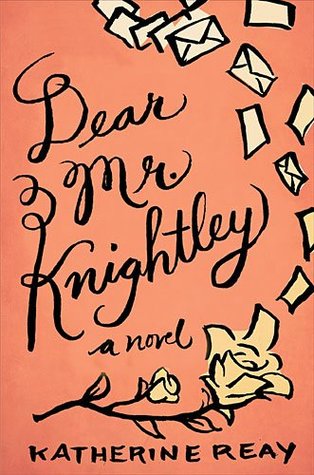
Dear Mr. Knightley by Katherine Reay

I saw the audiobook version of this available for download from my library, and since the description (a contemporary epistolary novel with a delightful dash of Jane Austen) sounded right up my ally, I checked it out. And... there were things I loved and things I hated. I loved how, rather than just make this a shallow chick-lit novel, Reay really tried to incorporate some meatier substance. I really appreciated the premise, young girl who's been really hurt and battered by life and hides behind her Austen fandom (totally related to so many different parts). But the execution fell a little flat for me. Reay just didn't nail the epistolary genre, the themes were a little too heavy-handed, and the innocence of the main character considering her rough and tough backstory felt very unrealistic. Still, I found it sweet and charming and would totally recommend to any Austen fan looking for some good chick-lit.

And now, just in case you're curious, here are the books I didn't finish last month.

East Goes West by Younghill Kang - Rather interesting view of a Korean immigrant's experience in New York during the early part of the twentieth century. I might finish it some day.

Tropic of Cancer by Henry Miller - No! No! No! Never! No! These are the types of books that make me shudder as an English major. Ugh. Also, this is why I don't do modern American literature. I'll keep with Shakespeare over this crap any day.

Their Eyes Were Watching God by Zora Neale Hurston - I've read this one before, but I'd forgotten most of it. I love Hurston's colloquial style and how she incorporates her anthropological work and folklore into her fiction. It's really beautiful writing. Highly recommend.

Thursday, March 19, 2015

Embracing Joy


I'm not sure I can put a finger on it exactly, or list all the reasons why, but I've been feeling a deep sense of joy recently (this feeling may or may not have coincided with the advent of my baby finally sleeping 12-13 hours through the night). Life certainly isn't perfect, things are still busy and stressful and there are many days where normal life frustrations get me down (remind me to tell you about the day I yelled at my son so intensely he peed his pants...)

But overall, life is so, so good right now.

Which scares me.

You see, when things seem to be going well for me, my mind inevitably reacts with questions: Why are things so good right now? Is it because something terrible is about to happen? Nobody is allowed too much happiness in life, I bet something horrible is going to happen soon. I be there's going to be a car accident. Someone's going to die. Someone's going to get sick. What's the worst possible thing that could happen to me right now? How can I be prepared?

You get the idea.

I never really used to think much of this tendency of mine to dwell on negative future possibilities until I read Dr. Brené Brown's Daring Greatly last summer. If you haven't read this book yet, you probably should. I even recommend buying it. It's one that needs to be revisited over and over again.


Brown is a researcher in social science, and she studies fear, shame, and vulnerability. One of her arguments is that in order to avoid shame and pain, people put on different forms of mental armor or shields to protect themselves, things like numbing, perfectionism, cynicism, etc.

One mental shield she called "Foreboding Joy". People who use this shield are incapable of enjoying the happiness of the moment. Instead, they are constantly worried about the possible bad things that could potentially happen. In this way, they refuse to acknowledge the joy that is in front of them, waiting for them if they would just feel it.

It was a strange experience for me, to read about this part of myself in her book, and realize for the first time what a disservice I was doing to myself by forever dwelling on these negative possibilities and mentally trying to prepare myself for the worst.

It meant I was refusing to simply feel the joy.

It's been surprisingly hard to turn that side of my brain off. There's a part of me that feels it's very productive for me to to imagine these possible future scenarios and try to prepare for them. But I realized there's a deeper issue going on. When I have these negative worry thoughts, it's not just because I'm trying to be prepared, it's because there is some part of me that honestly believes I don't deserve this moment of joy.

There is so much pain in this world. So many people have hard struggles. I have friends and family so close to me going through such terribly hard things, and I wonder, what have I ever done to deserve happiness? What did I ever do to get such a beautiful life?

I feel guilty that my life is so happy.

And I also feel like it won't last, because I don't deserve a happy life, and so it's only a matter of time before that super horrible thing happens.

But what Brown's book has also helped me see is that I am doing no one any favors by dwelling in this negative space. Decreasing how much I enjoy my blessed life doesn't help anyone else who is suffering. It only unnecessarily adds misery to the world.

So I am working on it. I'm trying so very hard to just let the joy flow through me right now. To just swim in the cuddles of my baby, and laugh with my three-year-old at tickle time, and soak in the knowledge from my grad school classes, and love my husband more, and enjoy one more slice of chocolate pie because I'm nursing, and just let it swirl around and fill me up. The joy is right there, all around me.


This is a season of joy. Seasons of pain and sorrow may be in my future, but that doesn't change that this is a season of joy. I don't need to feel guilty about it, and I don't need to reject it.

I just need to embrace it.

Monday, March 16, 2015

5 Life Lessons From My De-Cluttering Binge


It was about the end of January that I cane to confront the hard truth.

Over the past year or so, I had many excuses to explain away the clutter: I was pregnant, I had a new baby, I was sick, our tiny apartment was too small for a four-person growing family, if we lived in a house it would all be better. . .

But I finally confronted the truth. All excuses aside, we were just lazy, disorganized, messy people.

The beds were never made, there were always dirty dishes spread over all the counters, books and clothes and toys and mail and whatever random crap just piled up everywhere. I about died of shame any time anyone popped over for a surprise visit.

It was depressing.

So when I came across Marie Kondo's book, The Life-Changing Magic of Tidying-Up, at my local library, I grabbed it up eagerly. I knew we needed help, and something had to change.

Okay, let's start with the caveats. Marie Kondo is Japanese. All of her clients are Japanese, and it is obvious that all of her experience with organizing and decluttering is heavily influenced by her culture (sometimes I had images of neon flashing Hello Kittys or big-bellied Buddhas speaking to their underwear coming through her advice). Not everything she says or does translates perfectly to an American home. She never addresses how to handle holiday decorations, her aesthetic is clearly much more spare and modern than most Americans are comfortable with (unless you really dig that minimalist, modern look, which is cool if you do, but I find it depressing), and she does NOT have kids. Or a husband, as far as I can tell.

And yeah, if I didn't have a husband and kids, I'd like to think my little apartment would be sparkling clean all the time.

BUT, caveats aside, I literally found this book to be LIFE CHANGING! I know, it sounds extreme. Let me see if I can explain.

Kondo has developed and perfected a method (the "KonMarie" method) for organizing and tidying that she guarantees, if followed, will lead to life-long organization. She claims that she has a 100% success rate, and that none of her clients have ever relapsed. You can't argue with numbers like that, so I was more than game to try out her method.

She has five categories of things to declutter and organize:

1.) Clothes
2.) Books
3.) Papers (Files, etc.)
4.) All Other Objects
5.) Sentimental Things

To follow her method completely, you must tackle each of these categories in order (the order is very important to her), and proceed to throw out or keep items based on the criteria of whether or not it brings you joy. Then you organize only the possessions that bring you joy in a logical way where everything has a place. She goes into much more detail in the book with suggestions and tips I don't have space to discuss here, some of which I found super helpful, and some of which I'm going to ignore completely (she had some super extreme and ridiculous suggestions, I just looked past those).

As soon as I finished the book, I jumped into my own decluttering project, sticking as close to her method as I found practical. So far I've worked my way through my clothes and books (the story of my books deserves it's own post), and I'm working through my papers, but this is a HUGE project. It is going to take months to finish, but this process has already been so transformative for me. I've had so many epiphanies, finally internalized lessons I've heard all my life but never taken to heart, and learned things about myself as well. Really, I am not over exaggerating when I say the process of organizing my home has been life-changing.

Here are a few of the epiphanies I've had through this experience:

A House of Order
When I think about my home, this home that I am creating, and the ideal home I want to have, certain words come to mind. PEACE is a big one. JOY is another one. I want a home that is peaceful, calm, filled with joy and light and happy memories. And when I imagine what this home looks like, clutter is not a part of it. This home isn't obsessively clean, or stark and bare (no home with children should be), but it is a home where things have a place, and they are generally kept in place. I want a house of order, and this process has helped me focus that vision and bring it closer to reality.

"Joy" as a Material Philosophy
I've been searching for a philosophy about how to relate to material possessions. Our consumer culture focuses very much on "More! More! More!" and sometimes it's hard not to feel that pull. However I think we all recognize that's not a healthy way to think about things. The philosophy in my home growing up was "Necessity vs. Want," and while I think this is a much healthier view of things, I've talked before about how sometimes there is a fuzzy line between needs and wants, and this wasn't providing clear guidance for me. I've dabbled in the Zero Waste Home philosophy (way too stressful for me) and other minimalist philosophies, but ultimately, none of these philosophies really spoke to me.

But when Kondo started talking about only keeping things that bring you joy, that totally clicked with me. Suddenly, it doesn't have to be about whether I need it or only want it, it doesn't have to be about function, or hoarding, or not being wasteful, or other things that tended to add stress to my life. Instead, it gets to be about joy! This idea has been super profound for me. Not only is it allowing me to let go of A LOT of things we already have (we've hung on to so many ugly, low quality, broken, or underused things because it felt wasteful to throw them out), it's changing the way I bring things in. Now when I shop, instead of asking questions about value and discount and coupons and sales that leave my head spinning, I think about whether it brings me joy. When it has to actually bring you joy, you buy a lot less stuff.

Revolutionary.

Outer Order Brings Inner Calm
Possessions carry a lot of weight. Not just physically, but mentally. I really felt this the last time we packed up our lives and moved across the country (the event that started me thinking about a minimalist philosophy), but I can't believe all the stuff I still felt was necessary to hang on to (like that box of all my lesson plans from when I taught school years ago. I have them all on my computer, why have I been lugging around the physical paper? Why?) It wasn't until I started throwing things away that I realized how great it felt mentally to let that weight go. Life feels lighter, physically and mentally. I feel more in control. I feel calmer and more at peace.

Order Creates Energy
One of the things that worries me the most is the effort it takes to keep things tidy and organized. Laziness has always been the cause I've attributed to all the clutter. I'm just too lazy to clean up and put things away. It takes effort.

But what I've noticed from this experience is that when I REALLY focus on the joy of my possessions and finding the perfect way to organize them, it creates the energy and motivation in me to keep it up. Kondo talks about how no one who follows her method ever relapses, and I think it's because of this energy that is created by the order. You feel so good when everything is in the right place, when you only have things you love, that you don't want to lose that good feeling by not taking the extra five seconds to fold your pants and put them away. At least that's the way it's been working for me.

Everyone Needs a Sapce
At the end of her book, Kondo talks about how everyone needs a space, a place for their things that are their own. Considering that in my entire life I've NEVER had my own room, this idea really struck a chord with me. It also helped me gain perspective on how to deal with the tidyness habits of those I live with. As much as I like to think that this little home is my domain and I have control over everything in it and can force tidyness on everyone, that is simply not true. Kondo says (after making this mistake herself) that you should never throw out or reorganize the possessions of any other person. I'm trying to respect this line with my husband, and leave his possessions and his space to himself. However, I'm finding that my new tidyness obsession is contagious; my husband has asked for my help cleaning out his clothes too and got really excited over the idea of getting bookshelves for his game collection. I'm even trying to respect this line with my three-year-old, while at the same time teaching him how to care for his possessions and keep them tidy. It's an experiment right now, this realm of kids and clutter, one I'm still working through, but I'll write it about it in more depth some day.

This process of decluttering and reorganizing my life has been a profound experience for me. Even though I understand how this book might not be for everyone (you really have to read past the cultural quirks) I highly recommend a good decluttering binge. Look for more posts as I continue to work on this process over the next few months. I'm hoping there are even more lessons to be learned.