Quantcast

Wednesday, October 30, 2013

Reading Goal #1

So, I wrote last week about how I'm feeling the need for a little more discipline in my reading selections, and I probably need a few goals to achieve this. However, I've been a little hesitant to come up with goals, mostly because (if all goes according to plan) I'll be starting a master's program in literature in two months, and any and all free reading time will most likely be consumed by assigned reading. So I'm a little bit torn, because maybe I should just soak up all the time I have right now for mindless chick lit.

But then yesterday, I stumbled across this lecture given by David McCullough a few years ago (actually, ten years ago, now that I look at the date) called "The Course of Human Events". And man, McCullough has passion for history. It just oozes out of him, and I found myself thinking, "I want to be like that!" I haven't read any of McCullough's books (secret shame of mine), but I've heard him speak before and I just have such great respect for this man. So listening to this lecture yesterday, inspiration hit, and I decided on my first reading goal, to accomplish before the end of 2013:

1. Read a historical biography

Great! There it is! My first reading goal of 2013. We'll see if I feel inspired to come up with any other goals, but in the mean time, any recommendations for good biographies? Obviously, I should just read a McCullough book, since I've been meaning to since forever, and since he's the inspiration for this goal. But still, I'm open to other suggestions if anyone has any favorites.

Monday, October 28, 2013

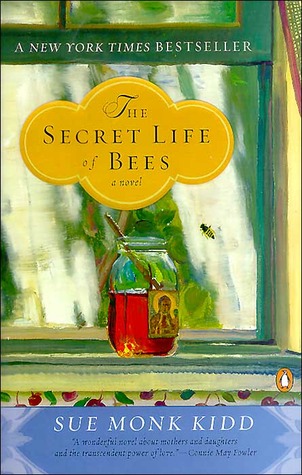
Book Review: The Secret Life of Bees

The Secret Life of Bees by Sue Monk Kidd

Summary (Courtesy of Goodreads): Set in South Carolina in 1964, The Secret Life of Bees tells the story of Lily Owens, whose life has been shaped around the blurred memory of the afternoon her mother was killed. When Lily's fierce-hearted black "stand-in mother," Rosaleen, insults three of the deepest racists in town, Lily decides to spring them both free. They escape to Tiburon, South Carolina--a town that holds the secret to her mother's past. Taken in by an eccentric trio of black beekeeping sisters, Lily is introduced to their mesmerizing world of bees and honey, and the Black Madonna. This is a remarkable novel about divine female power, a story women will share and pass on to their daughters for years to come.

So, I've mentioned before the virtual book club I belong to (seriously, there is NOTHING better than discussing books with intelligent people). For this round we read The Secret Life of Bees. I will confess that this was a re-read for me (well, in all honesty, a re-skim). I read this book years and years ago, but it's a powerful one. There are parts of this book I've never forgotten. It just stays with you.

Even though the 1960's segregated south is the backdrop for this story, and racial tensions play a big roll in the plot, I wouldn't say that racism is necessarily the main theme of this book. Mostly, this is a book about women, and the strength that women find when they come together and form a community. It's a really beautiful little world the women in the this book create, and it gave me a lot to think about because communities of women have been on my mind lately. I read an interesting article (no idea where, I can't track it down now for the life of me) about a woman who attended an all-girl boarding school. She wrote about how it was such a perfect place for her to develop a sense of self and identity, and to develop a voice outside of the competition between sexes. She wrote about how some of the feminist ideology of complete equality between the sexes has led us to a harmful place, and that women are actually benefited and can have more power and more voice when they are allowed to develop in communities of just women. These were very interesting ideas for me, and so I've been thinking a lot about the sphere of women, and the strength that comes when women form strong, supportive communities. Especially in this book, you can see what a wonderful thing it is for both Lily and Rosaleen to escape from the world of (abusive, racist) men and begin healing and flourishing with the help of the three calender sisters.

In today's world, I don't feel like female communities are as strong as they once were. I feel like people in general are much more isolated than they used to be, and I think this is destructive for society in general, and especially for women. I grew up with two sisters, a loving mother, and several very close friends that formed a wonderful community of female support for me, but I didn't appreciate the importance of having a support group of women in my life until I moved half way across the country with my husband and then had a baby. My mom was able to come for the first week, and there were lots of phone calls with my older sister, but I still felt like I faced a lot of motherhood very much alone. Thankfully I did have a secondary support group in my church congregation, because I don't know how I would have made it without the advice, meals, and hand-me-down baby clothes from those women. I wonder all the time about other women who aren't lucky enough to have such a community. How do they do it? Is this why women are so depressed these days?

So yes, I believe in the value of strong female communities. I believe that generations of grandmothers, mothers, daughters, and sisters are meant to be linked together to give support and raise future generations of strong women. I believe in women gathering together to talk, share ideas, and grow intellectually. That's one of the reasons I love my book club so much (strong, intelligent, female women talking about books, what an incredible community!). And I especially believe in the need for strong female support communities in motherhood. Yes, husbands need to be involved, but mothers need other mothers. Period. So this book just contributed a lot of great insight into everything I've been thinking about female communities recently. I really like the community presented in this book and the message that in order to be strong, women need other women.

There is so much other thought-provoking content in this book. My favorite is the character of May, and her empathy towards a world of pain. There is just so much to talk about there, but I'm afraid to give away plot spoilers about what happens to her in the end. There is also plenty to be said about southern culture in general, or the symbolism of the bees and the black Madonna (which tie back to female power), but I don't think I have time right now for a thorough discussion of all of that. What I will say is that this is a beautifully written story with wonderful characters and a lot of good things to think about.

Wednesday, October 23, 2013

Wednesday Library Day

Wednesday is quickly becoming my favorite day of the week. That's because it's library day!

So our new local library lacks some of the hundred year-old charm of our last stone-pillared local branch (gosh, that was such a beautiful building). But what it lacks in architectural history it makes up for in programs. Yay for story and craft time!

 As you can see, story time is pretty well attended here (the parking lot was completely full today, I had to squeeze into a not-quite-real spot by the garbage bins). They always do rhymes and three stories around a theme, and then break up for a craft time. Today the theme was bats.

I love this setup because it's perfect my son's attention span right now. I love giving him the chance to sit and listen to someone other than me read. I love learning new rhymes and songs (because apparently I've forgotten everything I knew as a child, and I'm struggling to come up with enough rhymes to appease my toddler's insatiable appetite for Mother Goose). And even though he's no where near old enough to do them on his own, I still love the craft time. It's been years since I've made funny little animals out of felt and glue and whatever, and my son would have zero exposure to this side of creativity otherwise.


After craft time, we wander down to the kids section, read a few books, and take a handful home with us to enjoy for the week. My Little Man has the routine down, and he loves getting to pick his own books off the shelf and carry them around.

So, I'm going to refrain from going off again about how much I love libraries (like I did in this post). But yeah. I love libraries. And I really love Wednesday Library Day.

Monday, October 21, 2013

Why I Don't Like John Green

Image Source
Okay, if you haven't heard about John Green, you probably don't read much contemporary YA fiction. Because John Green is huge these days. He has come out with a few wildly popular books over the past decade that have won all sorts of awards, most recent of which is the 2013 Teen Book of the Year: The Fault in our Stars (which, I believe, is being made into a movie).

He also happens to be a hugely controversial author because of the content in his books, and if you read the reviews people tend to either love him or hate him.

I read The Fault in our Stars some time last year, and I came away from it deeply conflicted. I mean, obviously the book had some staying power with me because here I am, still thinking about it over a year later, but I just couldn't bring myself to love it the way other people love this book. I decided to give Green another chance, so this past week I started listening to Looking for Alaska, which is his next most highly rated book. This book displayed more of Green's writing genius, but at the same time confirmed to me that I do not like John Green's books. I've been thinking and thinking and thinking about just why I don't like these two books. I've been reading reviews and lying in bed stewing over the question and trying to figure it out, but writing always helps me the most when I think these things out, so here I am to try and articulate just why I don't like John Green.

We'll start with the positive first. After all, I wouldn't be so conflicted if there weren't a lot of good things here.

Things I Like About John Green

-His characters. Green creates the most fantastic, funny, smart, and realistic teenage characters I have ever read. He is a genius at this. These characters pretty much breathe, they are so alive. I have to give Green credit for this.

-The substance. Yes, these are YA books, but Green is not afraid of attacking big life questions. Basically, he explores the meaning of existence through the eyes of these teenagers, and I have to admit it is refreshing to see a contemporary YA author get this deep. I wish there were more YA authors like this.

-The emotional punch without being sappy. I still have not figured out how Green can do this, but somehow he can write about teenage kids with cancer, or kids dying from drunk driving, and get me all incredibly weepy without crossing the line into sentimentality. It's just genius writing.

Things I Don't Like About John Green

-The mature content. Maybe I'm just a huge prude, but I would NEVER actually recommend a John Green book to a real teenager. The Fault in our Stars wasn't necessarily too shocking, but Looking for Alaska was simply awful in terms of language, drugs, and sex. Maybe it is realistic, maybe teens really talk and act this way, but please, no! My teenage years were far more innocent than this, and I hope they are far more innocent for my children. I think all of Green's issues and themes could be discussed without the language and sex.

-The agnosticism. I think, in the end, this is what actually tips the scale to disfavor for me. Maybe I could look past the mature content as just being "realistic," but what I struggle with the most is watching these smart, funny, brilliant characters face the hardest realities of this life without any sort of hope in God. It is downright depressing, and it makes me hurt all over to read. These poor kids face all of the pain and suffering this life has to offer, and they have nothing but their own grasping, flailing, limited understanding to help them through. I see what Green is trying to do, using world philosophies and the Humanities to try and scrape some semblance of meaning together in the face of all this suffering, but what Green offers is so woefully inadequate it hurts. It feels empty to me. Real or not, I just want to gather these children up and tell them there is a God who loves them, there is life after death, and real peace can be found in this life. But I suppose that is too much of a cop-out answer for Green.

And that is why I don't like John Green.

I admire him. I think he is a brilliant writer. And I appreciate what he is doing to push the genre of YA to a more substantial place. Of all the contemporary YA books I've read recently, Green's certainly have the most potential of being canonized as classics. I even appreciate his attempt to use the Humanities to help kids deal with real-life pain and suffering.

I just find it too depressing, too inadequate, a substitute for God.

Thursday, October 17, 2013

Time for a Change


I'm a huge fan of pleasure reading. I enjoy pleasure reading as a chance to escape, get lost in an addicting story for a little bit, and just not have to think so hard. It's so much fun.

But lately, I've been feeling like my pleasure reading has taken over my "serious" reading, and I've become too busy, or too distracted, to read some of the "heavier" stuff on my too-read list.

Don't get me wrong, I think any reading, even YA chicklit, is a more valuable activity than say, watching mindless TV (which has also been taking up too much of my time lately...). But it must be acknowledged that some books are better than others, and since there is only so much precious time in this little life, I need to find balance.

I want to read more books that stretch my mind.

I want to read more books that teach me new facts.

I want to read more books that make me think.

I want to read more books that help me grow.

This is not to say I'm giving up my YA chicklit. Heavens no. I've just been thinking lately that it's time to mix things up, branch out, and be a bit more disciplined in my reading endeavors. I haven't come up with any specific goals or plans, but I think I will work on developing some. Nothing like a good goal to actually get some results. We'll see what happens.

In the mean time, any recommendations? What books make you think?

Tuesday, October 15, 2013

Book Review: Zero Waste Home

Zero Waste Home by Bea Johnson

Summary (Courtesy of Goodreads): In Zero Waste Home, Bea Johnson shares the story of how she simplified her life by reducing her waste. Today, Bea, her husband, Scott, and their two young sons produce just one quart of garbage a year, and their overall quality of life has changed for the better: they now have more time together, they've cut their annual spending by a remarkable 40 percent, and they are healthier than they've ever been. 

Yay! It's the first nonfiction I've reviewed on here since... well, it's been a while. Which is strange, because nonfiction is actually one of my favorite genres. So this one! I'm pretty sure I first heard about this one from Janssen, and I'm pretty sure that my initial reaction was, That sounds like a bunch of hippie-dippie crap. But then I read about this book in a few other places, and it stuck around in the back of my mind through our whole process of cleaning up and moving (which is a huge trash-producing process, if you've ever been through it), and I just kept thinking, How? How in the world does that family live without producing any trash? So curiosity finally got the better of me and I checked the book out from the library.

So, I'll just say this first: Bea Johnson is extreme. I mean, if you're only producing one quart of trash a year and you're living in modern America, obviously you've got to be extreme. Johnson is super dedicated to her philosophy, and the lady is hardcore. And while that's all awesome for her, I am not that dedicated to this cause. I will never make my own make-up. I'm just not going there.

That being said, I really liked a lot of what Johnson had to say about simplifying life and rejecting our culture of extreme consumerism. For our entire marriage, my husband and I have been struggling students, and I feel like we've done a relatively good job of living within our means, which has meant necessary restrictions on how much we've participated in consumer culture. But now that we have a real job, I can see how our attitudes and patterns are changing (and we haven't even gotten the first paycheck yet!). Now I find myself thinking, "Why not? We can afford that," or "How nice we can finally buy (fill in the blank)." So reading this book now right now was great timing for me. It's made me stop and really analyze my attitude towards our new spending habits, because I do NOT want to fill up our house and our lives with stuff just because we can afford it. I want to be a lot more purposeful about the things we buy. Johnson has chosen to do this through the filter of not bringing anything in that will generate waste, and I think that's an interesting way to think about things. Like I said, I'm not as dedicated to reducing our trash output, but I see the value of thinking this way.

This book also changed my perspective on buying quality over quantity. I used to firmly be in the camp of buying the absolute cheapest possible product, whether it be food or clothes or toys. My husband once asked me where I would choose to shop once we had a real clothing budget and I told him that I would probably still shop at Target, because then I could just get MORE clothes. But Johnson has convinced me that there is merit in paying a little bit more for fewer quality products that will last longer. I don't know how much I feel this applies to clothes, since trends change from season to season (I probably will still always shop at Target, because, it's Target!) but I'm definitely starting to see the benefit of this philosophy for things like appliances, kitchen gadgets, electronics, my husband's wardrobe (he doesn't care about trends anyway), etc.

This book also provoked a very interesting discussion between me and my husband about what kind of house we want to live in some day. We've talked about our dream home before (most specifically, my dream library) and we talk about things like having a game room, a full guest suite, a huge beautiful kitchen, a formal dining room, an office, bedrooms for all the kids, walk-in closets, and all located on some sprawling piece of property out in the suburbs somewhere. But this book actually made me seriously rethink that dream. We are in a two-bedroom apartment right now, and we fit so perfectly. Obviously, as more kids come, we'll want more rooms and we'll upgrade to homeowner status some day, but do we really need the humongous house? And wouldn't it be nice to live closer to town to cut down on my husband's commute? And I can barely keep our little place clean now, how much more stressful would it be to keep a huge house clean? These are all things I hadn't really thought about before, but my husband and I had a great conversation about how maybe we're open to a different kind of living situation, maybe a town-home even (although, it's pretty tough to swallow the bang-for-your-buck comparison of a town-house to homes an hour or two outside the city...).

So what I'm saying is, after reading this book I'm probably not going to make drastic changes in the way we live to reduce our trash output, but I did love Johnson's philosophy about living simply. It's not that reducing trash isn't a value for me, it's just that hauling glass jars to the grocery store and fighting junk mail would complicate my life right now, not simplify it. But this book was definitely food for thought. I really want to be more reflective about how we participate in consumer culture, and I really do want to make some changes. I want to try composting and a few of the other helpful tips Johnson recommends. This book is brim full of tips and recipes and suggestions, I took a lot of notes of things I want to think about adopting.

So is this book hippie-dippie crap? Yes, it is absolutely hippie-dippie, but it's also very interesting and thought-provoking (or maybe I'm a bit more hippie than I thought?). I completely recommend this one to anybody interested in a different perspective on living simply.

Wednesday, October 9, 2013

Book Review: Two Sanderson YA Novels

After our little nerdy birthday date, I was definitely in the mood for reading some Sanderson this past week, so I got on that and read two: The Rithmatist and Steelheart. Before this I'd only read Sanderson's mainstream fantasy (is that an oxymoron?) stuff, but both of these were YA-- one a revisionist historical fiction and the other a dystopian. It was fun seeing Sanderson's signature style in these slightly different genres. Let's discuss!

The Rithmatist 

This one takes place in an early 20th Century steampunk America, only instead of being a unified continent as we know it today, this America is a collection of islands with a loose political connection. The islands are plagued by a deadly pest: the wild chalklings. Only Rithmatists, special individuals chosen by The Master himself to bring chalk drawings to life, can fight them back and keep humanity safe. The story follows Joel, the son of a chalk maker at Armedeus Academy, who is fascinated by Rithmatics but was not chosen by The Master to be one. When students at the school start mysteriously disappearing, Joel teams up with one of the Rithmatist professors to figure out what is going on. The surprising answer reveals a bigger threat than any of them had imagined.

I thoroughly enjoyed this one. I mean, the premise is a little weird (chalk drawings that come to life?) but Sanderson is nothing if not good at developing a believable magic system, and this totally worked. Sanderson had every element of his successful formula here: unique and intriguing world-building, quirky characters, page-turning suspense, and a surprising twist at the end that, try as I might, I can never anticipate. Honestly, it's knowing that twist is coming that keeps me hooked on Sanderson books. He is just so masterful at it. Anyway, it was a lot of fun to see this formula at work in a YA book (re: less time-commitment than his usual fare). It was great fun.

Side note: I listened to this one as an audio book, which I don't actually recommend. There are a lot of diagrams explaining the chalk drawings, and it's just so much easier to see them in the book than try to picture them from the descriptions. I didn't feel like it was a big enough issue to stop listening and get the real book, this is just a courtesy warning to anyone who wants to read this book in the future.

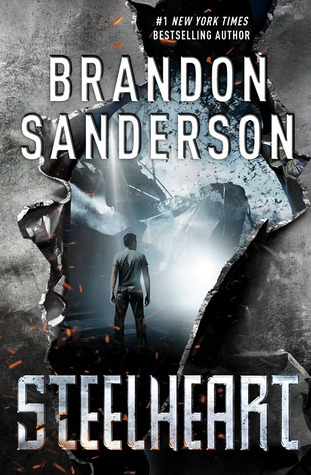
Steelheart 

This book, Sanderson's most recent release, was the reason for the book signing we went to. At the signing, Sanderson said the inspiration for this novel came when someone cut him off in traffic one day and he thought, What if I just had the power to blow that guy off the road? Thus the idea came: ordinary humans who are suddenly gifted with superhuman powers. Instead of being the superheros that we read about in the comics, these Epics (as they're called) are corrupted by their absolute power and proceed to terrorize and dominate mankind, taking what they want, killing at will, and ruling with fear. This is the story of David, who as a young boy watched Steelheart, one of the strongest and most ruthless Epics, kill his father. David wants nothing more than to find the Reckoners, a small group of mortals who are fighting back, and convince them to take Steelheart on once and for all. And, he happens to know a secret that could change everything.

Okay, so this one was not my favorite. To me, it didn't seem quite as well-written or well executed as some of his other books. It felt a little sloppy, like he wrote it quickly and then didn't really take the time to polish it up much. It also felt darker and a little more violent, though that may just be the nature of the dystopian genre and not so much a fault of the book. I guess I like my violence to be a little more fantasy-based, and not so action-movie-ish.

That being said, it still contained most of the trademarks that I love about Sanderson. There were some very fun characters in this one. I loved that the main character, David, was a nerdy teenager who was super awkward around girls and came up with the worst metaphors (reminded me of my husband, who always cracks the lamest jokes). And once again, the twist caught me by surprise. I really thought I had this one figured out, but while I was close on some things the ending had some unexpected curveballs. I love that.

Anyway, I'd recommend The Rithmatist  before I'd recommend Steelheart, but they were both enjoyable reads. Also, be aware that that both these books have sequels (possibly series?) planned. While I think they both could be read as fairly satisfying stand-alones, there were questions left unanswered in both books. Usually I'm not a fan of YA series, but Sanderson has yet to disappoint me, and his sequels to date have all been fabulous, so I'm actually a little excited to read more of these worlds and see what new directions he takes.