Quantcast

Tuesday, August 5, 2014

Theory of Mind (or, Why Readers are Better at Relationships)


I stumbled across this article last week, called "Why Readers, Scientifically, are the Best People to Fall In Love With."

Now, in my little corner of the world, this is common sense type knowledge. Of course readers are the best people to fall in love with, because, generally speaking, readers are the best type of people all around. I remember my husband, back when we were "just friends" before we were "officially dating," suggested over a Christmas break that I recommend my favorite book for him to read during the two weeks we would spend apart, and he'd recommend his favorite book for me to read. Guys, if I hadn't been smitten already, that suggestion right there was a deal sealer. I recommended Tess of the d'Urbervilles, which at the time really was my favorite, and he recommended a book I had never heard of before, The Solitaire Mystery. He confessed he was a little bit ashamed when he realized my favorite book was a renowned literary classic and his was a little-known YA novel, but that was a fact I didn't care about all (because I always love me a good YA book, and The Solitaire Mystery was absolutely delightful, and philosophical and deep in it's own way). The most impressive thing to me was that he actually read  Tess, and liked it. We even had a little mini book-club-type discussion about the books when we got back after the break, and the whole time I was sort of like, "This guy was not only willing to read a classic, but he can talk to me about it intelligently!" After that, I think marriage was kind of inevitable.

But anyway, what intrigued me about the article above was the "scientific" part of it. The two studies linked to in the article aren't actually about whether readers make better romantic partners, but they did analyze the social skills (or more specifically, the empathy levels) of people who read fiction. And the results are very interesting. Apparently these studies prove that people who read fiction, and are able to immerse themselves in the comprehension of other characters and worlds, are better able than non-fiction readers to transfer those comprehension skills to real-life relationships. In other words, readers who are good at relating to the emotions of fictional characters are also good at relating to the emotions of real people.

The theoretical concept behind all of this is called "Theory of Mind," and here's where I'm going to get a bit technical, but I find this stuff interesting, so please excuse my enthusiasm. I first learned about "Theory of Mind" when reading On the Origin of Stories  for my History of Narrative class this past semester. Now, I'm not actually a psychologist or whatever, but basically "Theory of Mind" is the special ability most humans develop around the age of four or five to understand that other people have a different frame of knowledge and belief than their own self. The experiment they do to see if a child has developed "Theory of Mind" goes like this: a young child watches through a window as Subject 1 hides a ball inside a box, then leaves the room. Then Subject 2 comes into the room, moves the ball from the box to another hiding spot, and leaves the room. Then Subject 1 comes back in, and they ask the child where Subject 1 believes the ball to be. Younger children, who watched Subject 2 hide the ball in a new place, will generally answer with the current location of the ball. However, sometime around the age of five, many kids will begin to understand that Subject 1 doesn't know the ball has been moved, and therefore still believes the ball to be in the box. This, in it's most simple terms, is "Theory of Mind." Basically, it's the ability to understand what other people are thinking, feeling, or experiencing.

This is quite an advanced evolutionary skill that is very advantageous for animals who live in cooperative societies, and considering humans are the only known species to have acquired "Theory of Mind," it's a big part of explaining our domination over the rest of the animal kingdom. But, what's really interesting, is that apparently fictional stories help humans develop "Theory of Mind." As in, we are biologically programmed to tell (or, in the modern world, read) and enjoy fictional stories because they help us develop a crucial skill that gives our species an evolutionary advantage over the rest of the animal kingdom.

And that skill is relationships. Understanding other people. Empathy.

Pretty cool, huh?

So the next time someone derides your introverted tendency to stay home getting lost in a good book, you can rest assured that you are actually staying home to hone your social skills.

(Unfortunately, this is not true if you are staying home to read that technical non-fiction textbook. These same studies prove that non-fiction readers actually do have worse social skills. Now, I thoroughly support non-fiction reading, but I love how these studies prove that fictional stories have a legitimate, worthwhile purpose, and my decision to be an English major is actually making me a better friend and spouse and person.)

Tuesday, July 29, 2014

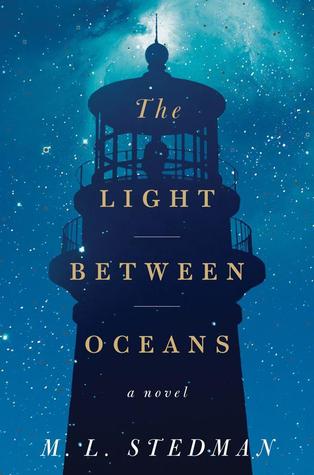
Book Review: The Light Between Oceans

The Light Between Oceans by M.L. Stedman

Summary (Courtesy of Goodreads): After four harrowing years on the Western Front, Tom Sherbourne returns to Australia and takes a job as the lighthouse keeper on Janus Rock, nearly half a day’s journey from the coast. To this isolated island, where the supply boat comes once a season and shore leaves are granted every other year at best, Tom brings a young, bold, and loving wife, Isabel. Years later, after two miscarriages and one stillbirth, the grieving Isabel hears a baby’s cries on the wind. A boat has washed up onshore carrying a dead man and a living baby. Tom, whose records as a lighthouse keeper are meticulous and whose moral principles have withstood a horrific war, wants to report the man and infant immediately. But Isabel has taken the tiny baby to her breast. Against Tom’s judgment, they claim her as their own and name her Lucy. When she is two, Tom and Isabel return to the mainland and are reminded that there are other people in the world. Their choice has devastated one of them. 

I've just got to say upfront that I listened to the audio version of this book, and I can't say I recommend that. I mean, yes, it was nice to hear everything pronounced in an Australian accent, but the reader's voice was not my favorite. He was so soft spoken that I kept having to turn my volume way up to try and catch what he was saying, and even then I feel like I missed out on a lot of the finer details (seriously, it was like he was mumbling). Also, I'm just not sure about the choice to use a male narrator here. I understand that Tom Sherbourne is probably the most common point of view in the story, but the language and descriptions (especially about babies) just felt so feminine to me that I think a female reader would have felt more natural. But whatever. It was fine.

Besides the fact that I didn't care for the audio production, and the fact that it took me FOREVER to finish this book (I think I started it back in February, which is seriously pathetic), I actually loved this book quite a bit. It was beautifully written, and the characters were so real and believable. Which was the tragic part. Especially Isabel. I felt like her flaws were so real, so understandable, and yet so unforgivable. The conundrum these people get into! It's terrible and heart-wrenching. And even though I knew the whole time that they should have notified the authorities and turned the baby in, and even when I sympathized with Tom for doing the "right" thing in the end, my heart just broke for Isabel. Being a mother myself, I felt her desire and longing and pain, and it was excruciating. And poor Tom just loved her and just wanted her to be happy, but couldn't live with a guilty conscience.

This was one of those books that really made me think, "What would I do if I were in their place?" I would like to think I would have enough sense not to keep a baby that wasn't mine, but then again, I've never had a miscarriage (knock on wood, real hard please). I can only imagine how hard it would be to lose a baby, and then have one turn up unexpectedly that for all the world looked like an unwanted orphan. I can really understand how Isabel thought it was a sign from God. But poor Hannah (the real mother)! I can't imagine her pain. What a terrible mess. There were so many times when I wondered, "What is the right thing to do here? Who really is to blame?" When I described the scenario to my husband, it was as clear as black and white who was wrong and who was to blame, but I tried explaining that when you get involved with the emotions of the characters (and in my present pregnant condition, I can't help sympathizing with the emotions of everyone in this book, especially the mothers), it's really not so clear (my dear, sweet, extremely logical husband has never been good about sympathizing with hormonally-charged emotions). This book is just about honest good people who make misguided decisions that lead to terrible messy situations where a lot of people end up hurt. And you just wonder how good people can make such a mess of things.

Anyway, I hope I'm not giving too much of the plot away for those of you who are interested. I thoroughly recommend this book to anyone looking for a well-written, heart-wrenching little story. I can't say I think this one will go down as a classic exactly, but I found it a very thought-provoking and worthwhile read. Right now I'm giving it four stars (though I might change it to five, we'll see how long it sticks with me).

Thursday, July 24, 2014

Getting My Pleasure Reading Groove Back


Pleasure reading has always been my thing. And I mean, since like first grade I've ALWAYS had a book I was deep in the middle of, one I carried around with me and sneakily read under my desk when classes got boring (although after being a teacher myself, I realize I was probably fooling no one. I've even been annoyed by a few students who I knew were distracted by books under their desks, but then I would remind myself that, as an English teacher, that's exactly the life skill I was trying to encourage, and if my lesson that day wasn't interesting to them, well, that was my fault.) (Also, never tell this to my boss, but I used to keep a book hidden in my desk drawer when I worked in university administration., and would read when things were slow, only to slam my desk drawer closed whenever anyone walked by my work space).

Anyway, I've just always been the kind of person to have a book going, to be plowing through my to-read list, and to actually pace myself so I didn't spend ALL my time reading.

But recently? I don't know if this pregnancy is messing with my brain, or if I'm just losing it, or what, because pleasure reading has been way, way down on my to-do list. In fact, on our recent family vacation, I didn't take a single book with me. I'm not sure I even thought about it when I was packing. I had a few audio books on my phone, but considering that my phone was the go-to toddler-distraction-device on all our plane flights and car rides, I didn't actually get a chance to listen to anything. I can't tell you how many times I thought, "I wish I had a book with me." It was such a strange, out-of-character move on my part, that honestly I'm completely flabbergasted by it. How did I not pack even one book? What was I thinking?

But the truth is, I've just been struggling to fit pleasure reading into my life for a few months now. And this is not acceptable. This is not who I am. So I've been consciously working on a few strategies to get me going again, and I thought I'd share them here, just to remind myself in the future in case I ever go through this weird phase again.

1. Have lots of books on hand.  When I got home from that family vacation, I immediately went online and put about ten books from my to-read list on hold at my library. I've got about five now sitting on my bedside table, reminding me they need to be read.

2. Give yourself a deadline. I've found that I tend to read library books with more alacrity than the books I actually own, because I know I have to return them. That forced deadline works wonders on my motivation to start a book (whether I finish depends on the book).

3. Have different media options going at once. By this, I mean I need to have audio books, e-books, and good old paper books available to me at all times. In the first two years of motherhood, I totally converted to audio books, and tried to get my hands on the audio version of every book I wanted to read. It was just so much more convenient for multi-tasking with a baby. But recently, I've found that paper books are a little more convenient for this stage of my life (or really, my toddler's stage of life). And e-books are always handy for out and about (it's easier to slip my e-reader into my purse for the doctor's office waiting room than some massive hardback). Anyway, it's just good to have options, for whatever situation is at hand.

4. Read what you like. So, I've got a couple of books going right now that are "should read" books about pregnancy and parenting. Now, I'm a total advocate for reading books to stretch your mind, learn new things, and enrich your life experience. And these pregnancy books are very good and interesting and things I want to read. But in my current situation, where I'm struggling to find motivation to read on a daily basis, the dryer tone of these books isn't helping much. I found myself thinking the other day, "I just wish I had a really good YA fantasy to lose myself in right now." Ask and ye shall receive. I got an email the next day saying my hold for Dreams of Gods and Monsters was available, and I kind of dropped everything to indulge in it for a few days. When you're struggling with pleasure reading, read what is absolutely most pleasurable to you.

5. Make reading an established part of your routine. This is the one that's been the biggest culprit for me, because I feel like my routine has been all disrupted lately (i.e. sleeping so much more than I used to, it really takes a bite out of my reading time). I finally decided to let myself read a chapter or two before bed each night. This used to be a huge no-no for me, because of the ever-present danger of getting sucked into a book and then not putting it down until the wee hours of the morning. But it's a risk I'm taking now because most days, I don't find any time to read until I'm climbing into bed.

6. Make it a priority. This last piece of advice isn't as concrete as the others, but it's still important. I think pleasure reading has been falling off the grid for me because other things are feeling more important. Or generally because I just feel exhausted all the time (yay for being pregnant!). But when I stop and think objectively, I really want pleasure reading to be a part of my life. That's not just the kind of person I am, it's also the kind of person I want to be, even if I have to work a little harder at it. I just have to view reading time as important and worth the effort. Because it is.

Do you ever have reading slumps? What helps you get over them?

Thursday, July 17, 2014

Grammar Nazi

Other areas of my life have exploded with busyness recently. It's to the point that I can't even take naps anymore (and trust me, I protect my nap times), so blogging is taking a backseat again (like it has this entire year). But anyway, I saw this music video posted on Facebook today, and couldn't help but share. It's been making the rounds, so you've probably seen it by now, but the old English teacher in me found it vastly amusing.


Somehow, I don't think the song would make much sense without the video. I can't say I'm a huge Weird Al fan, but he just nails it sometimes with his parodies. He's quite clever, really. Hats off to you, Mr. Yankovich, for providing English teachers the world over a chance to play another YouTube video in class.

Anyway, despite the fact that I am the English teacher / literature master's student / bookish person in our relationship, I will freely admit that between the two of us, my husband is by far the bigger grammar Nazi. He's a total stickler for Oxford commas and split infinitives and other rules that I consider unjustly imposed on our English language by the Latin fanatics of centuries past (because of him, I now notice all the times people misuse the subjunctive, and it's often). Maybe it's the want-to-be creative writer in me, but I'm much more kindly disposed to experimentation and focusing on communication and expression rather than mechanics and conventions.

That being said, you should know the rules before you break them. I strive to at least show I'm intelligent and aware of grammar rules (even if I don't always follow them).

What side do you fall on?

Wednesday, July 9, 2014

Books I Read in June

At some point in this pregnancy, I expect to get some sort of groove going. Despite my best efforts to eat well and exercise and get (plenty) of sleep, I just feel thwarted. First there was the thyroid issues in my first trimester that made everything just so much more terrible, but gratefully my hormones have settled down and we're mostly past all those problems. Then there was that little hiccup of being anemic (which might explain why the unusual exhaustion is dragging on into the third trimester), but hopefully the recent addition of iron supplements will fix that soon. And I'm just coming to terms with the fact that this little baby doesn't like sugar, and as tragic as that fact is it's probably best for both of us. So now that I'm done with my family reunioning and travels for the summer (thus the blog absence for the past few weeks) and I'm back in control of my diet and sleep schedule, I have real hopes that the rest of this summer will start shaping up in terms of not feeling like a zombie all the time.

Here's to a positive outlook!

Anyway, somewhere in the past month (and by that, I mean sometime in June, even though June ended nine days ago) I finished three books. As pathetic as that might sound for a book blogger, this is a record for me this year (not counting the books I read for school). It's been a rough one on the pleasure reading front, but I'm feeling my old itch again to start scratching these titles off my to-read list, so hopefully the steam only builds from here.

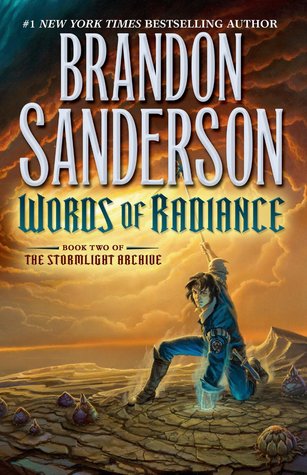
Words of Radiance by Brandon Sanderson

Yay! I actually finished this behemoth. You guys, as much as I love me my Brandon Sanderson, this Stormlight Archive series is not for the faint of heart. You must be a dedicated, hardcore, nerdy fantasy fan. You have been warned.

That being said, wow is Sanderson incredible at crafting a story. It was when I found myself comparing the themes in this book to Crime and Punishment that I really appreciated the complexity Sanderson is creating here. This is straight up great fantasy.

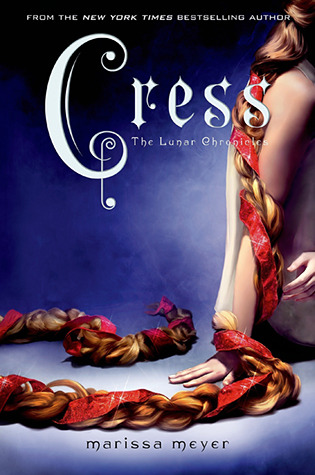
Cress by Marissa Meyer

I finished this one in two days, and it felt so good to allow myself the indulgence of such a fun, light, consuming read. So, I adore this Lunar Chronicle series, and while I don't think Cress is nearly my favorite (definitely suffered from some middle book syndrome dragging) I still enjoyed every minute of it. Such fun fairy-tale retellings.


All Joy and No Fun: The Paradox of Modern Parenthood by Jennifer Senior

I added this to my to-read list after reading Amy's review of this book, and then was pleasantly surprised to find it on the "New Non-Fiction" display at my library the very next week. So I snagged it, and subsequently devoured it. I could probably write a super long post analyzing all the thoughts and feelings I had while reading this book, but for now I'll just say that I highly recommend this book to anyone who is or might become a parent. I found it fascinating. It's not a typical parenting book, as in there is no real advice (do x, y, and z and you'll have happy, healthy, successful children), but it does provide a broad historical background on how parenting as a cultural concept has evolved over the past century or so, and I found that perspective vastly illuminating. This one gave me and my husband a lot to discuss, and I love books like that. Also, I cried all the way through her last chapter about the "joy" side of this parenting business (but that just might be the pregnancy hormones). Good stuff.

Thursday, June 19, 2014

Intellectual Reads

So I tossed around the idea of reviewing some of the books I was assigned to read this past semester in grad school, but I'd already written enough about all of them elsewhere to not really want to rehash it here on the blog, and I kind of figured that none of my readers would be really interested in full length reviews of Romantic poetry anthologies, so I've been waffling on whether to review anything or not. I mean, is anyone really interested in pleasure reading more academic stuff?

Then, I saw Modern Mrs. Darcy's post on her Summer Syllabus, the idea being she wants to read something that makes her a little bit smarter this summer, and I thought, you know what? I read some really interesting stuff this semester, and I bet maybe someone out there would be interested in reading these things too. But, for your sake, I've paired it down to the five most interesting (at least to me) books I read last semester, and the ones I feel the most confident in recommending for general (albeit, intellectual) consumption.

What I think is most funny about this list is that they all come from one course I took called The History of Narrative. I actually hated this class (the professor was terrible, and the class took place in a restaurant, which you might think sounds awesome but I was first trimester pregnant and they served seafood and I associate all memories of class discussions with intense nausea and the desire to die), but the reading list was incredible. So, without further ado, here are my current recommendations for some intellectual reads:


1. On the Origin of Stories: Evolution, Cognition, and Fiction by Brian Boyd. Okay, the concept with this one is that the human fascination with stories (and in particular, fiction stories) is the product of evolutionary adaptation, and that stories actually serve a biological function in giving us an advantage over other species. I mean, how fascinating an idea is that? We are biologically programmed to need stories? That's an idea I can totally get behind.

But as interesting as I found this one, I also struggled with it quite a bit. As a literature person, I've never studied evolution much beyond the basics, and I must admit that Brian Boyd's whole approach-- that pretty much the entire branch of Humanities (including religion) evolved as a biological adaptation-- felt a bit soulless to me. I definitely don't agree with 100% of what he argues in this book, but I still found the science and the concepts fascinating. This one made me stretch and grapple and think about really big ideas, and I appreciate it for that.

2. Journey of the Universe by Brian Thomas Swimme and Mary Evelyn Tucker. This book is a quite a bit shorter than any other on this list, and was actually written for a lay audience. Let's see, how to describe this one? This book is a good follow-up to the Origin of Stories because this is where the Humanities comes back into science. Or something. It's a bit weird, and I might even say mystical. It's kind of the history of the universe and lightly covers everything from the Big Bang to star formation and galaxies and atoms and life and all of that, but with this grand idea of making human existence meaningful (instead of soulless and accidental). So, it's kind of like the religion of science without a God. Being a religious person who believes in God (and science, the two are not mutually exclusive), I thought some of this was downright ridiculous, but as far as a synopsis of the history of the universe and a little light physics, it was quite interesting. Worth a read at least.

3. The Divine Comedy: Inferno by Dante Alighieri. For those of you who aren't very familiar with The Divine Comedy, this masterwork is actually divided into three parts: Inferno, Purgatorio, and Paradiso. We had to read the whole thing for class, and it's really quite epic and brilliant and all of that. But I will say, Inferno is by far the most interesting of the three. Let's just face it, it's more fun to read about the sinners in hell than to read about the holy angels who do nothing but sing in heaven (seriously, Dante's version of Paradise sounds downright catatonic to me). So, if you feel the need to cross this classic piece of literature off your life bucket list, take it from me and stick to the Inferno.

4. Parallel Myths by J. F. Bierlein. I've always enjoyed mythology and those types of ancient stories, and before taking this class I had a vague notion that there were certain themes or tropes that show up in a lot of mythology from different cultures, but this book! I had no idea how many similar stories there were across cultures. It was fascinating, in almost an eerie kind of way. Bierlein goes through by category (creation stories, flood stories, end-of-time stories, etc.) and retells myths from cultures all over the world, and then offers a fascinating discussion about why so many cultures share such parallel myths. There are all sorts of theories, ranging from some sort of shared human conscious (that's Freud for you) to dispersion (although that one's kind of been disproved) to simple mystery. If you are even a little bit interested in mythology, this one is a great collection, with a fascinating discussion to boot.

5. Ramayana by Valmiki, translated by William Buck. Supposedly, this translation of the Ramayana is more accessible and reader friendly than other translations. I haven't read other translations, but I thought I'd let you know in case you pick up a different version and wonder why in the world I would ever recommend this one.

So, what I knew about this epic Hindu religious poem before taking this class consisted of the excerpts from A Little Princess and what I gleaned from a funny cultural experience on my first date with my husband (that's a story for another day). I didn't know that this was probably the most popular and influential story of all time, having been told and retold for centuries across the entire southern continent of Asia. In fact, it's considered one of the few "living" epics today, as this story is still being told in traditional and modern formats (apparently there's a TV miniseries that nearly shut down the subcontinent of India when it first aired). At it's core, it's an epic love story between a husband and wife, and while it doesn't necessarily have the happiest of endings, it is a great story. If you have any interest in expanding your cultural horizons and learning more about Indian culture, this is a great place to start.

Tuesday, June 17, 2014

A Few Bookish Tidbits

You guys, June is killing me. I mean, how are we over half way through this month? Where is my lazy summer going? (Oh yeah, I might be sleeping it away).

Anyway, here are a few bookish things from the internet I've been reading/pondering/interested in recently.

1. This article from Slate made the rounds on my Facebook feeds a couple of weeks ago, and I can't stop thinking about it because it made me so angry. Adults should be ashamed to read YA literature!? Obviously, this sad author has lost touch with her childhood, her innocence, and any sense of decency, and I feel bad for her. It's not that I love The Fault in Our Stars so much (I don't), but I will stand up unequivocally for the value of young adult and children's literature. Take, for instance, this paragraph:

Most importantly, these books consistently indulge in the kind of endings that teenagers want to see, but which adult readers ought to reject as far too simple. YA endings are uniformly satisfying, whether that satisfaction comes through weeping or cheering. These endings are emblematic of the fact that the emotional and moral ambiguity of adult fiction—of the real world—is nowhere in evidence in YA fiction. These endings are for readers who prefer things to be wrapped up neatly, our heroes married or dead or happily grasping hands, looking to the future. But wanting endings like this is no more ambitious than only wanting to read books with “likable” protagonists.
How sad! How sad indeed that adults are only allowed "emotional and moral ambiguity" and we should feel ashamed to believe that stories actually should have endings. Excuse me if I believe in happy endings.

2. This little list from NPR last week made me super happy. I can't say I remember the show Gullah Gullah Island, but Reading Rainbow? Wishbone? These were the shows that defined my childhood! There are so many books today that I can't look at without remembering that little dog costumed as the main character. Also, my husband can still sing the entire theme song to Where in the World is Carmen Sandiego. Yep, we had some quality public programming in those days.


3. You guys, I need my favorite bookish bloggers to stop posting summer reading guides, because my to-read list has exploded recently, even as my time devoted to actual reading has plummeted. It's a conundrum for sure. Nevertheless, if you find yourself looking for that next great read this summer, my two favorite guides so far have been this one by Janssen at Everyday Reading and this one by Modern Mrs. Darcy.

4. Okay, so I was totally late to the Lizzie Bennett Diaries bandwagon, but after finally stumbling across it I binge watched all 100 episodes over two days (each episode is only five to ten minutes). It was a fantastic web-video-blog (whatever the word is) adaptation of Pride and Prejudice, and I loved it, so I was delighted to discover Emma Approved last month (still late to the game, but only half-way through this time), which is obviously an adaptation of Emma. I think this new series is a bit less charming (it took me a lot of episodes to warm up to Emma), but I still highly recommend it to all those Austen-obsessed fans out there. However, they're only on episode 53 right now, so you might want to wait until all the episodes have been released and binge watch it all at once (a highly satisfying, if time consuming experience). Either way, it's a fun way to experience Austen.